Skip to content

Posts from the ‘What to Eat’ Category

Lers Ros

Oh, thank god Lers Ros was all that it was cracked up to be. I realize NYC isn’t necessarily the United States’ Thai hot bed (that would be LA, wouldn’t it?) but I still have developed standards and am always cautious when I hear raves in other cities lacking a strong Thai presence. I’m still stinging (sorry, I’m a grudge-holder) over my disappointing meal in Chicago and that was a year-and-a-half ago.

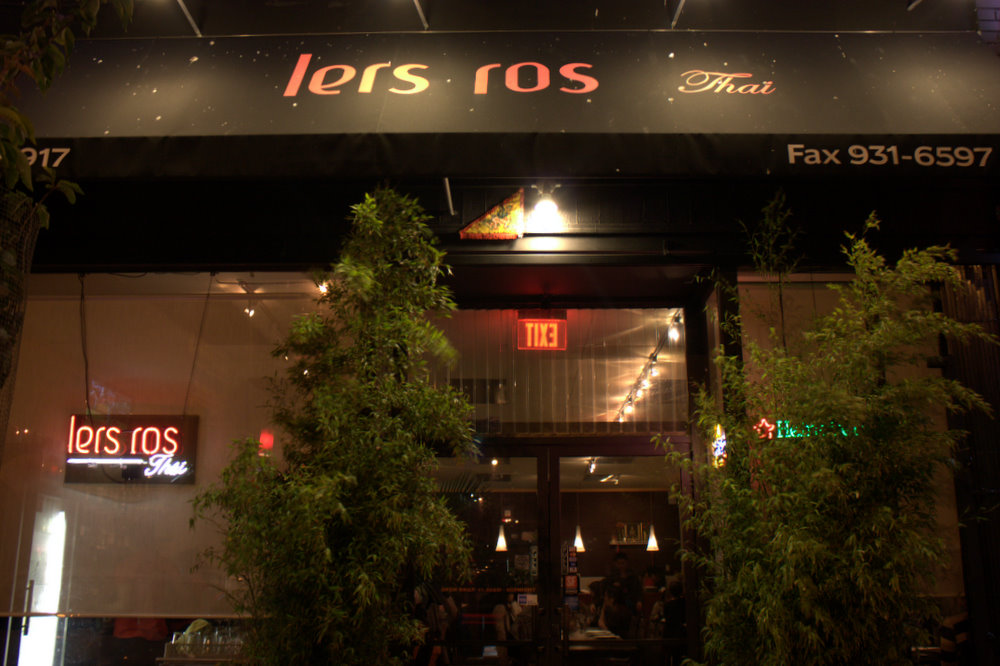
Lers ros facade

I didn’t fall for any of the exotica beyond boar, which isn’t that wild really (the wildest thing I encountered that night was someone pants halfway down, propped up on scaffolding, poised to take a dump onto the sidewalk—I didn’t really get what all the Tenderloin hubbub was about until that moment). Alligator just seems gimmicky unless you’re in New Orleans and even then you wonder if you’re just being a tourist for giving in. Frog, venison and rabbit will have to wait for another visit.

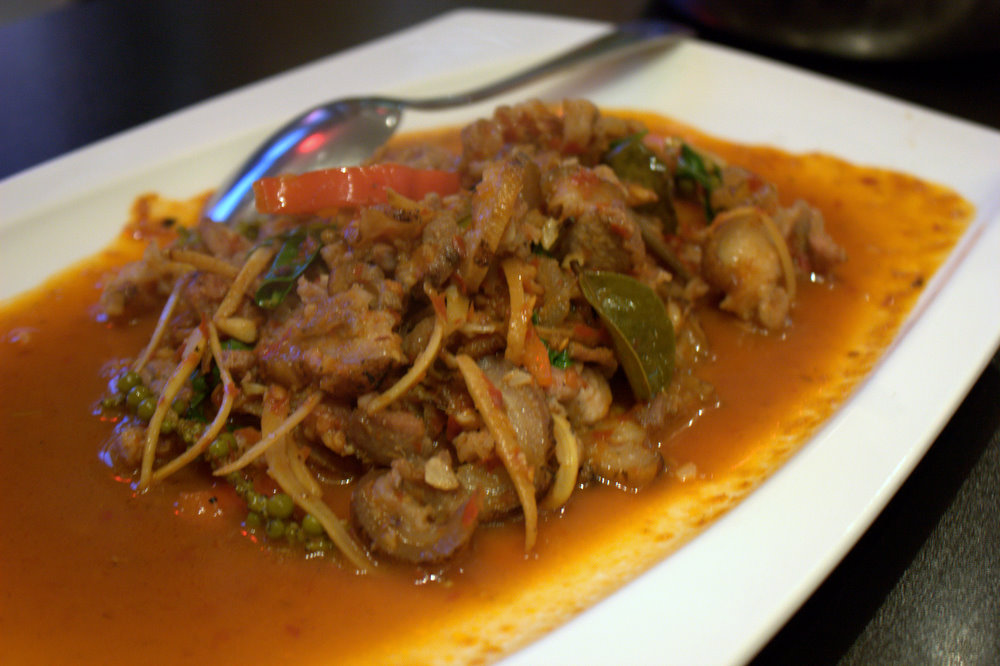
Lers ros wild boar

Said boar. I appreciated that they didn’t shy away from offering such a tough, cartilaginous cut of meat. Serious masticating was necessary, though it was likeable in a similar way that pigs’ ears and beef tendons are. Hit with green peppercorns, chiles and sharp strips of krachai, this was a punchy dish.

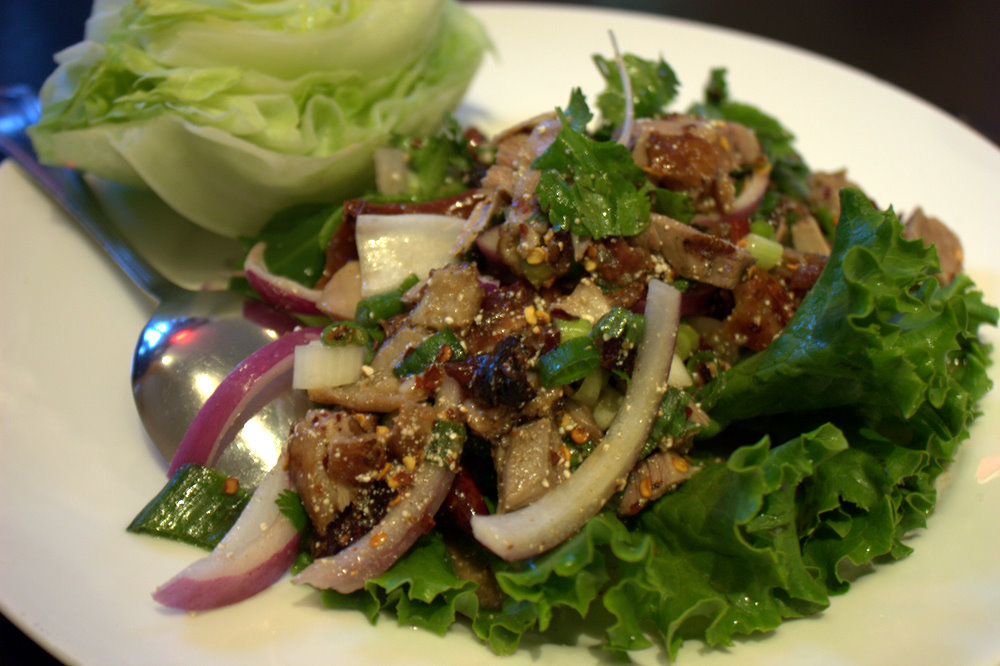
Lers ros duck larb

I’ve never had duck larb, but it makes sense. The poultry is in small chunks rather than a mince, which is nice because you don’t lose the contrast between the flesh and the skin. The spice level wasn’t disappointing, either.

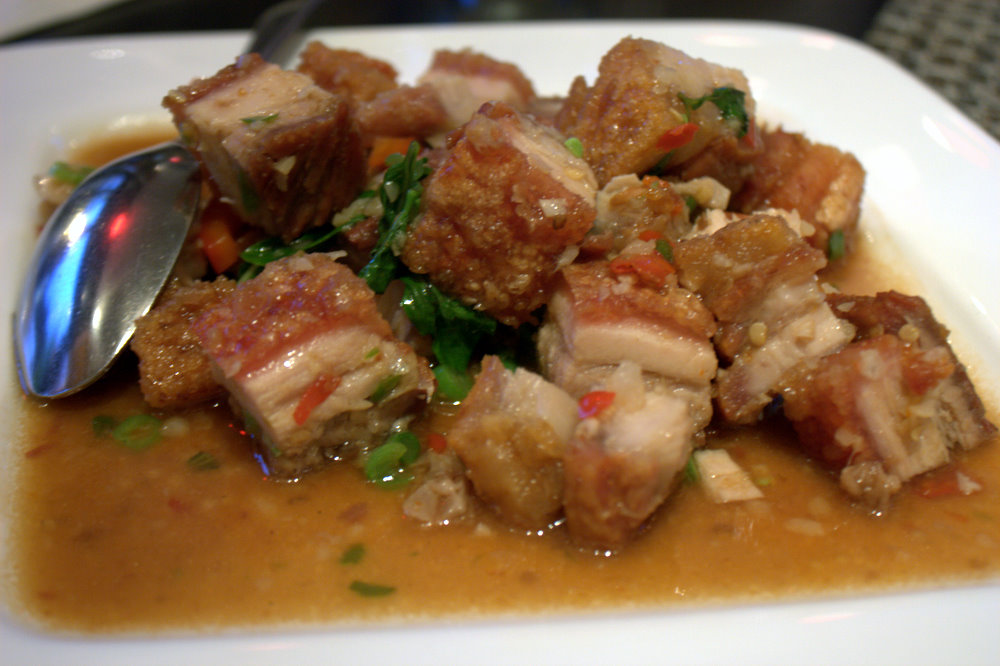
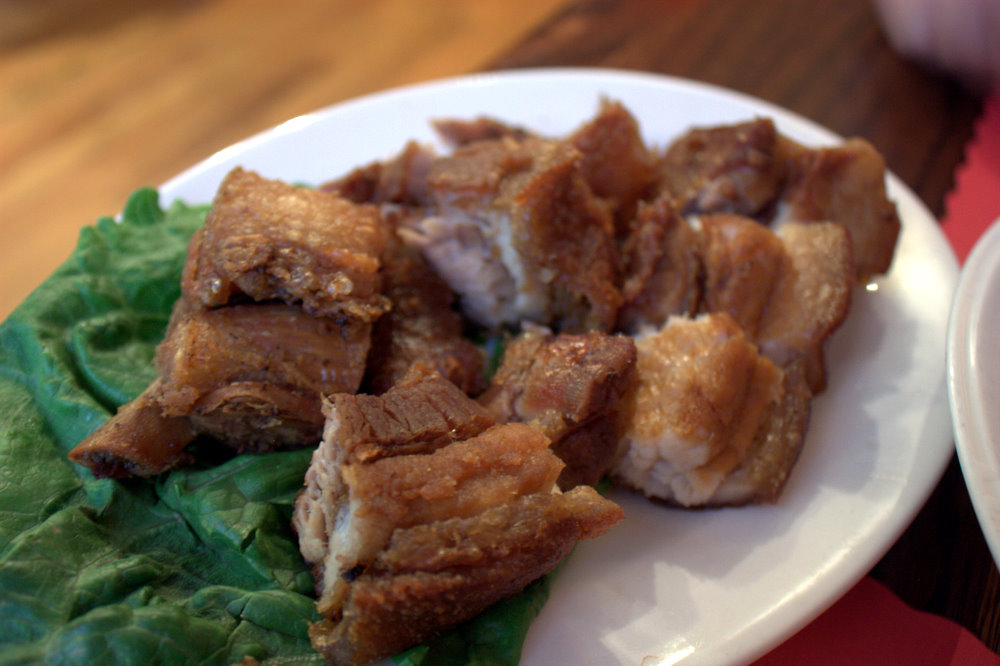
Lers ros pork belly

I can never resist crispy pork with basil and chiles—it’s one of my Sripraphai standards—and these generously cut chicharrón-esque cubes did the trick.

Lers Ros * 730 Larkin St., San Francisco, CA

Sa Aming Nayon

Now Jeepney. At least it's still Filipino, right? Gastropub or not. I walked past the opening last night and was tempted to pop in. (10/12/12)

Curiously, Sa Aming Nayon appeared in that patch of First Avenue near 14th Street that periodically sprouts and snuffs out Filipino restaurants back in June. Yet their name has been popping up in the past week in food media. Well, just Time Out New York and Tasting Table. Why now?

Who cares, all you need to know is that if you have even the vaguest interest in Filipino food—and you should—this home-style restaurant is worth a visit. Then again, I’m a big booster of Filipino cuisine. It’s an unknown compared to more popular Thai or Vietnamese, and those who encounter the style, reliant on vinegar and other bitter flavors, often write off the entire country’s repertoire. Some think it’s too funky; others find it boiled and bland.

Sa aming nayon lechon kawali

While lamb and goat battle for it meat recognition, pork is still the favorite protein of discerning gluttons everywhere. And no one does pork like a Pinoy. It’s a great introduction. The next best thing to experiencing the bounty of the whole beast, a.k.a. lechon, is sampling the fatty parts encased in crackly skin. This typically means crispy pata, a deep-fried ham hock or lechon kawali, pork belly given the same burnished-in-oil treatment.

Chicharrón is often eaten as is, but lechon kawali needs its sauce. I panicked for a second when it didn’t show up. “The sauce is coming,” I was promised before I could say a thing. Then I could hear the woman who appeared to be an owner yelling into the kitchen for “the sauce.” What if they were out of sauce? I’ve heard of women carrying Tabasco or ranch dressing in their purses. I wonder what they would’ve thought if I pulled a bottle of Mama Sita’s out of my bag.

I have no idea how you would come up with the idea of combining liver, sugar, vinegar and bread crumbs (thrifty, sure) to make a dip for fried pork, but the thick, sweet and savory result that’s more sludgy than saucy, transforms the meaty chunks into something even better. It’s instant umami.

Sa aming nayon pinakbet

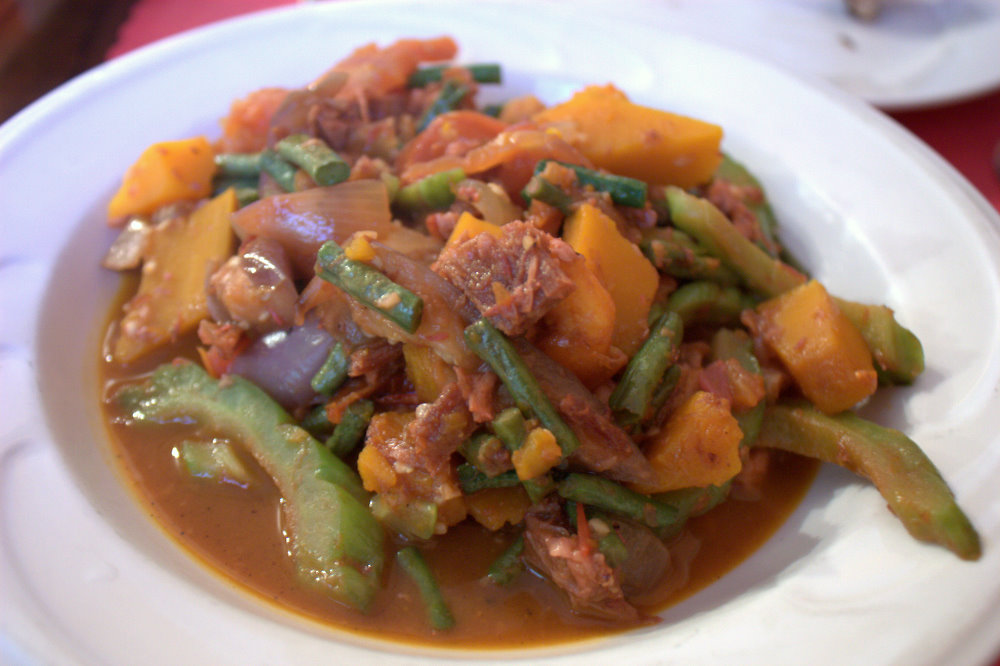
Pinakbet combines a slew of vegetables like squash, tomatoes, bitter melon, eggplant and green beans with more pork to create a vegetable stew. Read more about this dish on the new Real Cheap Eats NYC (not so much because I’m plug-crazy but because I don’t want to repeat myself).

Sa aming nayon adobo

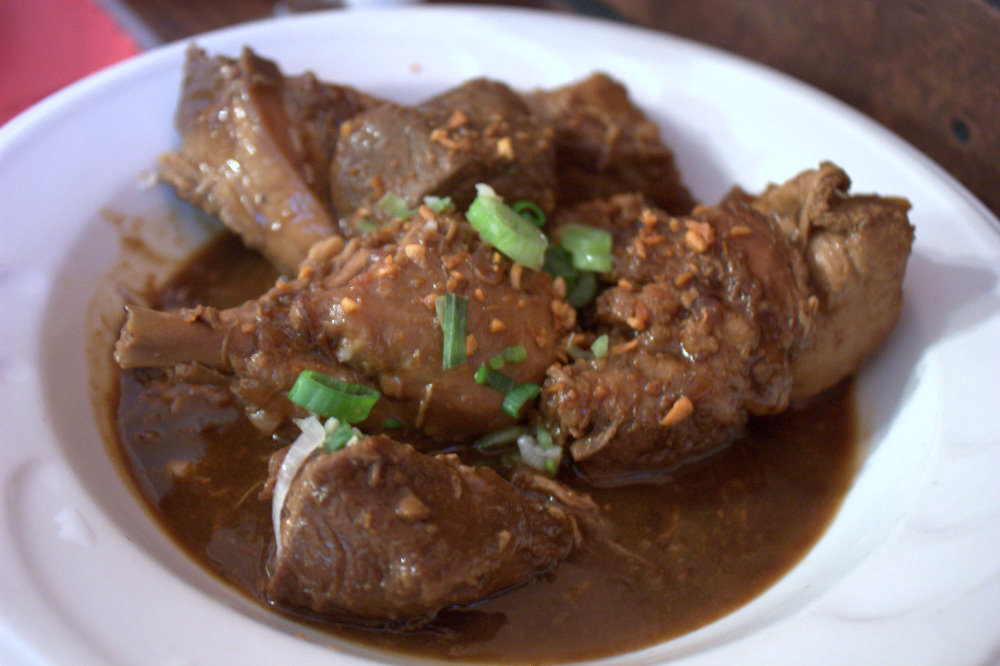
Classic soy-and-vinegar braised adobo is an obvious choice (they were out of sisig, which is what I really wanted) but I like that they served a version with both pork and chicken. The meat becomes so stained from the soy that you can barely tell which meat you’re getting until you take a bite. Adobo roulette.

I’d like to go back for the halo-halo. Icy Asian desserts, like snow cones covered in gelatinous goo, often seem odd out of context, but this heat wave is tailor made for tropical sweets, purple yam jam, pandan jelly and all.

Sa Aming Nayon * 201 First Ave., New York, NY

Bar Basque & Txikito

Ever since experiencing Basque food in its own element, I have become insufferable. Ok, not really, but I have wondered why there aren’t real pintxo bars in New York City when we have so many other niche culinary ventures. I’m envisioning a counter teeming with trays of small, high quality, totally creative, reasonably priced ($3 short pours of txakoli, not $12 like I experienced this weekend and $5 plates, not double digits) gems to be consumed while standing or on stools at a bar. It’s so crying out for a Brooklyn treatment. Could you street-food-ize it or make it pop-up?

If I were the opposite of me, I would make this happen despite my complete lack of business sense, industry experience and capitol. Like this is the part of the T Magazine or New York profile where the subject says, “I liked kombucha…so I started a kombucha company” or “I loved s’mores as a kid…so I’m now producing artisanal graham crackers. It’s a full time job.”  Uh huh. Myself, I’ve wanted to start a category (tumblrs just don’t do it for me) A to C, documenting these inexplicable journeys from idea to execution.

There are factors holding back pintxos bars in NYC: price, as I already mentioned, and the bar thing. Americans like to sit down and stay in one place when eating a meal and you couldn’t have a crawl anyway without a concentration of options in the same area. One destination pintxos place wouldn’t cut it.

This week I tried two extremes: Bar Basque (comped, I must point out) and Txikito (on my own dime—the difference between the two meals was almost exactly $100 on the nose, though mostly because I tried far fewer things at the latter not because the quainter restaurant is bargain-priced) to see the state of Basque cooking in the city.

Bar basque hall Bar Basque is just as bombastic as one may expect from a Chodorow production. The relentlessly red panels, ticker tape blue digital squiggles racing along the surface, and wall of windows open to a giant outdoor movie screen is like a lounge in an Asian capital that has a tough door policy for locals while letting in all Westerners even if they’re clad in Old Navy. When people said, the décor is like Blade Runner, I thought they meant that metaphorically, but Syd Mead, Bar Basque’s designer really did have a hand in that movie’s sets. It was jarring to see Annie Hall, a film only five years older than the sci-fi classic, playing on the screen visible from most tables. 1977 Manhattan contrasted with 2011’s interpretation of cinematic 2019.

All the show might give the impression that eating was secondary, yet the food is quite good. Spanish ingredients abound—you will get your Idiazábal, jamón and olive oil—while a whole series of seafood crudos and escabaches seem more like the product of chef Yuhi Fujinaga’s imagination. There is not a lot of raw fish traditionally eaten in Spain.


Bar basque gin & tonics

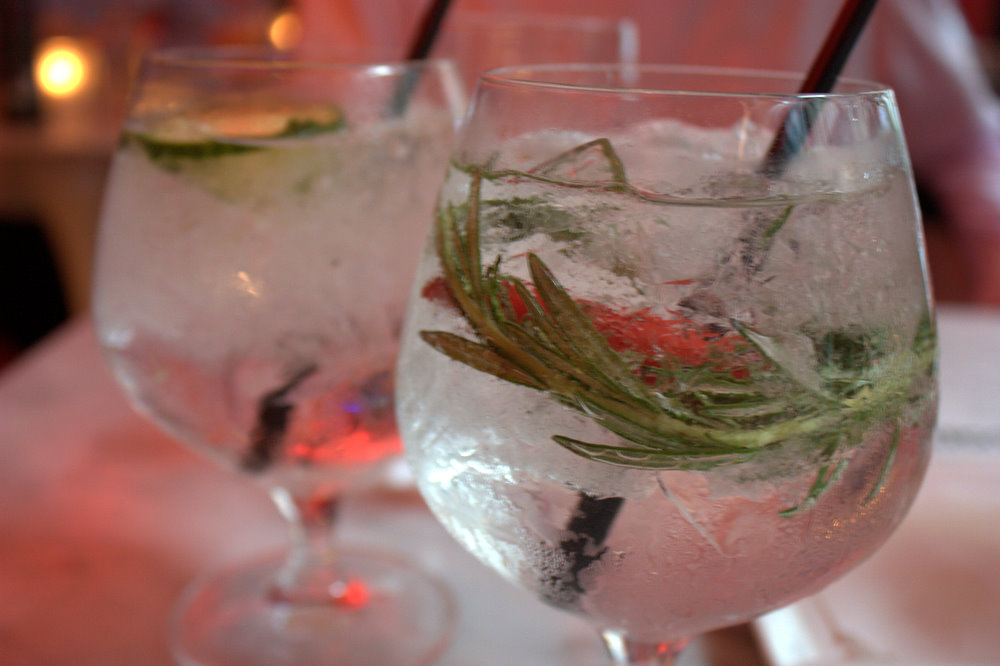
While light and effervescent txakoli is the wine most associated with the Basque region, gin and tonics are also a Spanish favorite. (I drank them by the tumbler-full at Madrid’s deco Museo Chicote) The list of modernized variations, each paired with a unique brand of spirit, including the rosemary and chile with No. 209 Gin above, was clever. Cocktails and a few shared plates of food might be the best way to enjoy the restaurant, which doesn’t feel like the right venue for a drawn out multi-course meal.

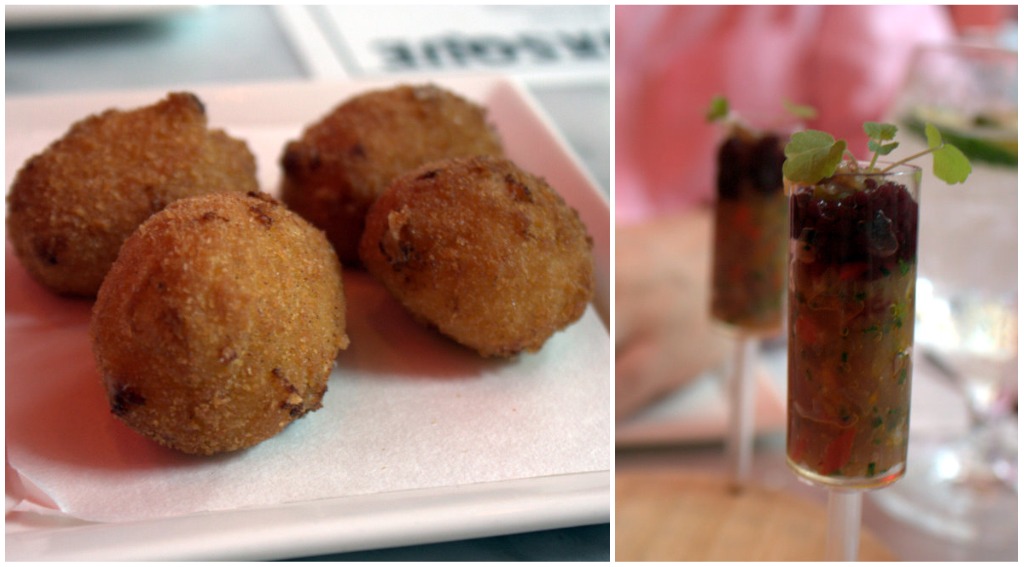
Bar basque starters

Idiazábal croquetas and yellowfish tuna tartare “push pops” with red wine caviar.

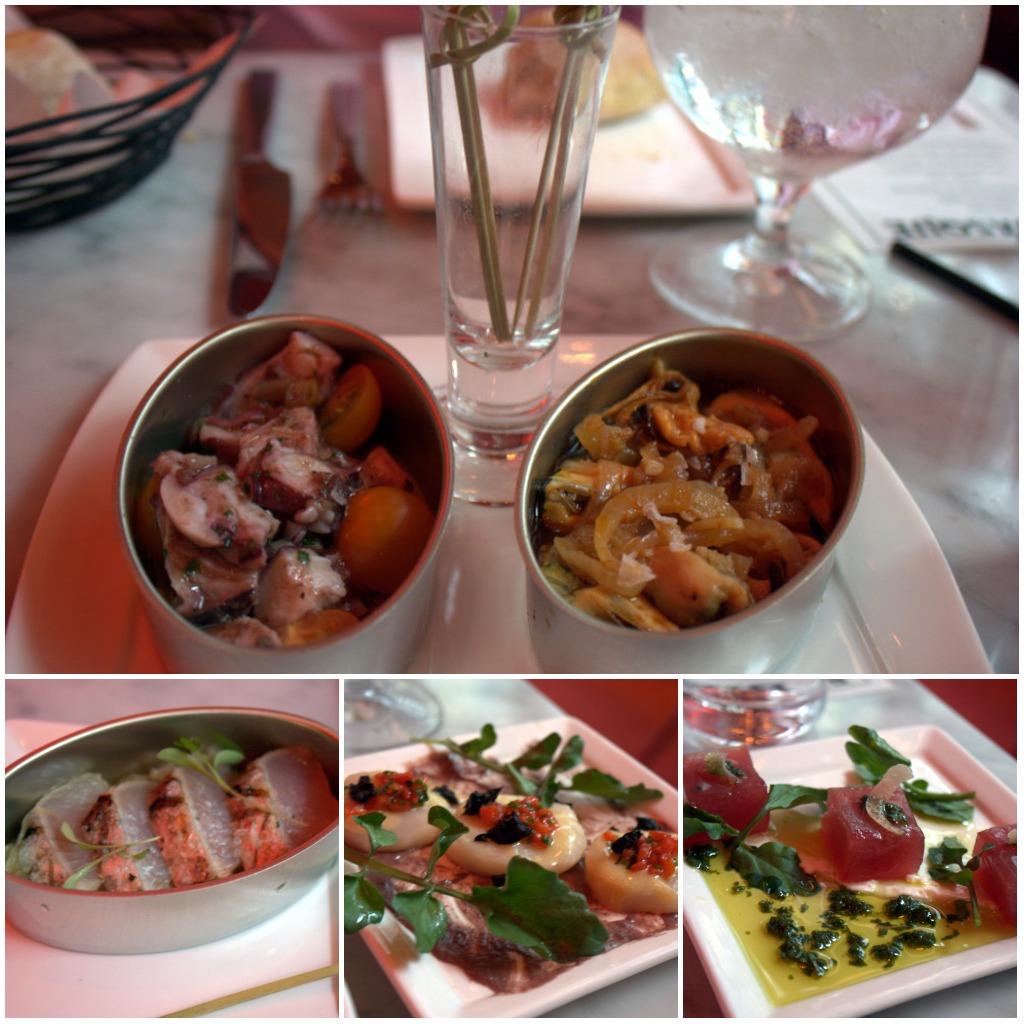
Bar basque crudo

Of the lightly marinated items playfully presented in cans—Spain is the king of preservas; entire grocery aisles are devoted to canned mariscos—the mussels with pimento de la vera, onion, garlic and fennel were my favorite. The meaty blobs, hit with smoked paprika seemed right on and the crimson oil and caramelized aromatics left behind made the best bread dip. 

There was also Spanish mackerel with shallots, chiles and coriander seeds, octopus, black olives and tomato confit, and Yellowfin tuna with ajo blanco and chimichurri. The only dish that felt a little clunky were the sea scallops with Mediterranean flavors. On paper black olives and preserved lemon seemed fine, but the olive puree smudged on the plate (which I genuinely thought was refried beans) overwhelmed the raw seafood.

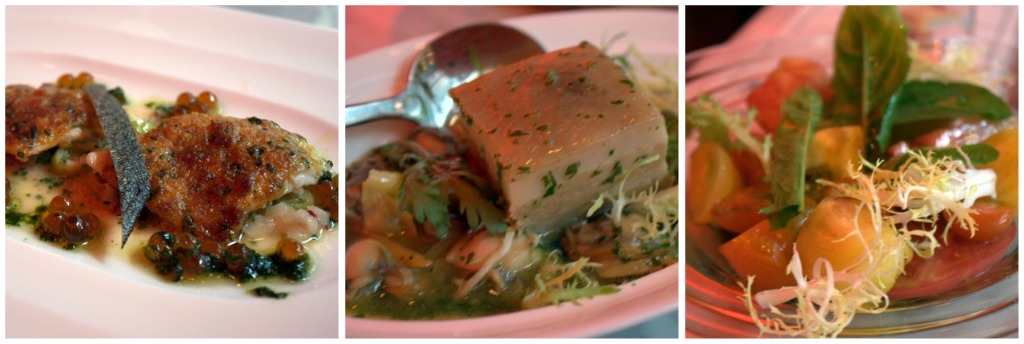
Bar basque mains

The smoked trout with jamon butter trumped the pudding-like pork belly with baby clams, if only because the fish had its crispy skin showcased.

The heirloom tomatoes with Pedro Jimenez sherry vinegar, were simple, greenmarket and somehow very American. I’ve been researching where to eat in San Francisco next week and this falls squarely under the hyphenated style they like to call Cal-Spanish. Everything gets the Cal prefix by using local produce and serving it simply.

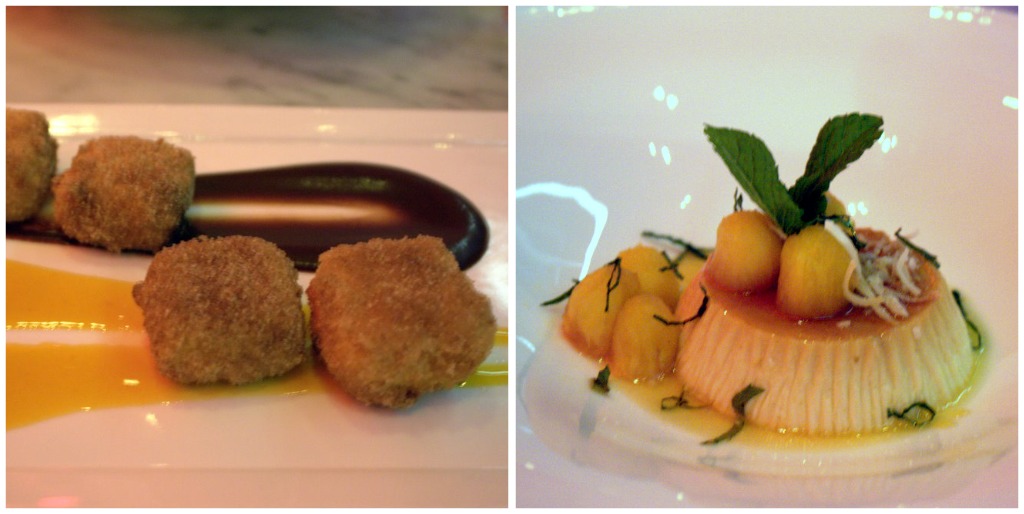
Bar basque desserts

Leche frita with chocolate and passion fruit sauces and piña colada flan with caramelized pineapple.

Is it ok to admit that the real reason I wanted to go to Txikito was to see the adorable food wallpaper in the bathroom? I’m a sucker for design. Fewer than ten blocks from Bar Basque, the Chelsea restaurant is cute, rustic, woody, the dead opposite of the theatrics occurring adjacent to the Eventi Hotel. Then again, on my way out my exit was blocked by a white-haired gentleman demanding enthusiastically, “Give me the best seat in the house!” I thought that only happened in movies. Also, that’s not someone who would appreciate pintxo-hopping.

Txikito morcilla

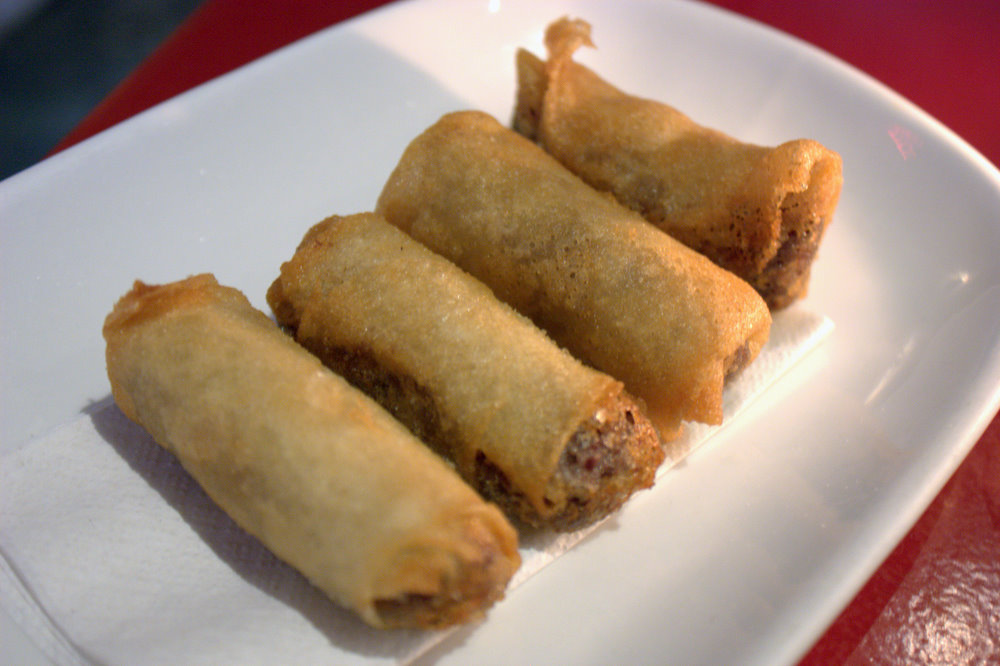
Like most Spanish restaurants in the city, the offerings tend to be more like raciones than tapas. The morcilla, stuffed into wonton skins like spring rolls, is mild in its fried shell and on the tapas end of the scale. Little rich bites.

Txikito melted cheese

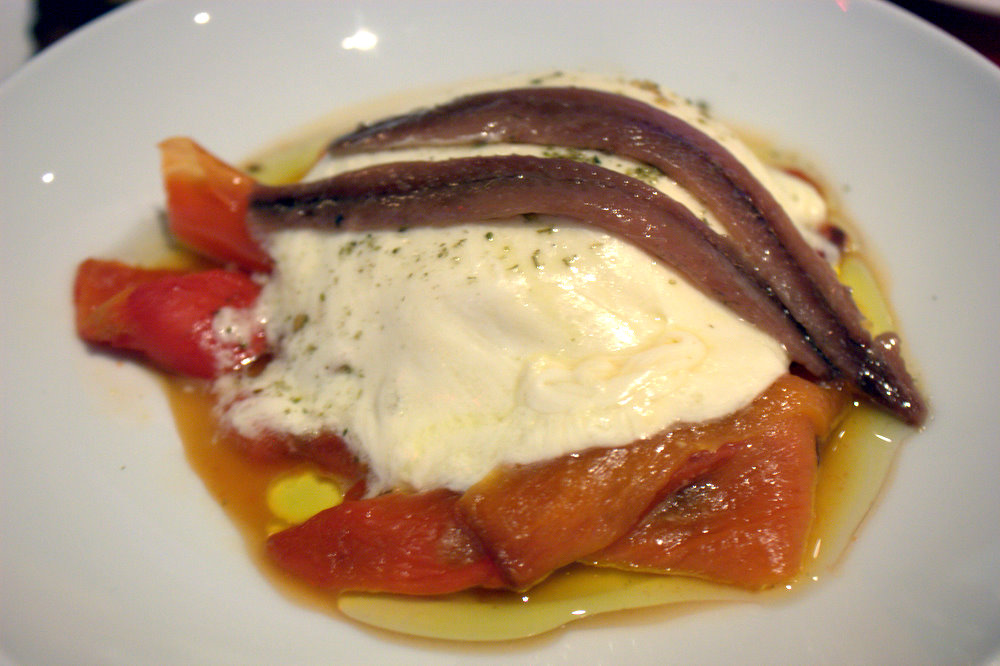
I was sitting at an odd angle from the blackboard, so I did not catch which mild, oozy cheese this was. Perked up by two anchovies and a bed of softened grilled red pepper strips, the fondue-style dish serve with bread was a little like Spanish queso, no Velveeta needed.

Txikito salad

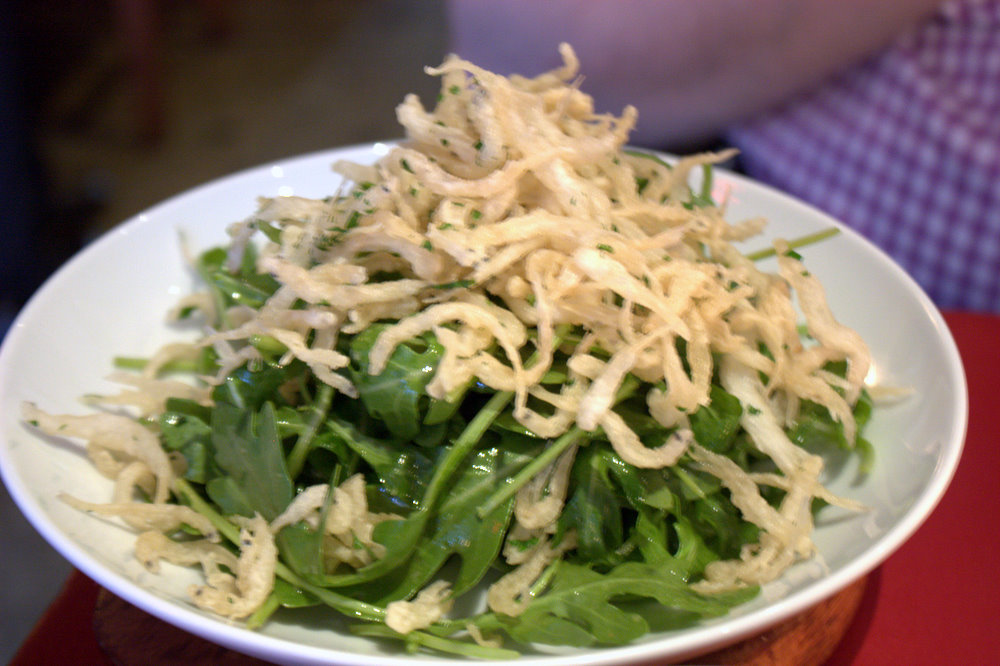
Arugula hides the poached egg, the most important part of any such dish. The tiny, battered, fried fish covering the whole tufted affair added great texture and a hit of salt like barely fishy canned onions. Who would like to make a green bean casserole with these instead?

Txikito squid ribbons

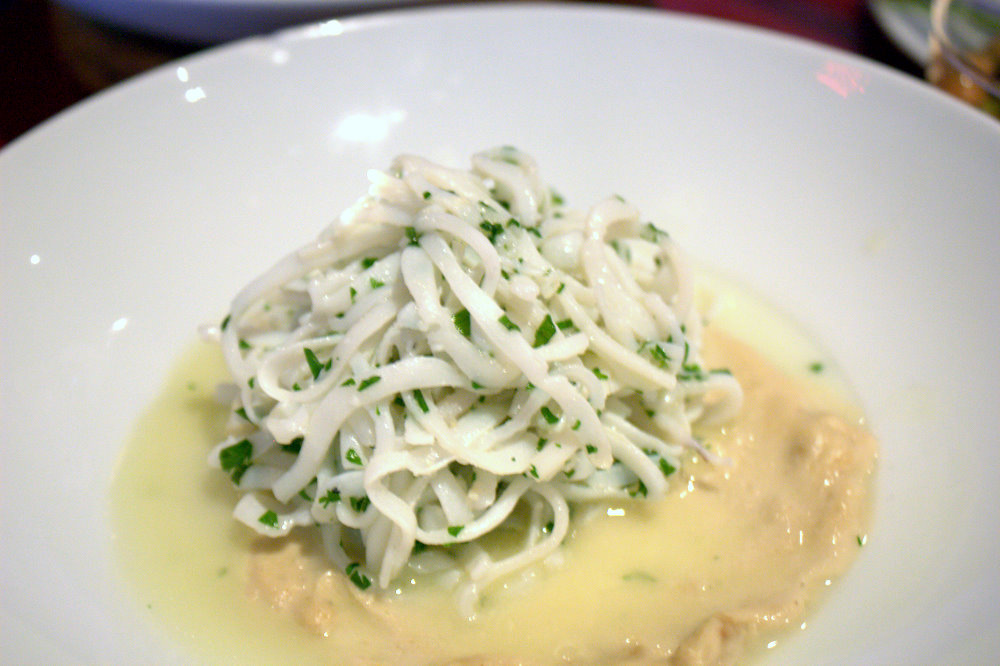
Txipirones, a.k.a. squid, cut into ribbons and served with…what was described as pine nuts and sweet onions. I had been picturing a sweet-savory thing with raisins even though nothing really led me to believe there would be any chunky dried fruit. This was more creamy,  rich with concentrated natural sweetness from the onions, and the kind of topsy-turvy dish that wouldn't be wildly out of place in San Sebastián.

Salinas, Basque chef Luis Bollo's new restaurant, is also on my radar. Though when I see a restaurant running specials like Salinas did this morning with Gilt City, I now get suspicious thanks to The Bad Deal.

Bar Basque * 839 Sixth Ave., New York, NY
Txikito * 249 Ninth Ave., New York, NY

Monte’s

I had only been to Monte’s Venetian Room, the so-called oldest Italian restaurant in Brooklyn that sat dormant for the past few years and was just reincarnated, once in its original state, probably around 2003. It was the last time I ever saw my stalker, an unstable former coworker (librarian, naturally) who originally seemed harmless because I thought he was gay and too old (late 30s, ha). I mean, it’s not like I get a lot of stalkers so I had to get the attention where I could find it even though it needed to be nipped in the bud. After two mid-afternoon gin and tonics at Monte’s bar, that was that was that.

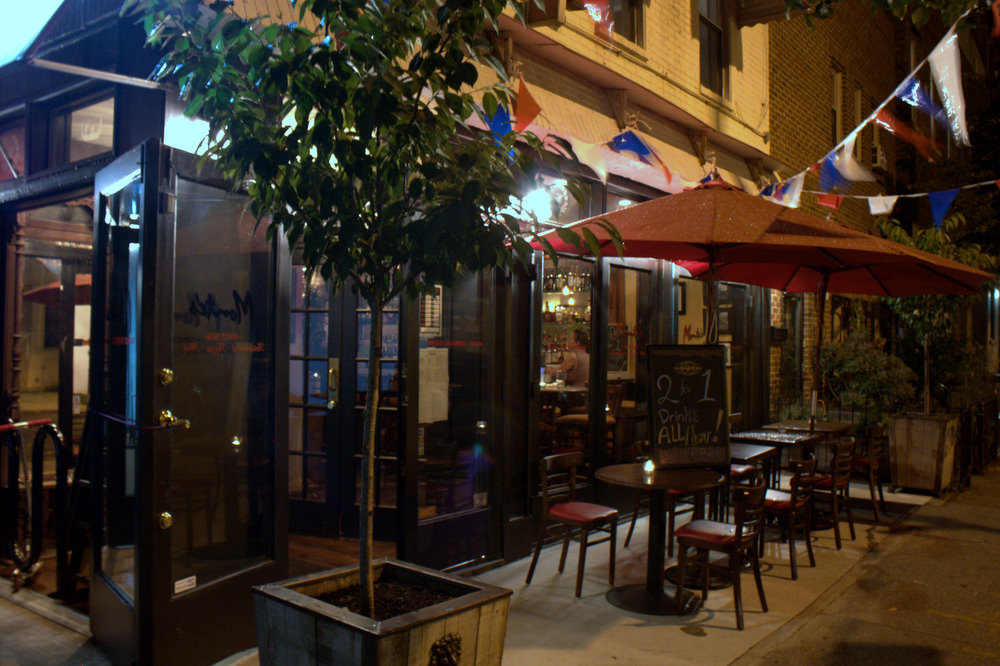
Monte's facade

On Friday night, half past nine, the bar was the liveliest section of the new room, Venetian mural removed, wood-burning oven installed. The two-for-one drinks advertised on the chalkboard outside probably had something to do with it. We had our pick of seats and choose a red booth mimicking the original the leather banquettes in the same shade.

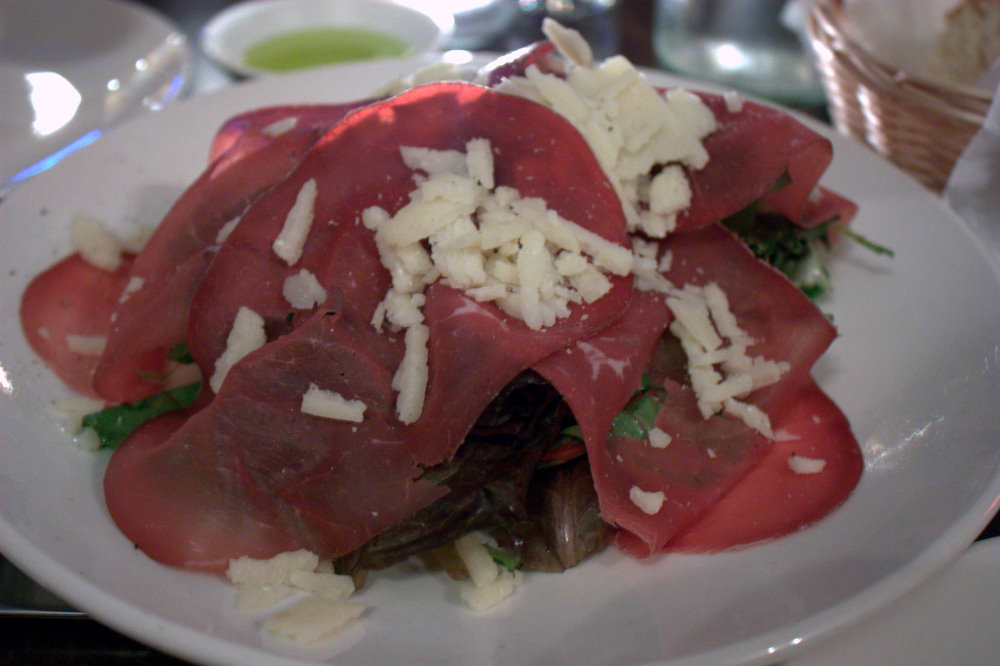
Monte's bresaola salad

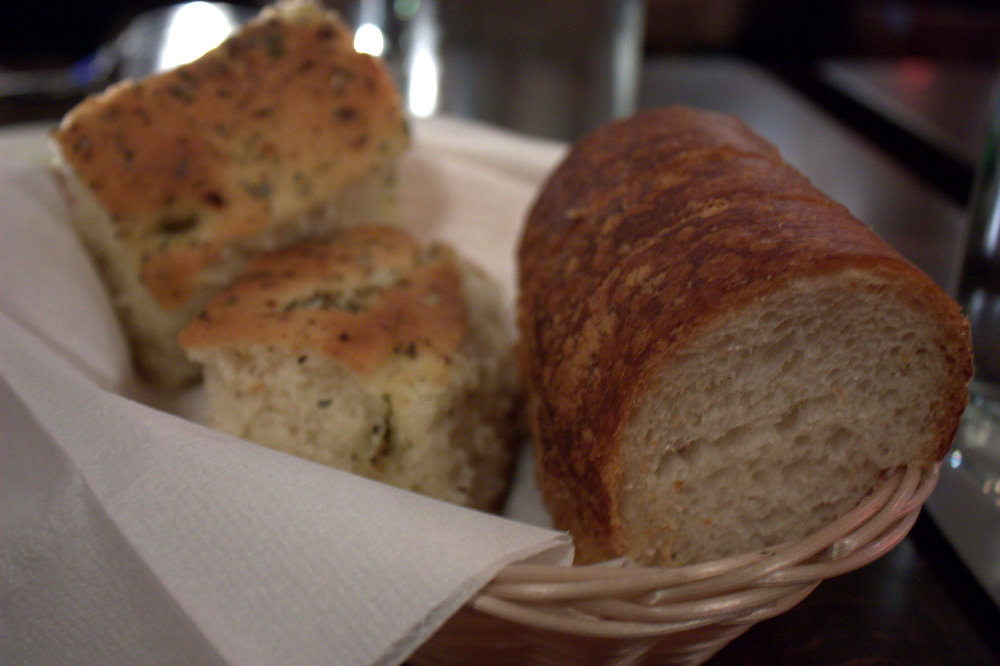
The arugula salad with lots of parmesan and thin slices of breasola was good and; the focaccia and crusty Italian bread was a nice accompaniment.

Monte's bread basket

So, too was the diavola pizza, layered with sopressata, briny olives bound by a generous application of mozzarella atop a crust more yeasty than crackly. How did I become too distracted to take a photo? That never happens, which could be the sign that I’m finally weaning myself from rampant picture-taking. It really wasn’t because I was concentrating on the food, even though the pizza was at least as good as anything else in the neighborhood.

That was the issue I got stuck on. Why was no one there on a Friday night? It’s not the cuisine. Even though I think the area should put a moratorium on Italian food, I know I’m not the norm. South Brooklyn is teeming with similar reasonably priced antipasti, pasta, secondi restaurants and they’re busy. I don’t mean destinations like Frankies 457 or really Brucie, Rucola, Bocca Lupo or that ilk, but comparable spots like Savoia, the enoteca next to Marco Polo, Fragole. Even Red Rose, which always looks a little down on its luck gruffly turned me away a few months ago. Not a single free seat on a Saturday.

That leaves location as the problem. Gowanus, as much as I love it, isn’t really Carroll Gardens or Park Slope. There’s not a lot of foot traffic, hence no potential spillover from neighboring restaurants. I’ve always thought much of Smith Street’s popularity was due to the volume of restaurants, not necessarily the food quality. It looks bustling; people want to go. And if one place is full, you pick another Thai/Sushi/Italian/Small Plates option.

(Part of the reason I forgot to take photos was because when I saw James’ orecchiette I brought up Gabrielle Hamilton’s Blood, Bones &  Butter because I had just reached the part where she was making that pasta in Italy and I then started going off on a tangent about how had described Smith Street as “that minor-league stretch of Brooklyn that always disappoints,” which I wouldn’t disagree with. Then she lost me with the following overblown inaccuracy: “I would rather starve and kill my children—Medea-like—than eat the truffle oil omelette with chorizo ‘foam’ and piquillo peppers at Soleil or Blue Bird or whatever those restaurants are called…” Twee names maybe, but Spanish flourishes, foam and truffle oil are totally foreign concepts in the vicinity.)

Luna Rossa, at the butt-end of Court is in the same situation as Monte’s. They both have similar menus and aren’t grabbing attention on a non-prime block. I think people just go to Luna Rossa because they have a back garden. Perhaps, Monte’s could work the not-yet-realized patio beer garden mentioned in the press. I’m not sure what the solution is, but you have to stand out.

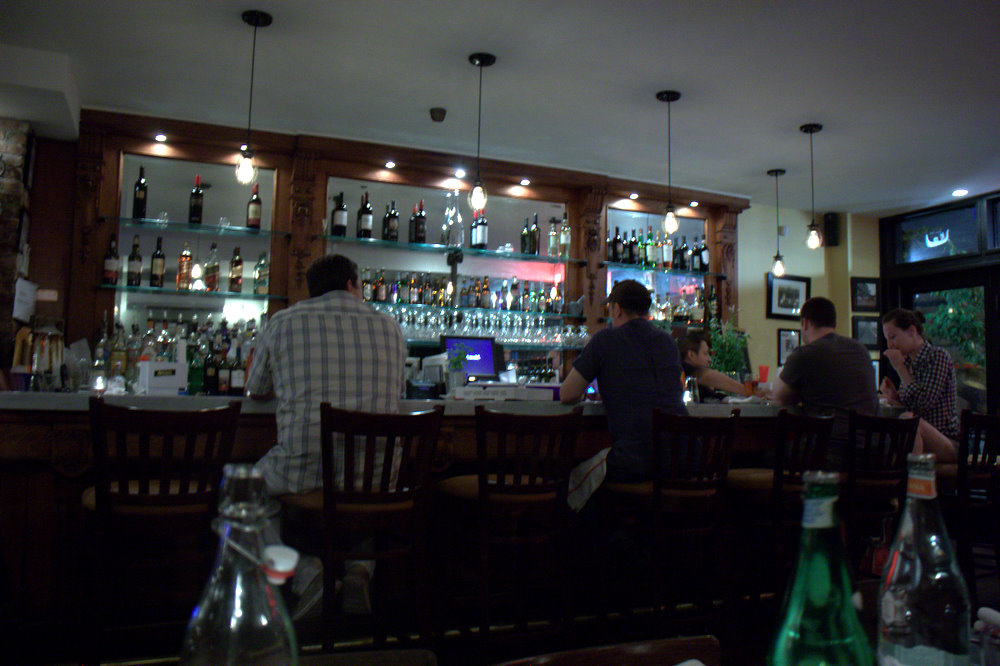
Monte's bar

One of the owners happened to be picking the brains of a young couple at the bar that had replaced the earlier, raucous crowd of locals. Are Open Table, Seamless Web, foursquare and email marketing blasts worth it? How to get on “foodie blogs?” Ostensibly, I work in digital marketing (and even wrote a report called Digital Dining: Chain Restaurants Add Social Media, Mobile to the Menu) but frankly I don’t feel comfortable giving advice because it would only be something obvious and generic like create a quality product and people will come to you. That’s as obnoxious as book deal bloggers talking about cream rising, passion, doing what you love and the money will follow, blah, blah.

I might try to capitalize on Monte’s history rather than coming in as just another Italian-American restaurant in an area thick with them. Keep the pizza, add updated classics, Rat Pack era cocktails or even modern cocktails with Italian flourishes–Fernet Branca is in, right? It could be pulled off by someone with a sharp aesthetic, but it would be tricky to avoid crossing over into kitsch or alienating whoever this target audience is supposed to be. Astor Room hasn’t been wildly successful with this approach, though, so I will zip it now.

Monte’s * 451 Carroll St., Brooklyn, NY

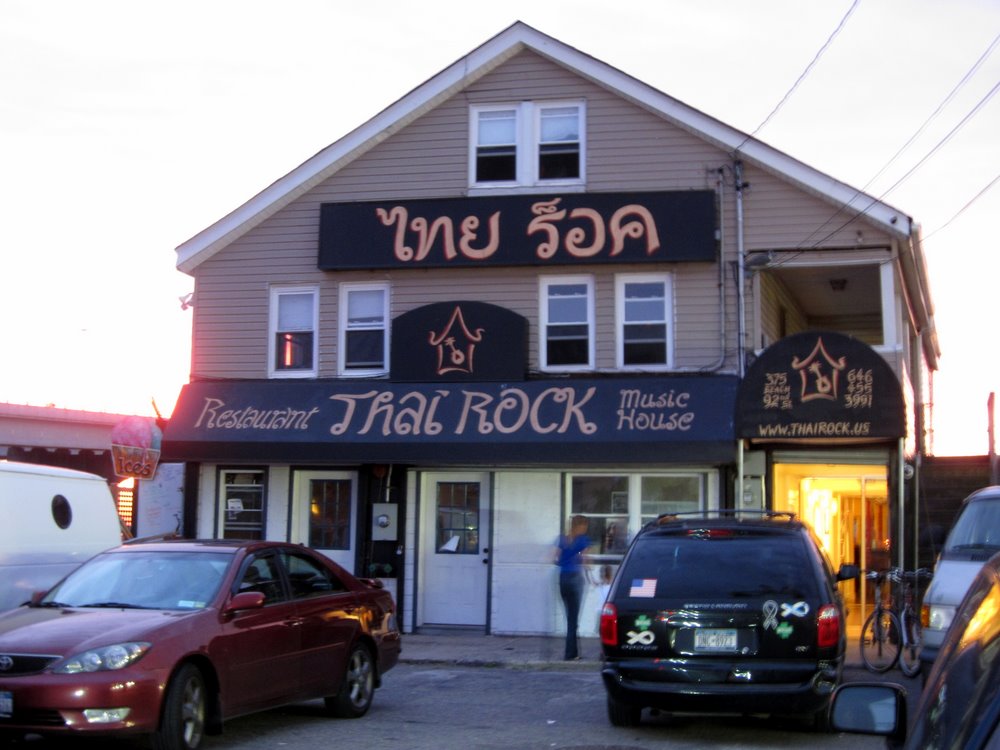
Thai Rock

It is a rare circumstance where I allow a pad thai-and-chopsticks joint into my life, though if there’s any occasion for breaking rules it is on our nation’s birthday.


IMG_0329

Really, I just wanted to see this rough-and-tumble “The boardwalk is the new Bedford Avenue” paradise I’ve been inundated with for the past few months, and peek at my friends’ Rockaways summer rental. By the time I showed up, though (I have no interest in sunning, swimming or sand) everything was closing up and the line for tacos was easily 30-minutes-long.

Luckily, I remembered a press release I’d been sent months ago—and never thought I’d need—advertising a new Thai restaurant. And it turned out we’d only parked two blocks away. After a long weekend of docks, cover bands and sunsets and on Maryland’s Eastern Shore I could still stand more, though I’d had my fill of crab, crab cakes and fried clams. Why not Thai food, rainbow martinis and a live tribute to Credence Clearwater Revival and Louis Armstrong?

It would’ve been cool to discover blistering hot seafood and papaya salads so I could pretend I was in Hua Hin, but the Rockaways are no Thai beach. The food was as expected, lots of pick your protein curries and toned-down spice. To their credit, the menu is surprisingly far-ranging. Sure, pad thai tops the list of noodles, but they also serve less common rad nah, khao soi and khanom jeen. I certainly haven’t seen any of those three in my neck of the woods, despite a Thai restaurant practically being on every block.

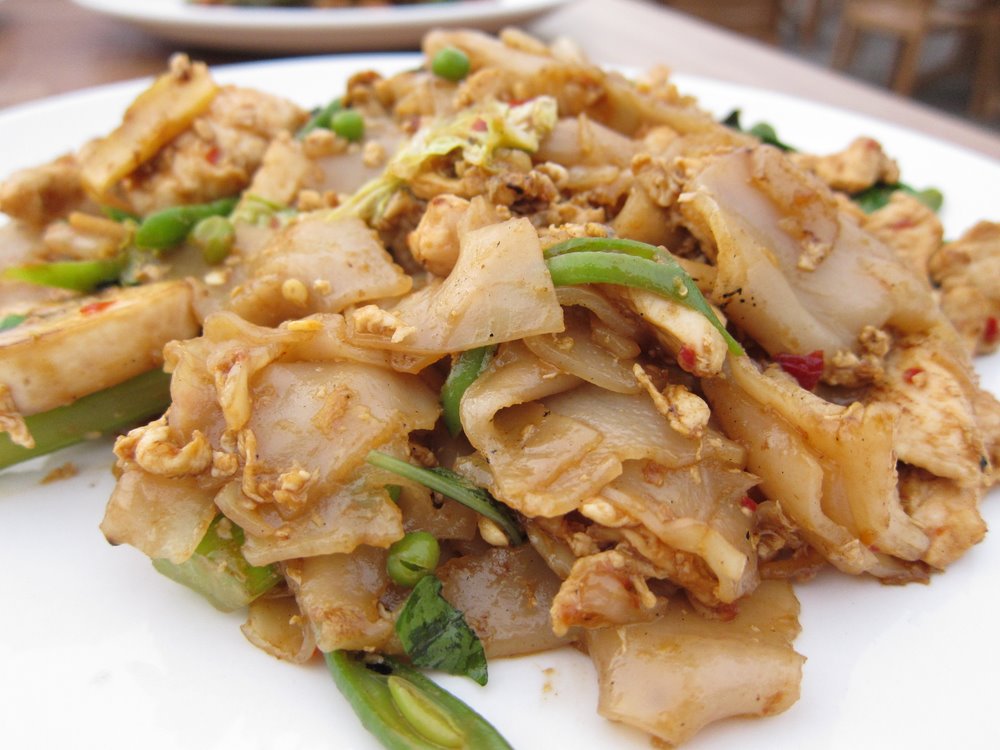
Thai rock pad kee mao

If we order noodles, it’s usually pad kee mao, though. Here, with chicken (as well as Chinese flourishes: baby corn, peas, bamboo shoots and celery). It could’ve used a side of fish sauce with sliced chiles. I did not notice if they had diy condiments.

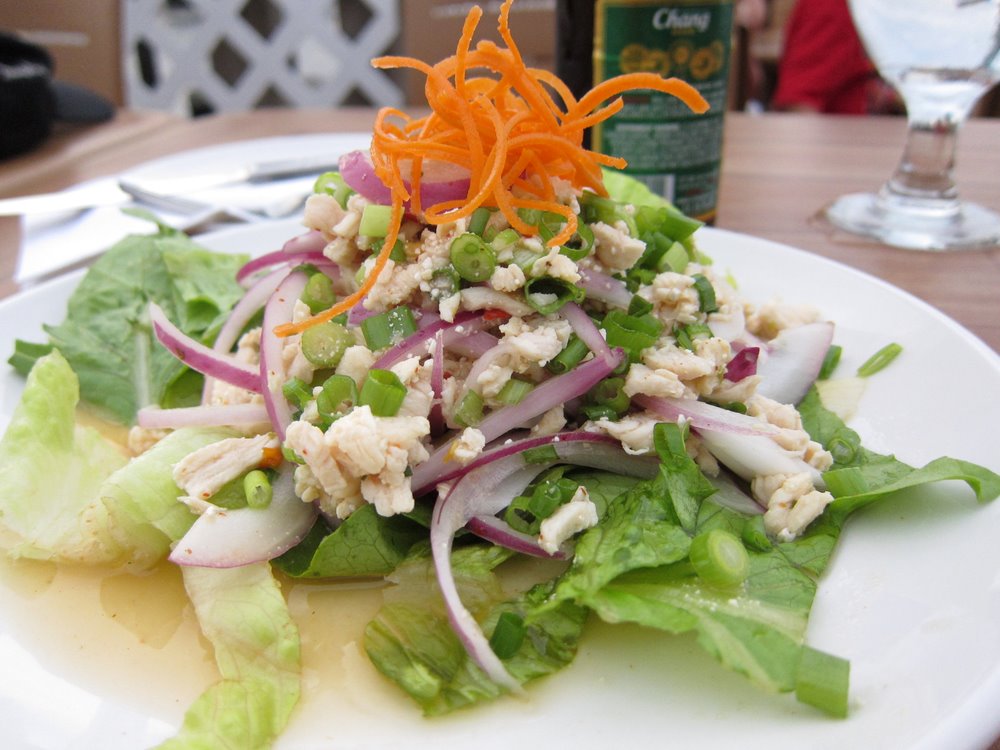
Thai rock chicken larb

The larb, chicken, also had a good enough foundation—and the necessary roasted rice powder—but leaned more limey than hot. I like my Thai salads more punishing.

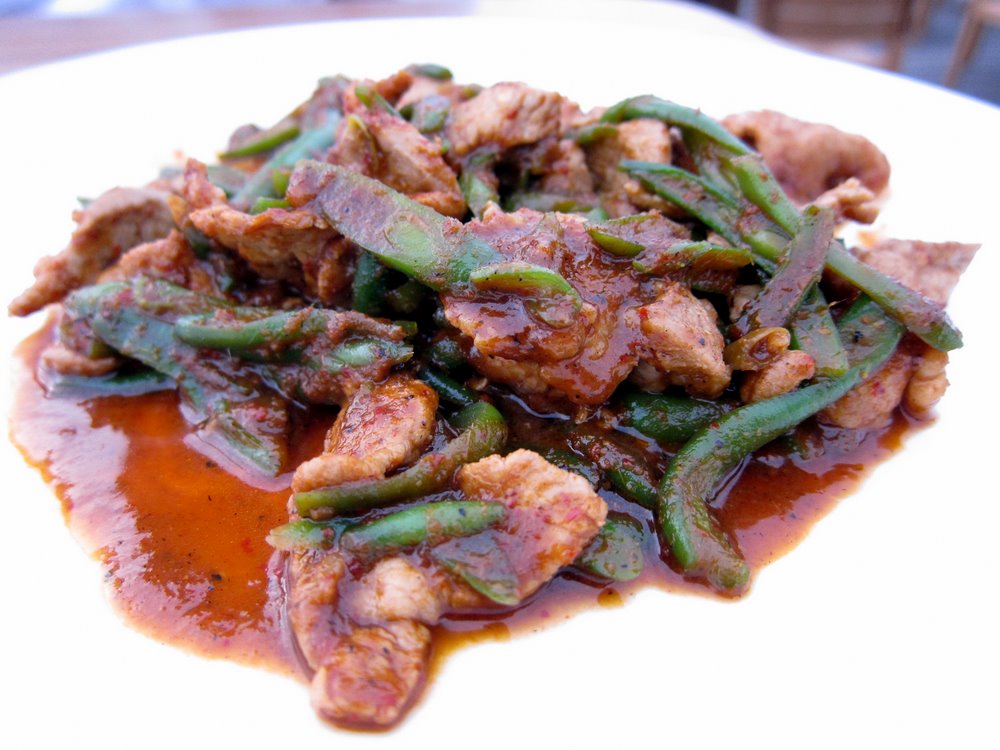
Thai rock pad prik king

Rich and salty pad prik king was more purist, just pork and green beans, no superfluous vegetables.

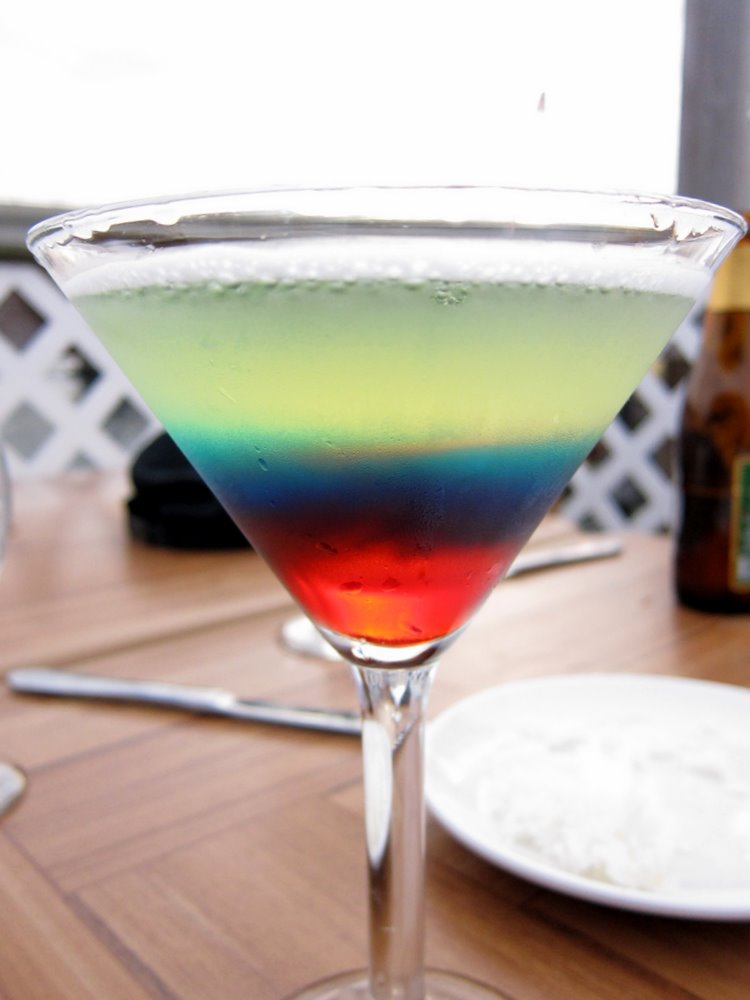
Thai rock rainbow martini

Chang beer was an appropriate starter, but when in Rome a so-called rainbow martini had to be the follow-up. Really, it’s a pousse café, a nearly extinct style of cocktail that will most certainly show up in artisanal form soon if it hasn’t already. This trio of colorful liqueurs tasted like gummi bears. I want this version.

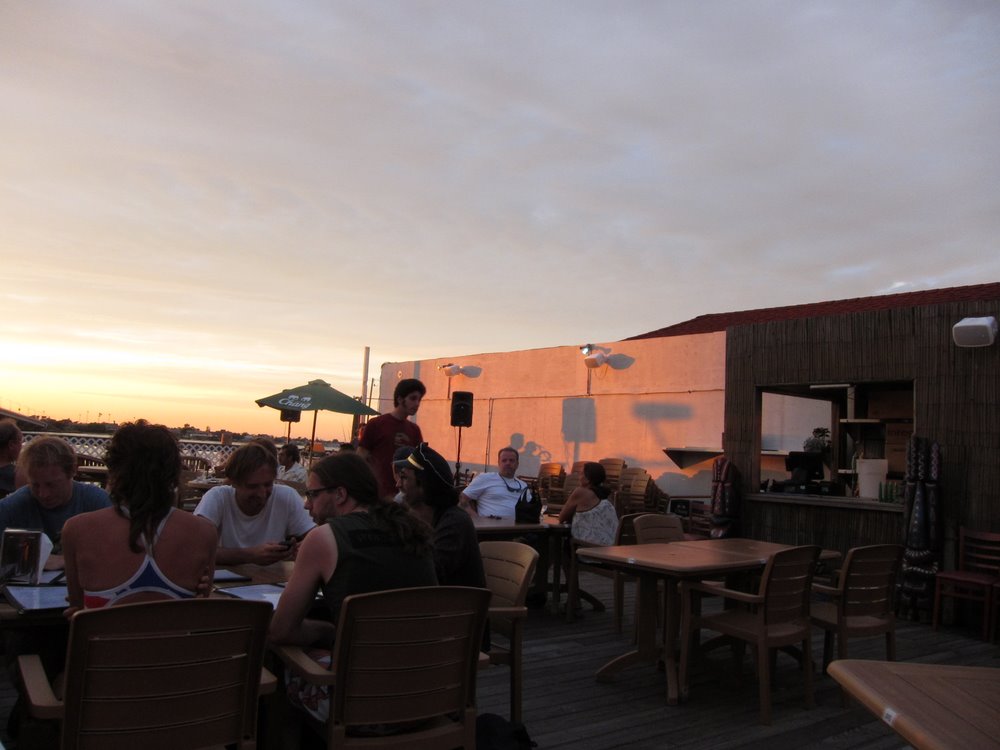
Thai rock patio

Since it was my first visit (yes, in 13 years here) to Rockaway Beach and the demographic appears to be shifting rapidly, it’s hard to say who Thai Rock’s audience is. On this early evening they were cooking for Europeans with babies, young, clean-cut couples who probably don’t live more than 20 minutes away, law enforcement-looking middle-aged men in polos, skinny girls with wavy mullets and high-waisted denim shorts over American flag swimsuits. The pair behind us complained that their food was too spicy, which only convinced James that our orders had swapped. I doubt it.

Visitors are looking for familiar flavors (while overlooking the baby corn) and a great view. And that’s what they’ll get.

Thai rock 4th of july sunset

Thai Rock * 375 Beach 92nd Street, Rockaway Beach, NY

Arzak

I briefly chatted with Elena Arzak as she said goodbyes to groups of lunchers slowly trickling out the door in time for what would be American dinner. When Mugaritz invariably came up (I imagine at least 80% of foreign Arzak customers likely dined at both in quick succession) she said something curious: “They’re French.” Obviously chef Andoni Luis Aduriz is not, so she must’ve meant the food. In turn, that would imply that Arzak is more Spanish. Or should I say Basque?

As a librarian by training, I enjoy categorizing things and what designation to give these topsy-turvy restaurants is problematic in the same way that food cooked by Indians in Singapore but not necessarily found in India, confounds me. Not to eat, but to designate in tidy checkboxes.

Initially I might’ve said Arzak and Mugartiz were both Spanish because they’re in Spain. But this is Basque country. But are their ingredients overtly Basque? Kokoxtas are used at Mugaritz to non-traditional effect. Green tea, yuca and huitalacoche are used at Arzak.

 
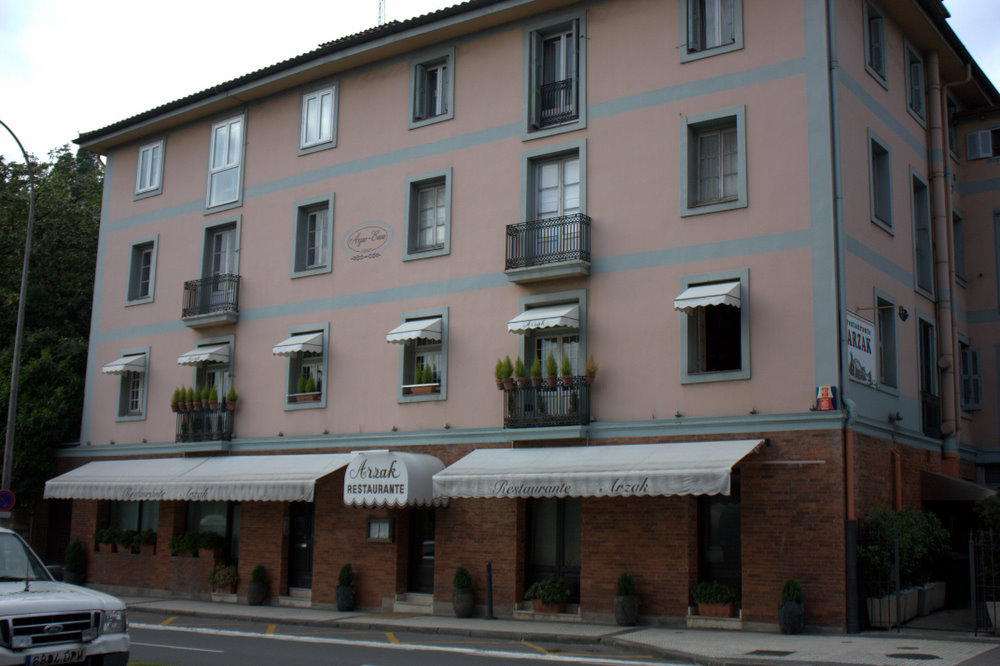
Arzak facade

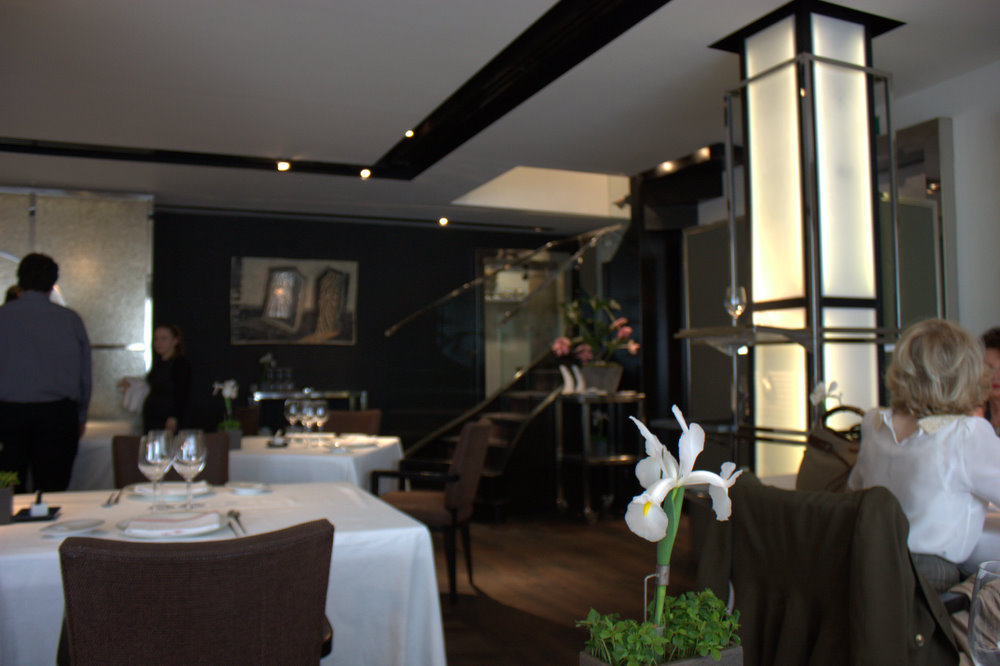
Arzak, unassuming in the same residential part of San Sebastián since 1897, lacks lush grounds, livestock or herb gardens to ogle. The restaurant is being run simultaneously by the third and fourth generations and is firmly entrenched as a local restaurant. It’s unquestionably Basque—at least in spirit.

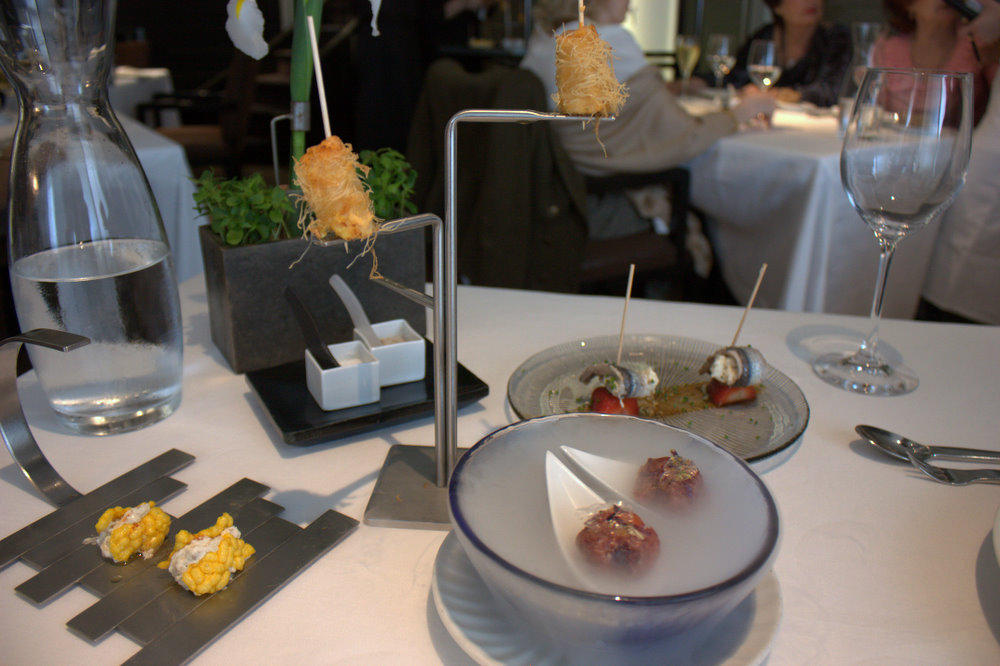
Arzak amuses
All of the amuses, plus the corn soup with figs and morcilla, arrived at once. (I tried not to go overboard with the individual glamour shots and just focus on tasting the food. If anything, note-taking is more useful than photo-snapping because a month later I only have fleeting memories of how things tasted.) You must be quick with that camera or you’ll miss the dramatic dry ice effect created when tea is poured around the sweet-salty ham and tomato balls. On the left is a puffed yellow rice filled with a wild mushroom mousse. Displayed on the spindles are nuggets of kaitaifi-wrapped kabrarroka (this translates to scorpion fish, but I think is similar to hake) paste. I noticed the crisped vermicelli being used on at least one pintxo, maybe at Zeruko. Strawberry halves topped with rolled sardines was the most unusual combination, though the oil and sweetness worked. Fruit and fish can be friends—or at least acquaintances.

I decided on a Bierzo wine because…frankly, I’m more knowledgable about food than wine and yes, Michelin starred restaurants in Spain are where you can totally dork out on Riojas, but I didn’t want to misstep with a pricey bottle. Bierzo is more of an up-and-comer in the US, fairly inexpensive and perhaps more versatile for a tasting menu since Mencia grapes are lighter than Tempranillo or Garnacha. Plus, I recognized Descendientes de J. Palacios Petalos del Bierzo as being a forgotten wine on my to-try list from a few years ago. Bizarrely, this exact bottle was called out in a Food & Wine article about Pinot Noir alternatives I just found at the gym. The only odd thing was that on the menu it was listed as 2007 and I was brought a 2008. The presenting and tasting of the wine is usually uneventful and I’ve always secretly wished I had something more to say during the ritual. And yet I didn’t make any mention of the bottle discrepancy; it just didn’t seem worth it with the language barrier and price point (this is like a $22 wine in NYC—I think it was marked up to 40 euros at Arzak). How different could the two years really be?

Unless you ask a million questions or are privy to behind-the-scenes looks at the involved food preparation, you will never know how complex a dish is based on menu description, and not likely through taste either unless you’re a total pro.

I’m not a sensual eater (and generally hate the word sensual). I like a dish more after I understand what has gone into it, but I don’t think anyone should have to know the 20 steps and ingredients incorporated to enjoy a meal. It should work both ways even if peeks into the process add meaning.

Arzak cromlech y cebolla con té y café
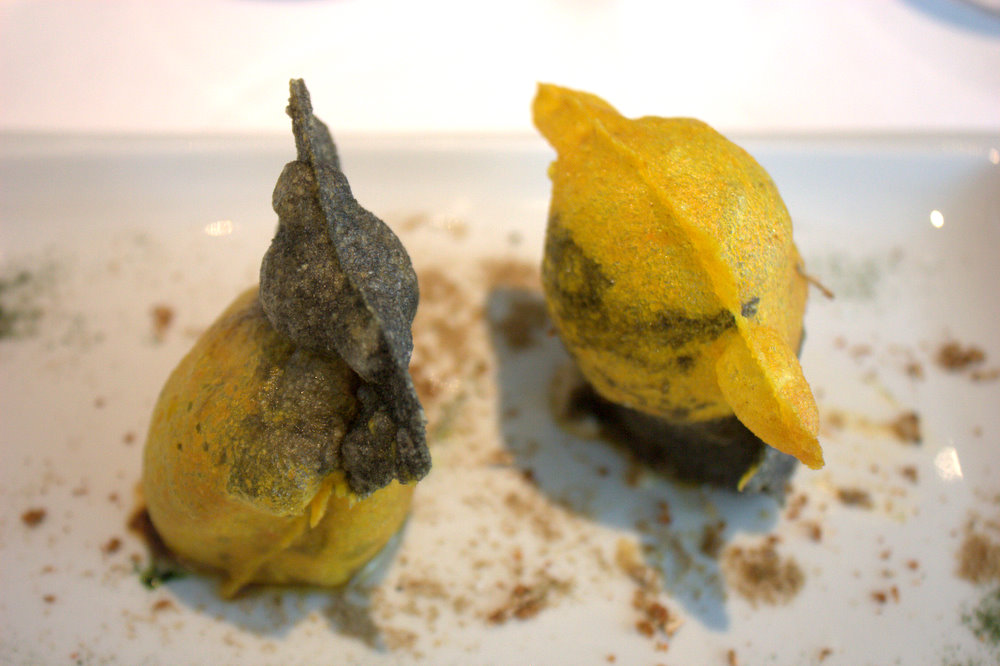
Last weekend I watched the new Cooking Channel show with the dopey title, From Spain With Love, and the host was shown by the Arzaks how this dish, cromlech y cebolla con te y café, was made. Me, I only knew that onion, tea and coffee were ingredients based on the description. Now I know that the shells are made from dough of yuca and huitalacoche that puffs when fried. The foie gras nugget that sits inside was detectable when eaten—you’re instructed to quickly flip them over as not to lose the filling from the open base and eat the creation out of hand—but I missed the green tea nuance that I now know is there.

So not Basque in flavors, but completely so in conception. A cromlech, as I neither learned from TV nor from description but from the internet, is an ancient circle of burial stones. Grave markers on a plate, essentially. More morbid than playful? I thought they resembled the freakish looking Dumbo octopus.

Arzak bogavante coralino

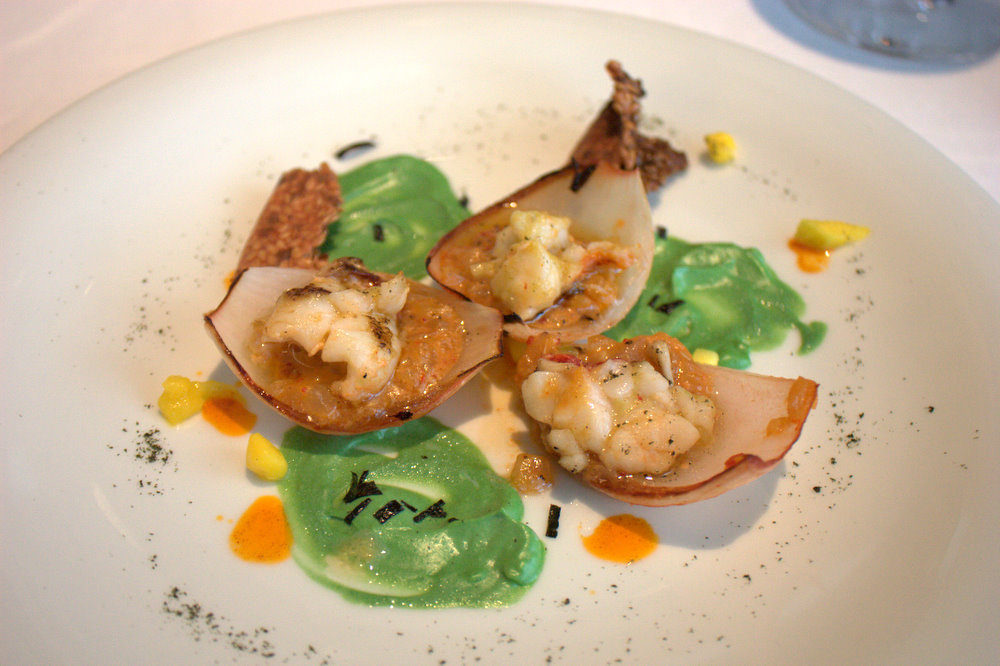
Bogavante coralino was significant for its use of kaolin, the clay I’d also seen used at Mugaritz. I want to say that the stiff, chalky smudges were green from chlorophyll, but I can’t find any evidence of that. The sesame crisps, soft lobster meat and onion crunch provided much contrasting textures.

Arzak side salad
Many of the courses, as well as the desserts, came with little sides. I didn’t keep track of all of them, but these greens that sat atop tapioca pearls, accompanied the lobster.
Arzak mejillón y huevo espolvoreado

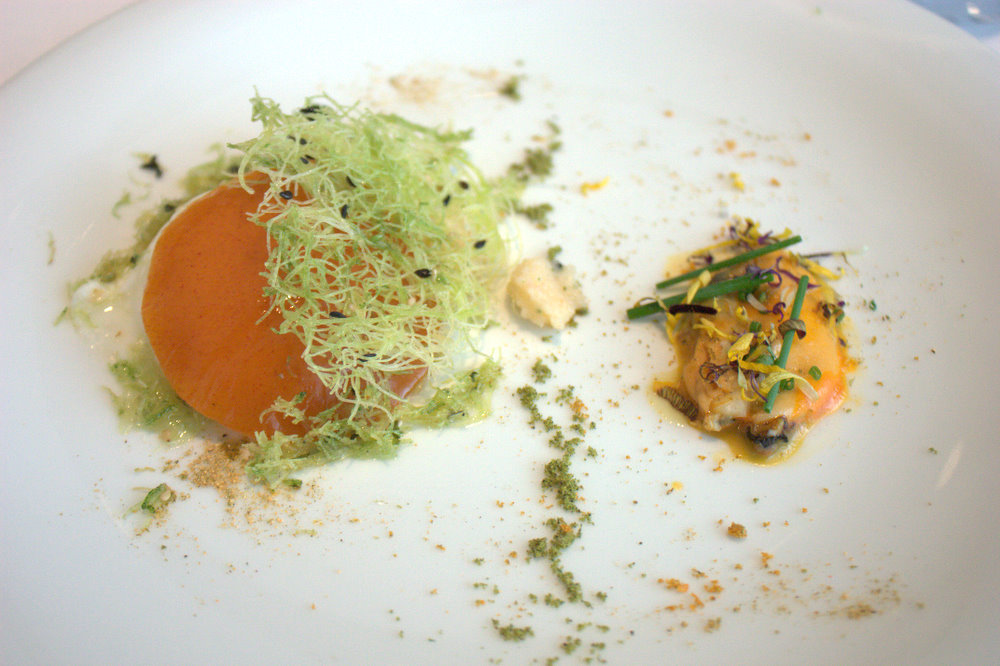
Mejillon y huevo espolvoreado. I completely forgot about this course. The yolk was not a yolk but an orange jellied disk made from mussels. Sometimes I think you’d need to eat each dish at least twice on separate occasions to get a true feel for them.

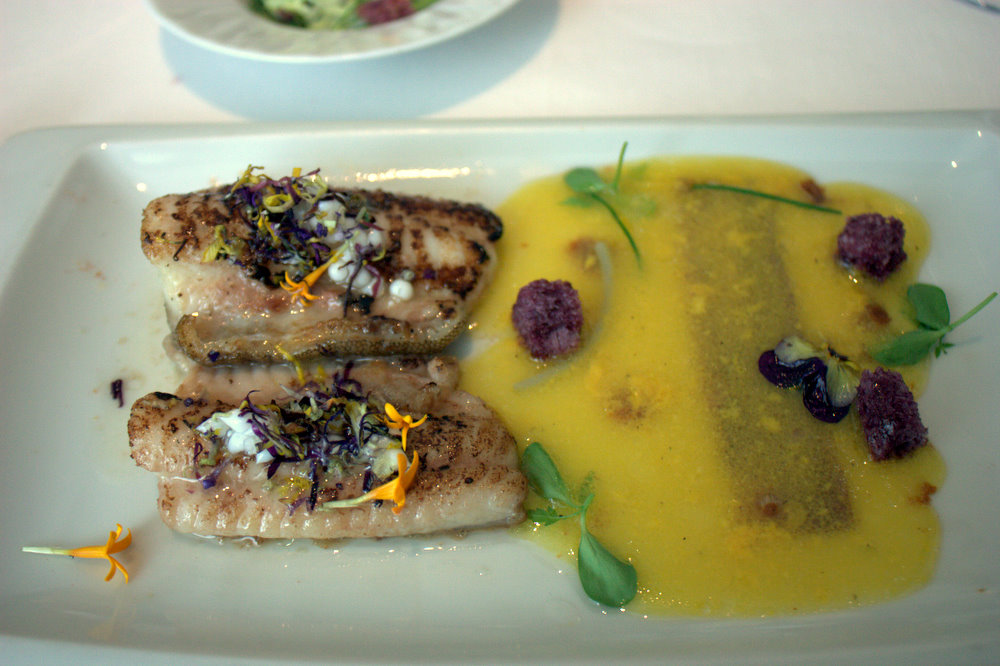
Arzak rape marea baja
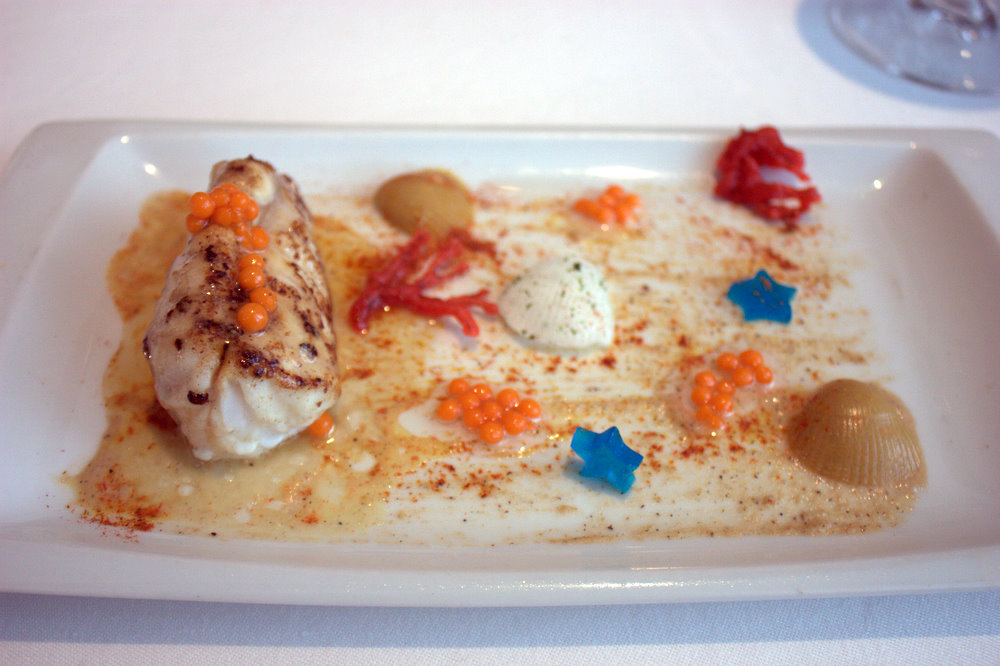
For the fish course, I chose rape marea baja because I’d loved photos I’d seen of the monkfish paired with tropical shades and crystalline blue stars flavored of curacao. I will always order the blue thing. The flavors were very light, though, some shells mildly fishy, others sweet. The coral was tempuraed seaweed (and I was given more shells and coral on the side). I wouldn’t have noticed how light if we hadn’t swapped plates half-way through and I noticed how much more distinctive the sole was.

Arzak lenguado con mamia
Lenguado con mamia
, paired with an orange sauce and sweet red wine soaked croutons had more punch. I’m assuming the head cheese was the thin, meaty strip hidden beneath the pool of sauce. Mamia is a curded dessert, which I’m guessing (always with the guessing—I take back any earlier hesitation; this food is super Basque, at least in a way that could only make total sense if you were familiar with the original) is the thick white topping on the sole. Maybe I just liked this dish because of the sweetness; their penchant for seafood and sweeter accompaniments was new to me.

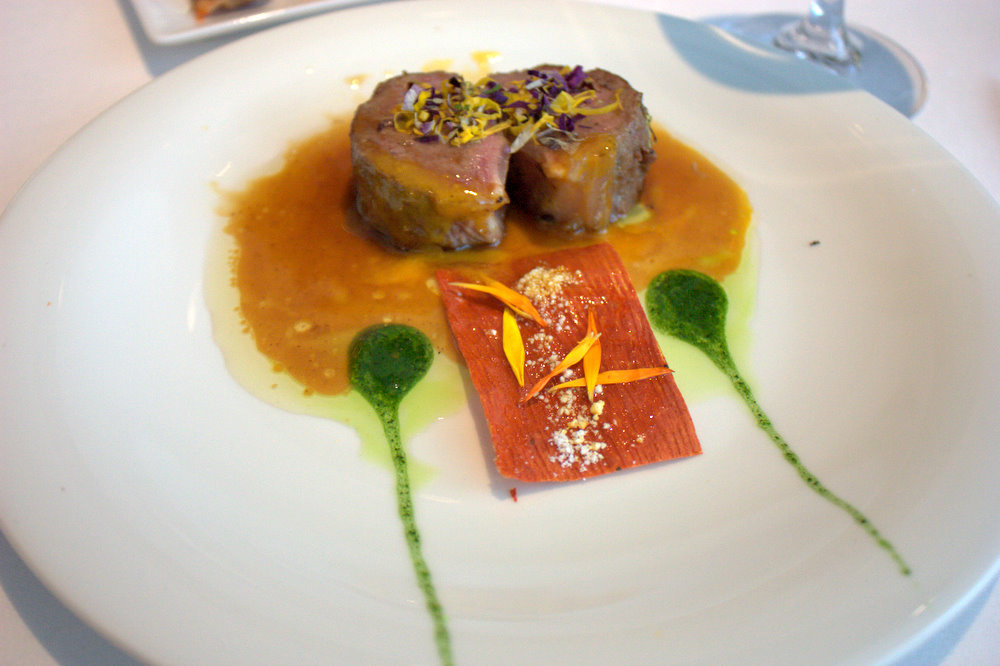
Arzak cordero con romero y curcuma con salsa
The meats, while delicately portioned, had heft. I picked the cordero con romero y curcuma. Despite the flourishes—flower petals, of course—and rosemary infused oil with red pepper sheet, this was not a wildly untraditional lamb dish, but a very good one.

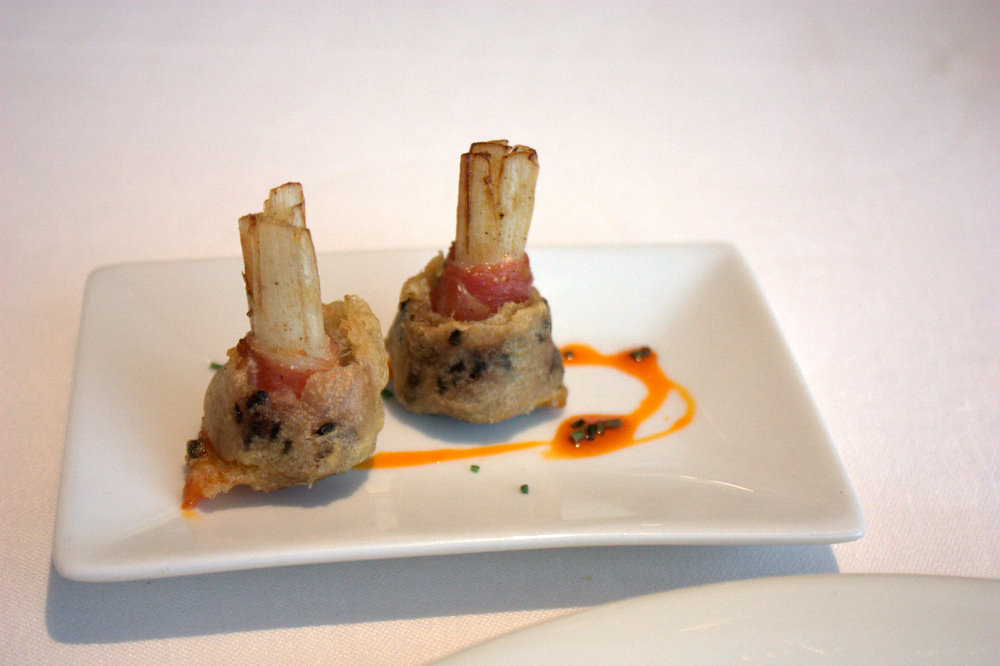
Arzak jamón y esparrago
Its side was white asparagus stubs wrapped in jamon and served as tempura.

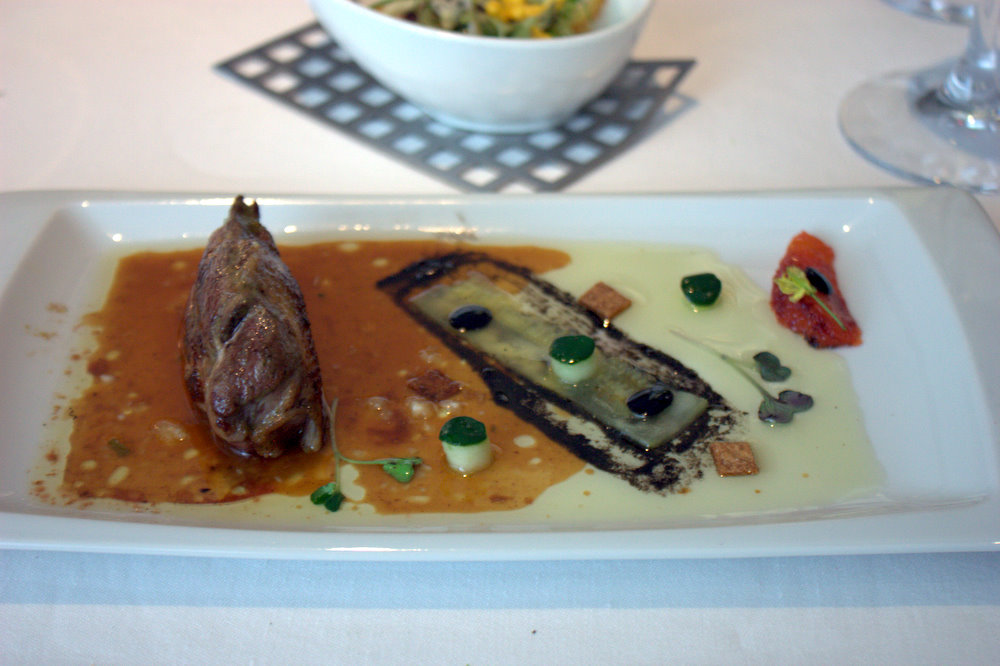
Arzak pichón asado con maíz y flor de azaha
Pichón asado con maíz y flor de azaha. The pigeon with corn and orange blossom was nearly as good. Black olives and cucumbers rounded out the flavors.

Arzak side
A side salad with a little pigeon leg.

Arzak sopa y chocolate entre viñedos
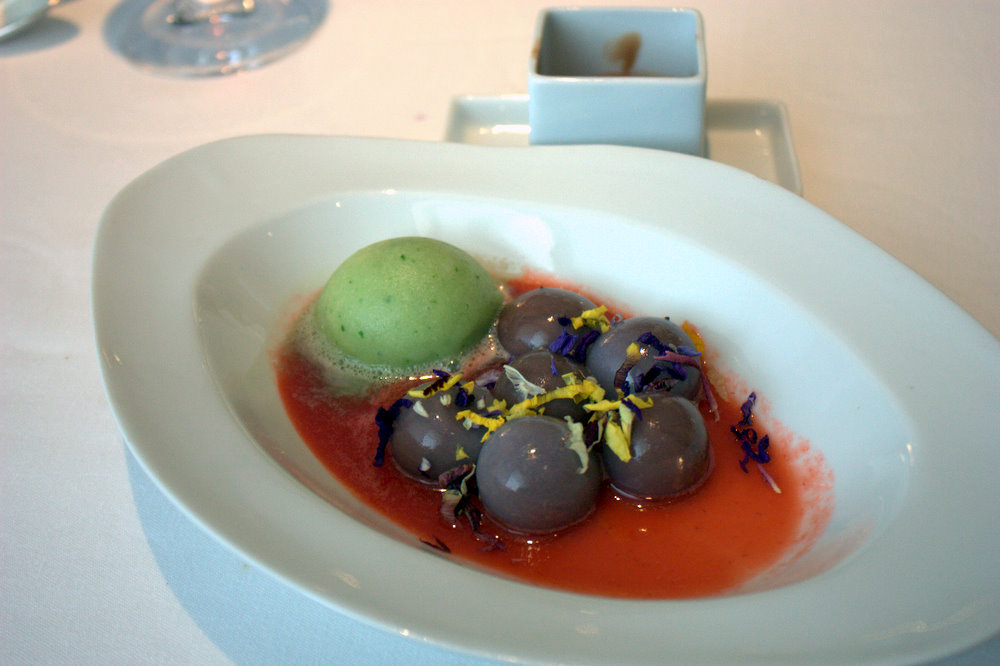
We said yes when asked if we liked chocolate. I don’t know what happens if you say you don’t. I suppose you’re not served the sopa y chocolate entre viñedos, a wavy bowl containing a shallow pool of strawberry soup occupied by shiny grape-like blobs filled with chocolate. An even bigger sphere of basil ice cream lies half-submerged in the pink liquid. More ice cream, I want to say chocolate, was served in the square dish.

Arzak jugando a las canicas de chocolate
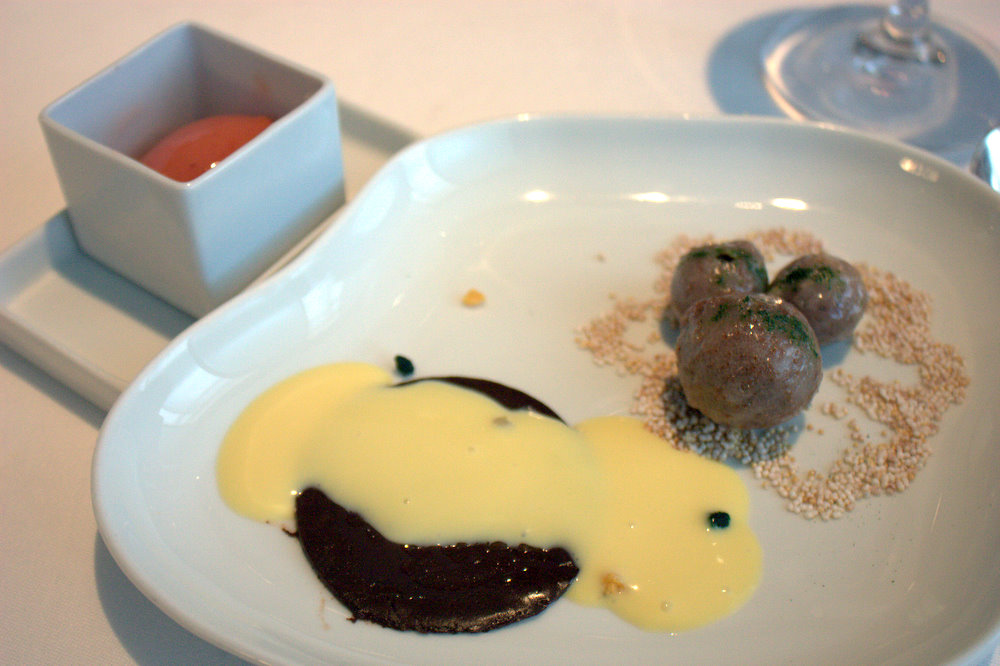
Jugando a las canicas de chocolate
. More chocolate orbs, these more wizened and meatball-like in appearance. Or I should say marbles since the dish translates to “playing with chocolate marbles.” The side ice cream for this was dessert was tart, pink and dubbed “tutti frutti.” I might have guessed strawberry bubblegum.

Arzak fractal fluido
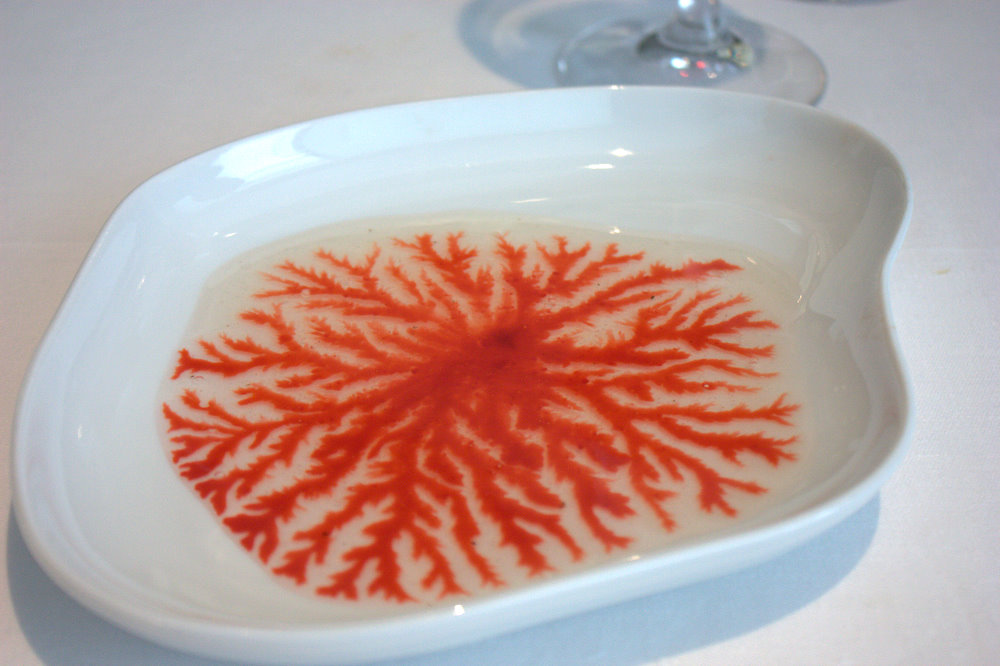
And one more. Hidromiel y fractal fluido starts with a dish of clear honeyed water. As red dye (made from vodka, carminc acid, sugar and water I discovered.  If you have free time on your hands, here’s the recipe. It’s a doozy.) is dripped onto the plate it blooms and zigzags like blood rushing into capillaries.

Arzak hidromiel y fractal fluido
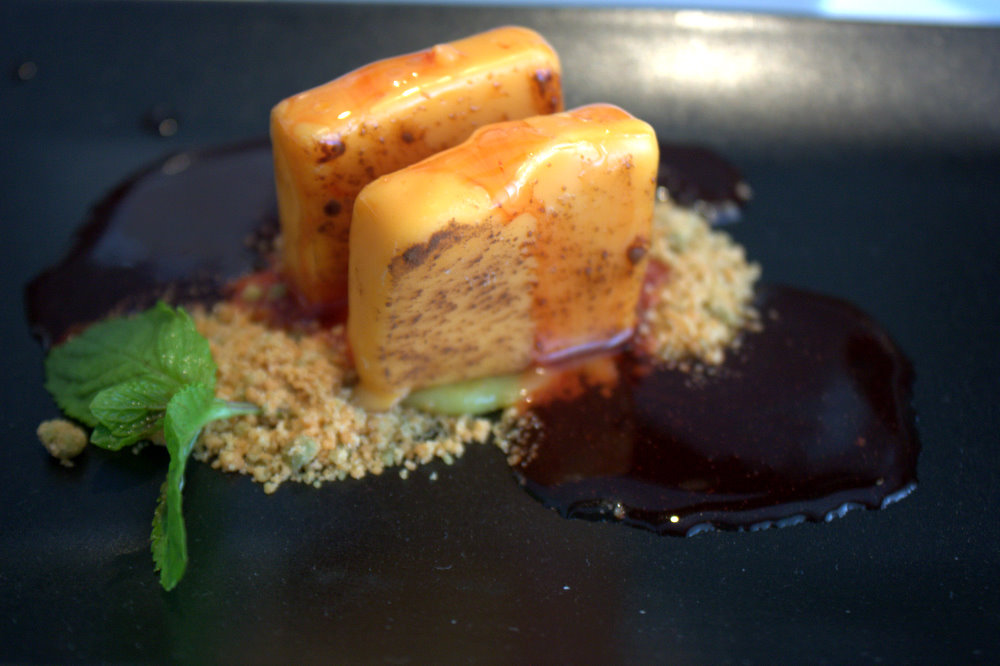
The thin, lightly sweetened sauce is then spooned over chilled upright wedges of white chocolate-covered lemon ice cream.

Arzak piedra de pistachio y remolacha
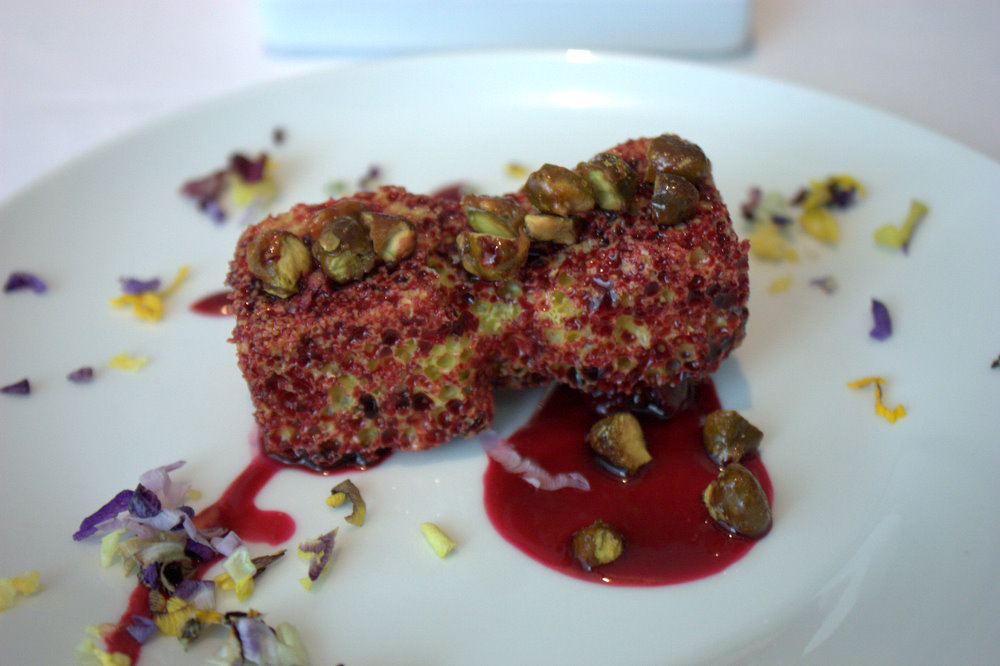
Piedra de pistachio y remolacha
. Beets, pistachios and a spongy cake.

Arzak chocolates artesanos
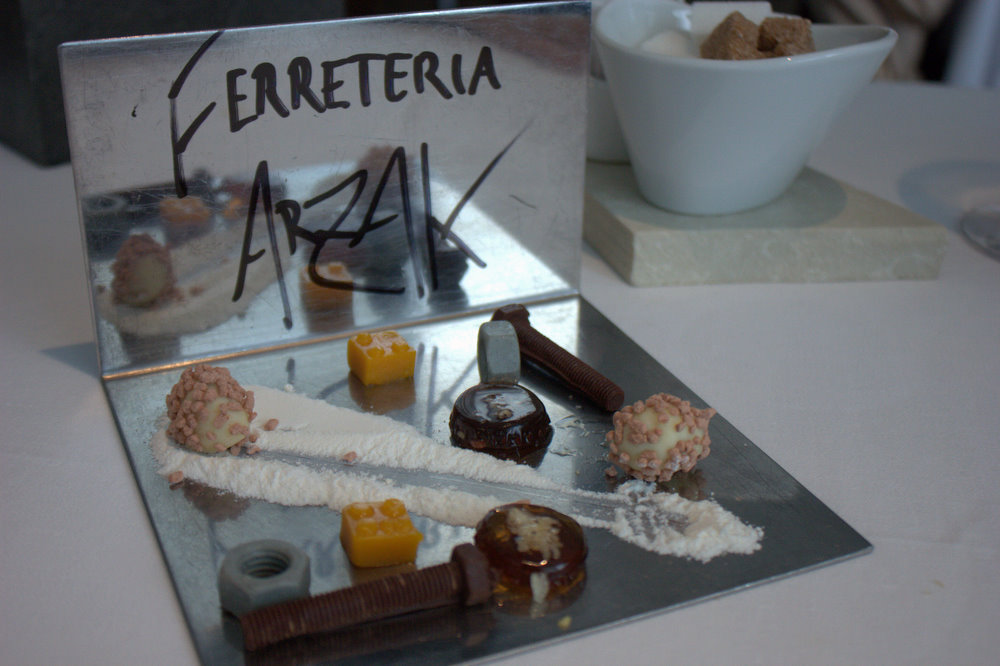
As I mentioned in my impressions of Mugartiz, I thought it was interesting that both restaurants end with an allusion to tinkering. Mugaritz with chocolate nails poked into a flowery ice cream one, and at Arzak a full range of nuts, bolts and Lego-like cubes.

Arzak dining room

After saying goodbye, I started heading across the street to get a photo of the restaurant’s exterior despite its understated presence. When we got to the crosswalk, I realized Juan Mari Arzak was already there waiting for the light to change. I’m a horrible small-talker, and can barely make what even counts as small talk in Spanish (I’d already gathered from when the chef made the rounds during lunch that he didn’t really speak English—that’s more Elena’s role) but it’s weirder to not acknowledge the person who just spent hours in the kitchen preparing the special meal you just ate.

I did muster in my so-so Spanish, “Do you live nearby?” He said “yes” and pointed up the street. I’ve always envied people who can walk to work. Maybe my eyes showed the pain of 13 years of subway torment. I was half-concerned that the elder Arzak was afraid we were going to follow him home.

“Uh, ok, bye! We’re going this way.” I may be a poor conversationalist, but I’m totally not a chef-stalker.

Arzak * Alcade Jose Elosegui 273, Sebastián Spain


Tenpenny

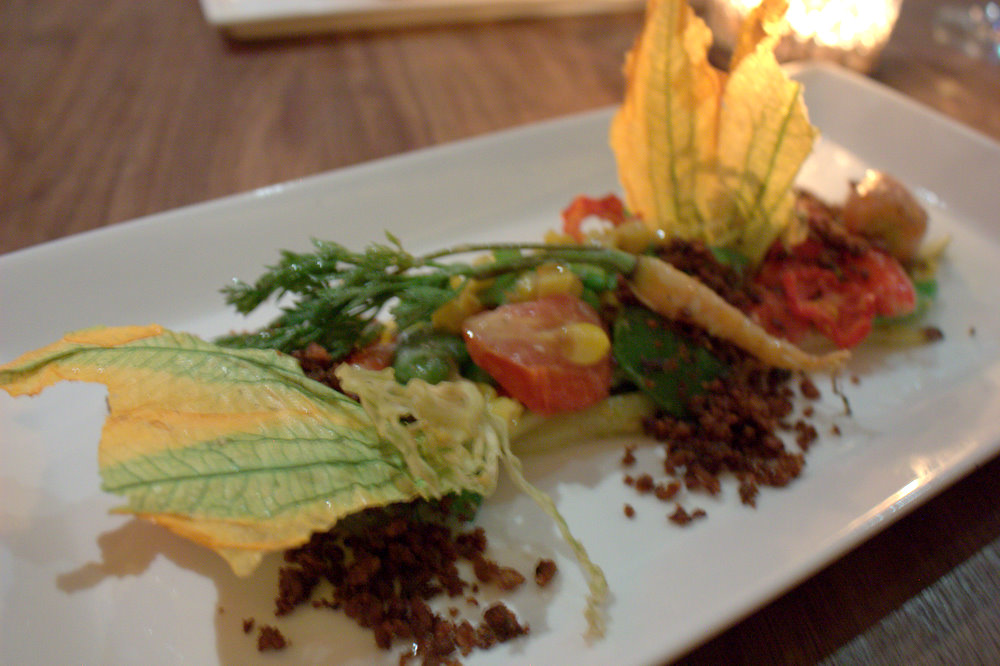
Tenpenny’s spring vegetables might well be the best (and possibly the only) elevated ranch dish since Park Avenue Autumn’s sweet potato fries with homemade dressing. It’s also quite pretty. Enough to counteract the unfounded ugly room criticism? I happen to like my spaces generic and spacious (surprisingly spacious on a Friday night, two days post-New York Times review) rather than cramped and twee.

Tenpenny spring vegetables

The hodgepodge of green peas, wax beans, tomatoes, corn, squash blossoms and one microscopic frond-topped carrot were surrounded by a sweet, crunchy sunchoke dirt that looked like Bac-O-Bits. The dusting of ranch was subtle, more of a perfume than omnipresent.

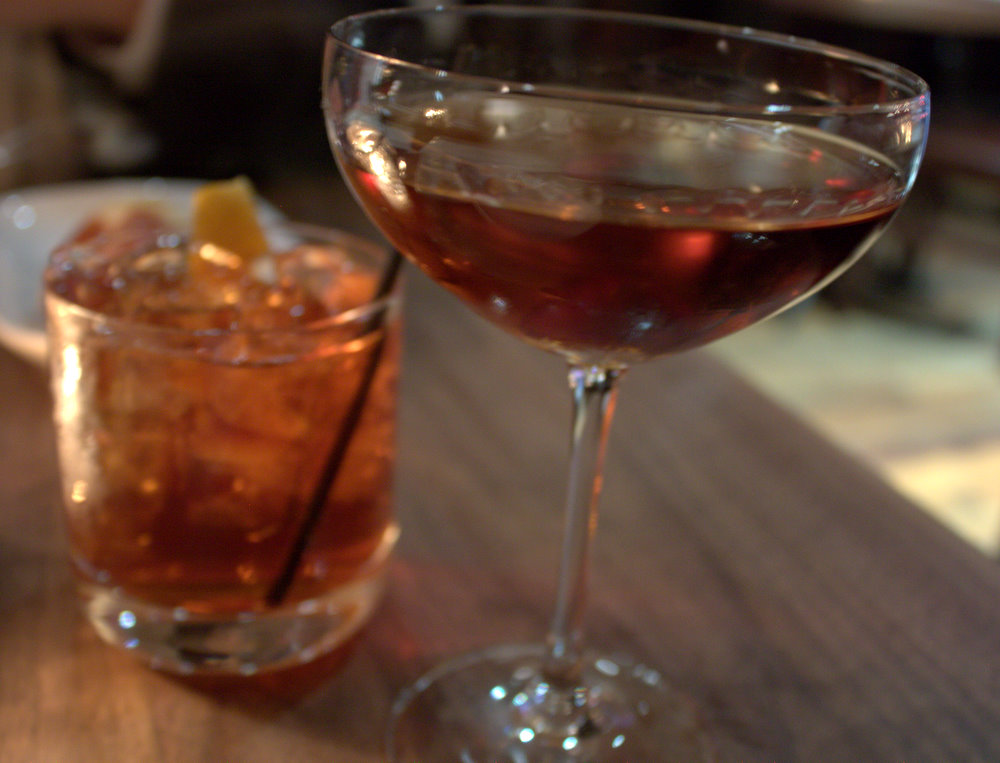
Tenpenny madison & negroni

Same for the root beer extract vermouth in The Madison, which along with Michter’s rye and a bourbon steeped cherry, smelled more like a soda and tasted more like an sweeter Manhattan. The Negroni (pictured) and The Landlady, a salt, cucumber, chile drink, also made an appearance, making up three of the four featured cocktails. The Unstrung Harp, Sam Sifton’s cocktail of the summer just didn’t appeal. I’d rather just have a glass of white wine, so I did. Albariño. Ok, mystery…the cocktail listed on Tenpenny's site contains white wine, not prosecco like recipe detailed on Diner's Journal. The sparkle might've changed my mind.

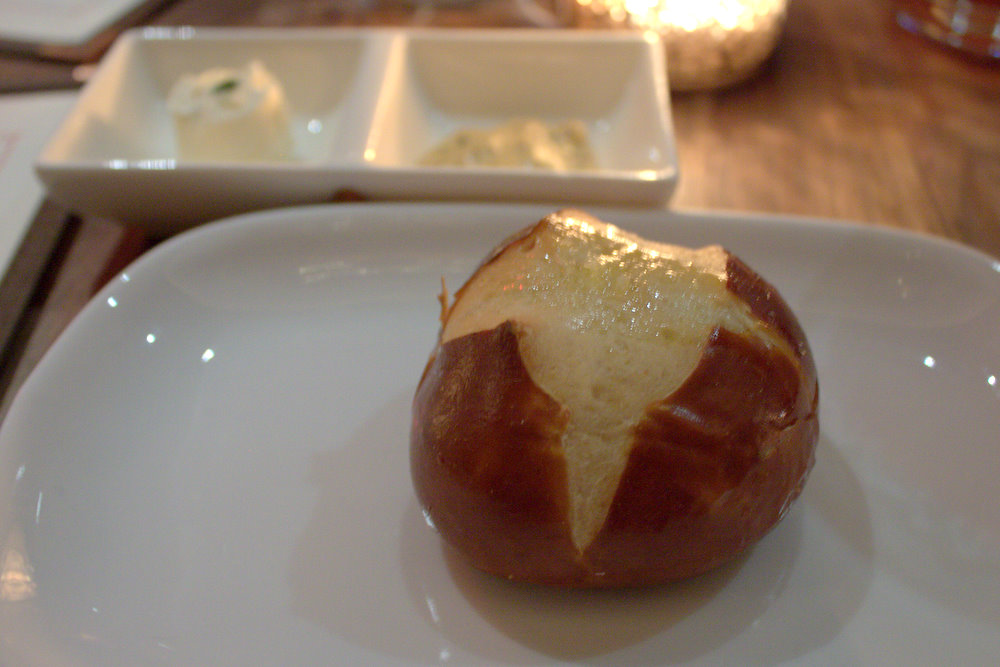
Tenpenny pretzel roll

Pretzel rolls come with horseradish-spiked mustard and an apple butter that’s flavored butter not jammy and made of fruit.

The next morning, there was some horrible infomercial being passed off on public broadcasting as an educational show. A doctor was telling an audience that they could break free of their food addictions, and there was lots of head-nodding and tearing-up. There was a lot of talk about salads and fruit, which I’m totally for and should be for, but I started getting depressed (or maybe I was just hungover from the cocktails) about having to live in an all lean protein world when pork belly tots exist.

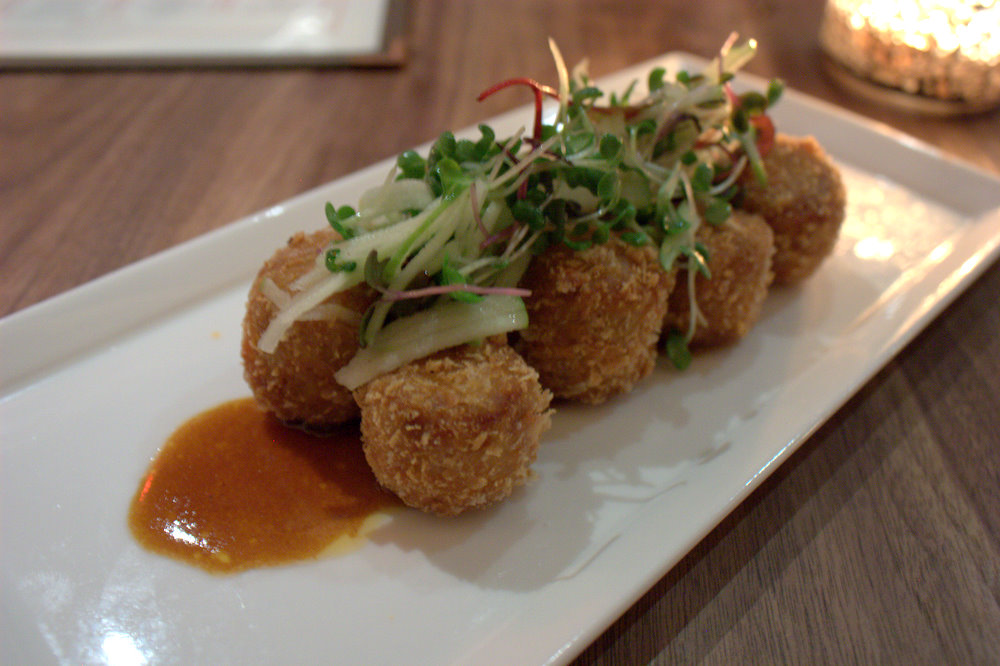
Tenpenny pork belly tots

Sure, they’re coated in potato flakes and fried, but the Granny Smith slivers and green leafy shoots must count for something.

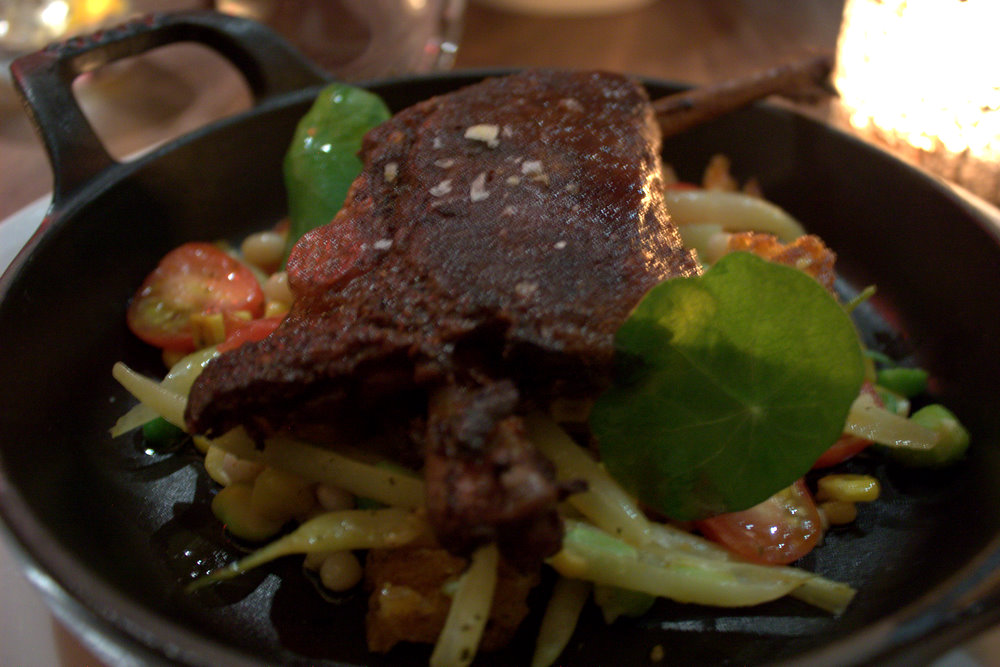
Tenpenny duck confit

You’d better like wax beans, such is the way of seasonal cooking. The burnished duck confit came in a skillet (more down home-style than Applebee’s affectation) atop a succotash with still-pliable croutons that appeared to have been soaked in chorizo oil. Just in time to snap me out of my Spain-vacation-is-a-fading-memory funk.

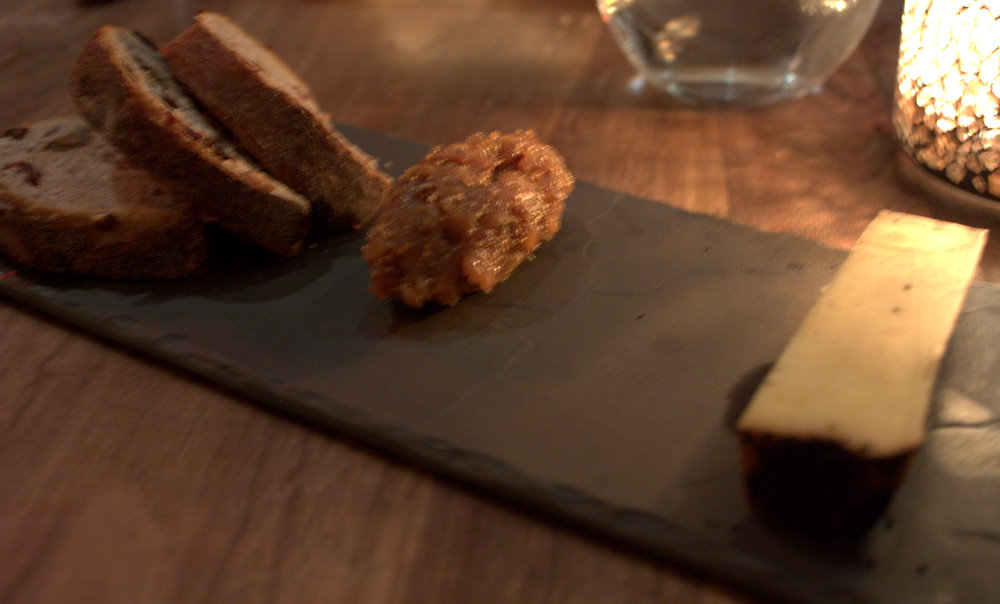
Tenpenny barely buzzed cheese Dessert wasn’t really necessary, but a small slab of “Barely Buzzed” had to be tried because I’d never eaten cheese from Utah, nor cheese rubbed in coffee and lavender. Firm and a little nutty, it was definitely dessert-like paired with fig jam and walnut bread.

Tenpenny * 16 E. 46th, New York, NY


El Corte Inglés Menú del Día

El Corte Inglés is the Macy’s of Spain, and no great shakes, I know. But beyond the obvious culinary attractions of San Sebastián, I needed more bait to get James to take a vacation (if it were up to me, I'd stay out of NYC half the year). Having a mall and a subway (TV and internet access goes without saying) are the two unspoken requirements for cities we may visit.

In the 11-and-half-years we’ve been dating (ha) Bangkok, Toronto, Montreal, Barcelona, Madrid, Shanghai, Beijing, Kuala Lumpur, Hong Kong, Mexico City, Buenos Aires, Singapore and London have had both; the only exceptions being Macau, which was a Hong Kong addendum and Penang, which only had a bus system but made up for it with amazing food and a hotel abutting a shiny, air conditioned mall. Oaxaca had neither, and tellingly, I traveled there alone (though took a cab out to Plaza del Valle, where fast food and a strip mall lurked).

That San Sebastián supposedly had a Corte Inglés, helped matters. Except that it didn’t. The address listed online was nonexistent. I was totally up for finding one, though. Bilbao had one (and a metro and a lightrail, both of which we rode on a day trip. I don’t talk art, but Paul Pfeiffer’s The Saints was the best thing at the Guggenheim) but we’d already been to that more modern city, which brought up the question, “Why didn’t we stay here?” Pintxos, that's why.

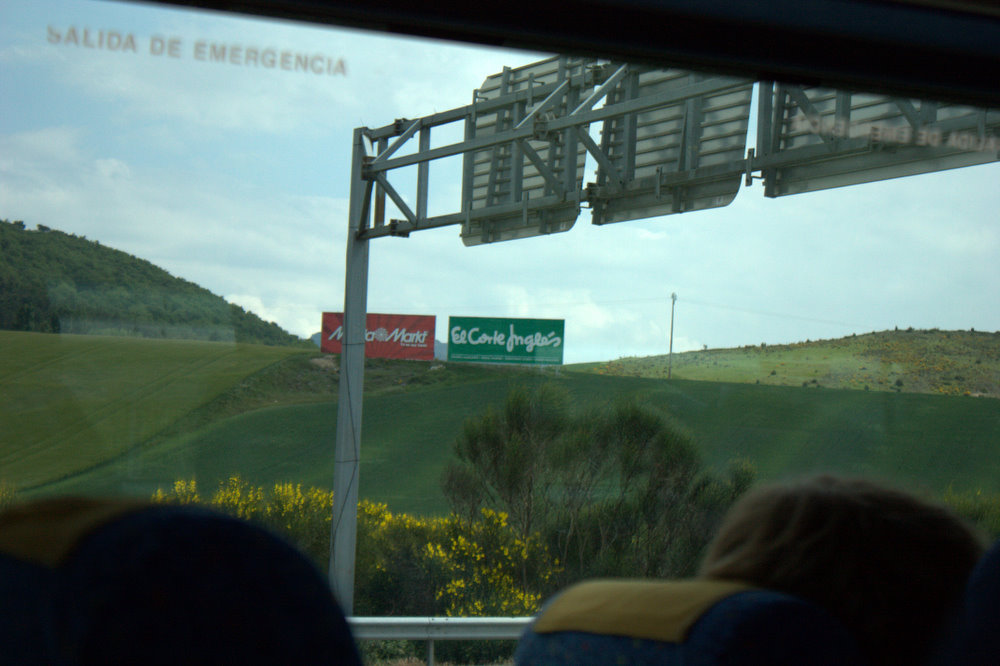
Pamplona, the next biggest city, was only an hour by bus in a different direction. El corte inglés billboard

El Corte Inglés' familar font on a  billboard. The sure sign that we were getting closer to civilization.

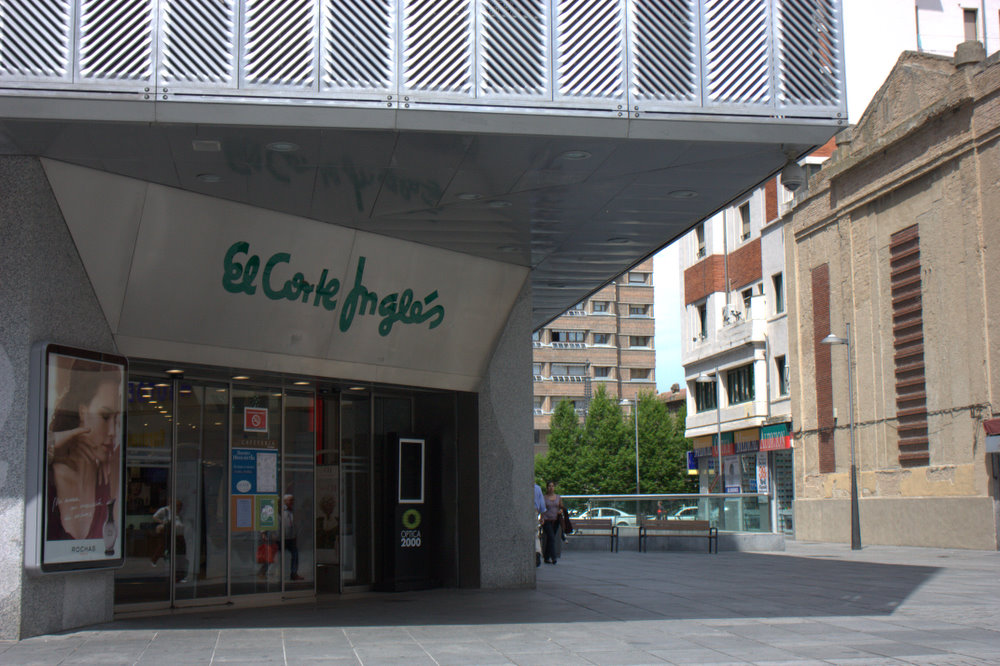
El corte inglés pamplona

And then we waited in line for lunch, the only pile-up during the week.  Everyone loves a menú del día, the affordable workhorse midday prix fixe served in nearly all restaurants. They’re rarely exciting—so much so that I won’t document another from Bilbao’s Café Iruña—but usually good value. While waiting in the entryway between the cafeteria and El Corte Inglés' branded travel agency, I had plenty of time to plan my three courses.

I was totally going to get a hamburger because I hadn’t encountered one in Spain yet, plus it came with an egg, which seemed oddly Australian. I also spent an inordinate amount of time parsing that a rollito de primavera wasn’t some rolled arrangement of spring vegetables but a spring roll. Duh.

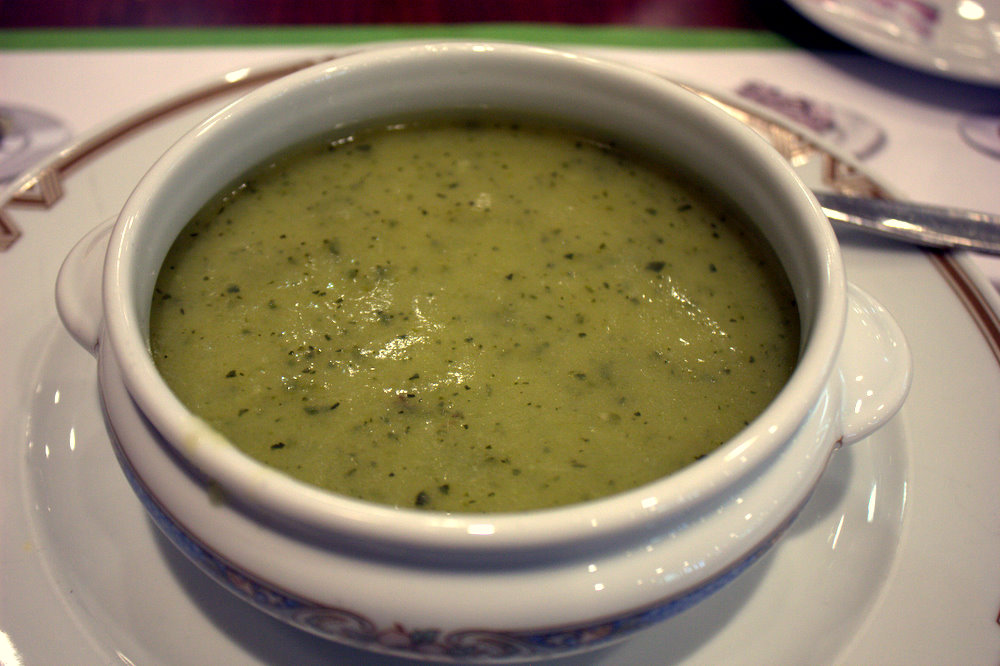
El corte inglés crema de calabacín

Soup is usually dreary to me, but I ordered it anyway hoping it would counteract the fries I would have next. Once again, I exposed my shoddy Spanish. Crema de calabacín, was not a squash like the orange pumpkiny calabaza I see at stores in NYC, but zucchini, which I guess is squash too.

El corte ingles salad fixings

If you order the ensalada mixta, which I did not, you get to make your own pepper-free dressing.

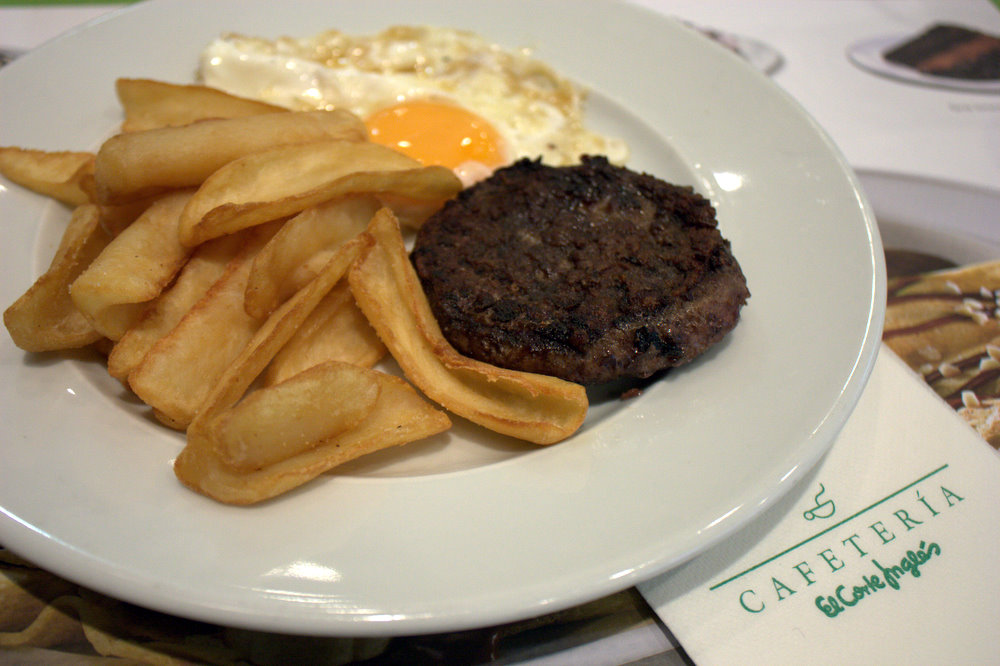
El corte inglés hamberguesa

Ugh, una hamburgeusa wasn’t a hamburger either. I was most definitely wasn't expecting a naked, well-done patty. At least I had the fries and egg to make up for the lack of a bun. And the pleasure of eating a regular person’s lunch instead of something Michelin-starred or smothered in foie gras. Actually, they did have foie gras and fries on the regular menu.

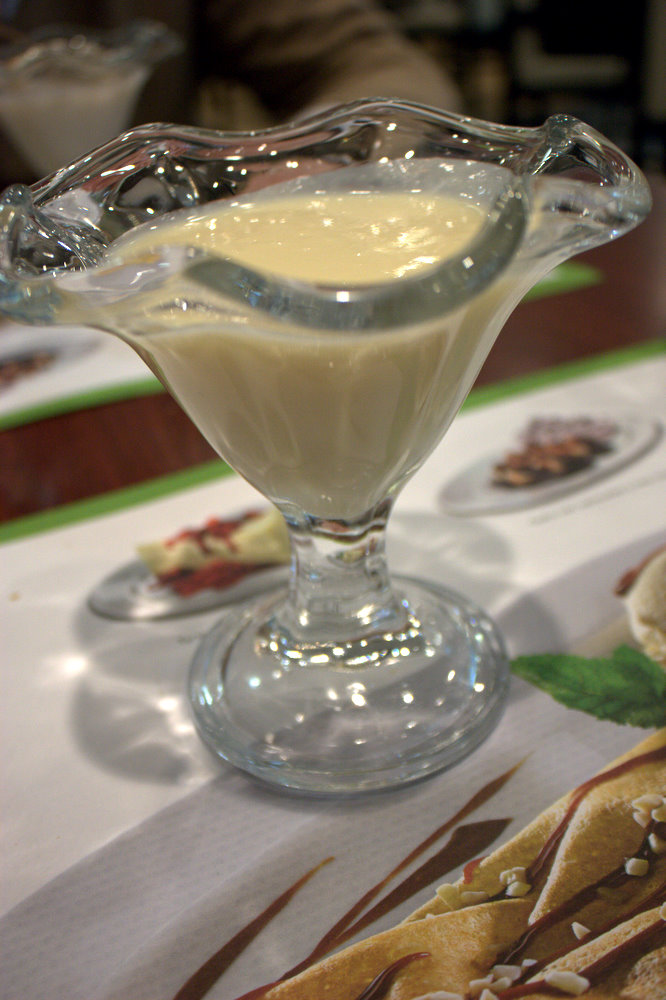
El corte inglés natillas I had far more trouble at this department store restaurant than any complicated pintxo bar. I saw a bunch of people eating chocolate cake at the end of their meals, but all I saw as dessert options were yogurt, sorbets, rice pudding and natillas. I thought natillas was something custardy, but ordered it anyway because it was the only thing I wasn’t 100% sure on so it could possibly be the chocolate cake. No, it was a cinnamony custard. Where did everyone get the chocolate cake?

El Corte Inglés * Calle Estella, 9, Pamplona, Spain

Etxebarri

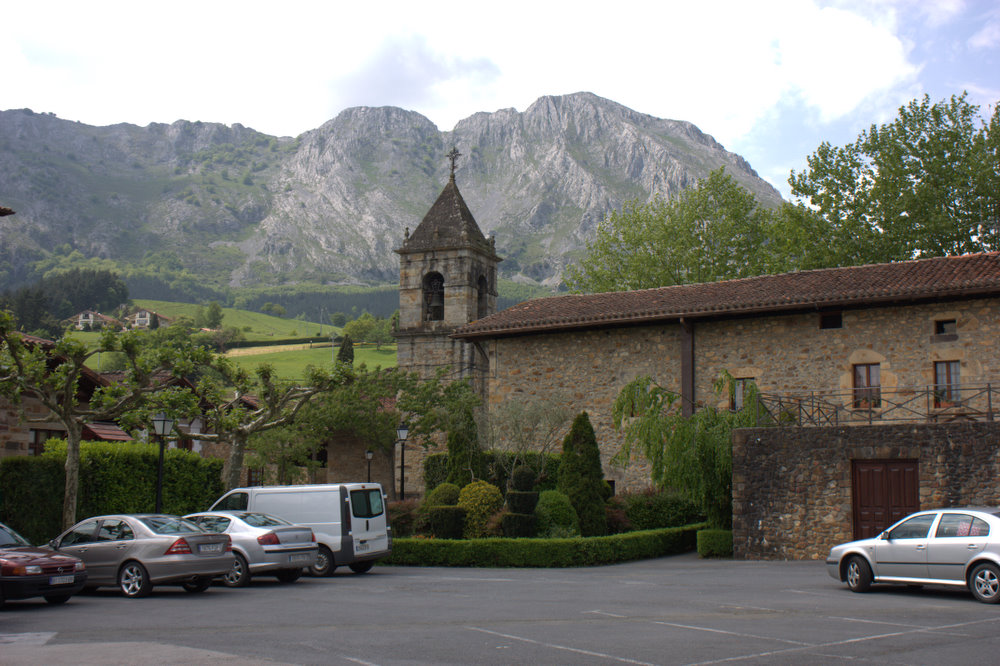
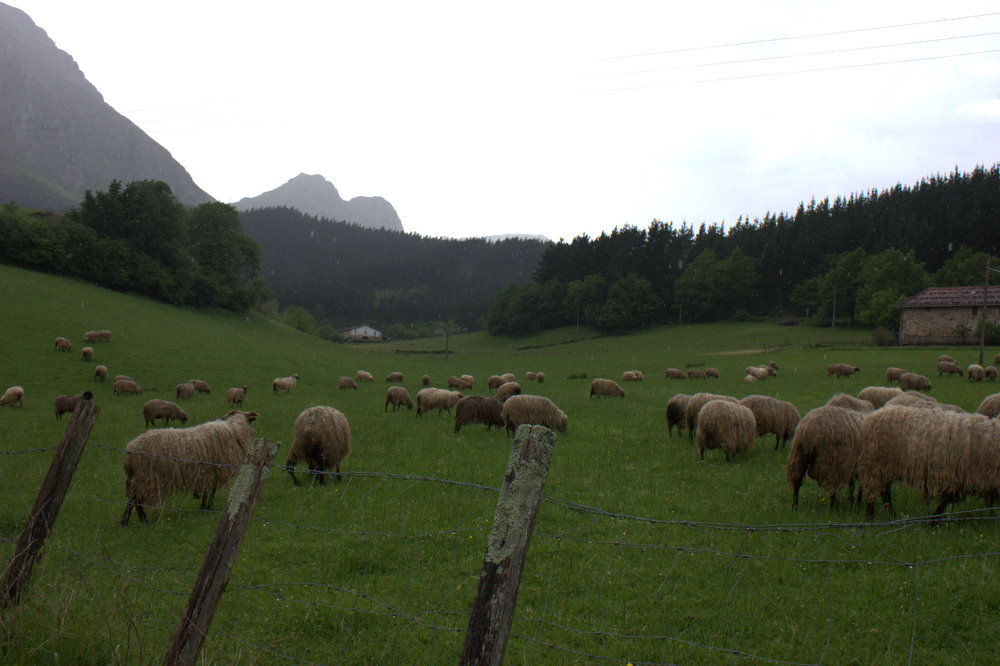
Chiseled Basque mountains, country roads hidden from global positioning systems, fields of shaggy sheep, old men in berets? Too postcard perfect. And to eat an unadorned cast of sea creatures, their essence sullied by little more than salt, butter and charcoal smoke? More simple perfection. Maybe too much so.

Etxebarri parking lot

I wasn’t convinced that Etxebarri was for me. Do you think I talk about chain restaurants and all of their cheese-smothered, common denominator glory because I’m being ironic? No, I need the grotesque in my life, and by grotesque I mean greatness. I’m also confused.

Sheep in axpe

It doesn’t seem right for me to deride Americans’ blind obsession with Italy and all the Tuscan trappings while allowing for faux stone farmhouses and never ending bowls of pasta in the suburbs. I hate our fixation with old world charm. When everyone agrees on what natural beauty is—A grassy rolling hill? A vineyard at sunrise?—it becomes a cliché.

Next you start travertining up your suburban home, installing a wrought iron wine rack and putting up wallpaper borders painted with clusters of grapes. Mass produced facsimiles cloud what was appealing about the original in the first place and it all starts seeming tainted.

Now, I have a hard time with genuine Italian landscapes because it makes me think of Olive Garden. Yes, the Olive Garden that I occasionally enjoy. Like I said, I’m confused.

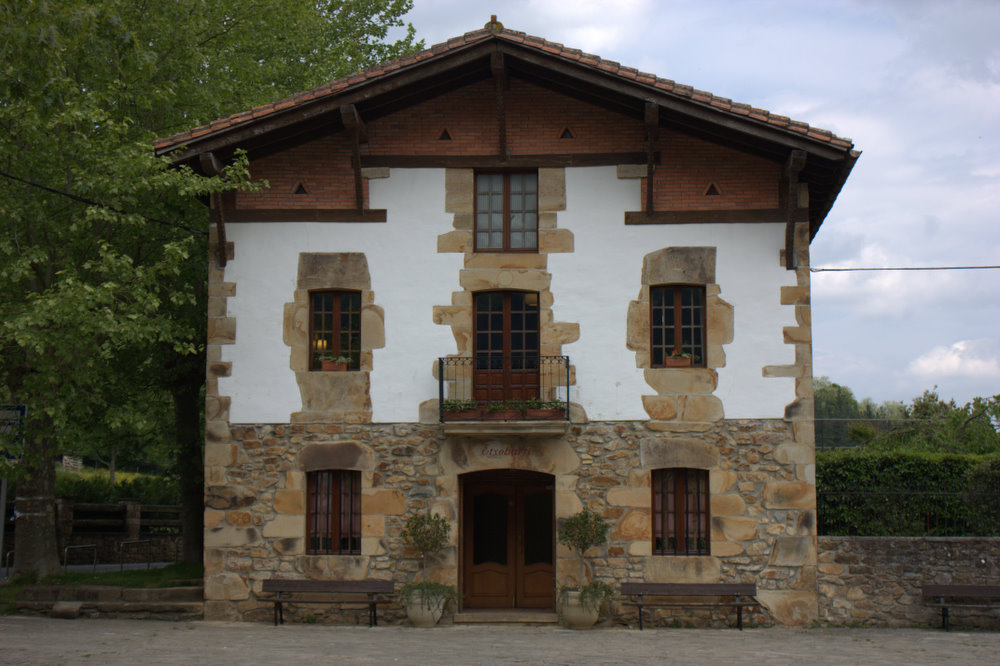
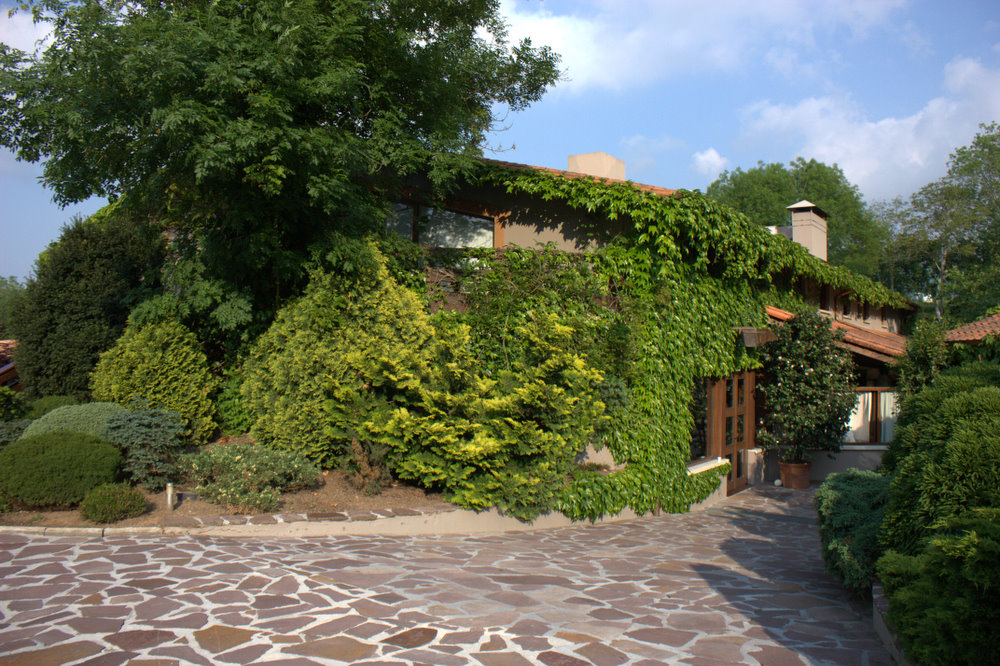
Etxebarri facade

Luckily, there isn’t a mainstream fetishization of Spanish culture in the US—at least not beyond calling anything served on something smaller than a dinner plate, tapas. When I stand in a courtyard in Axpe and stare at  a whitewashed stone facade, I don't think Vegas casino or Cheesecake Factory (maybe a little Swiss chalet).

But of course, Extebarri, an asador famous (even my mom knew it from No Reservations, which I thought she wasn’t watching anymore because she thought Tony was arrogant) for chef  Victor Arguinzoniz’ mastery of smoke—and its hard to get to location between San Sebastián and Bilbao—is no facsimile. It’s also all that it was cracked up to be.

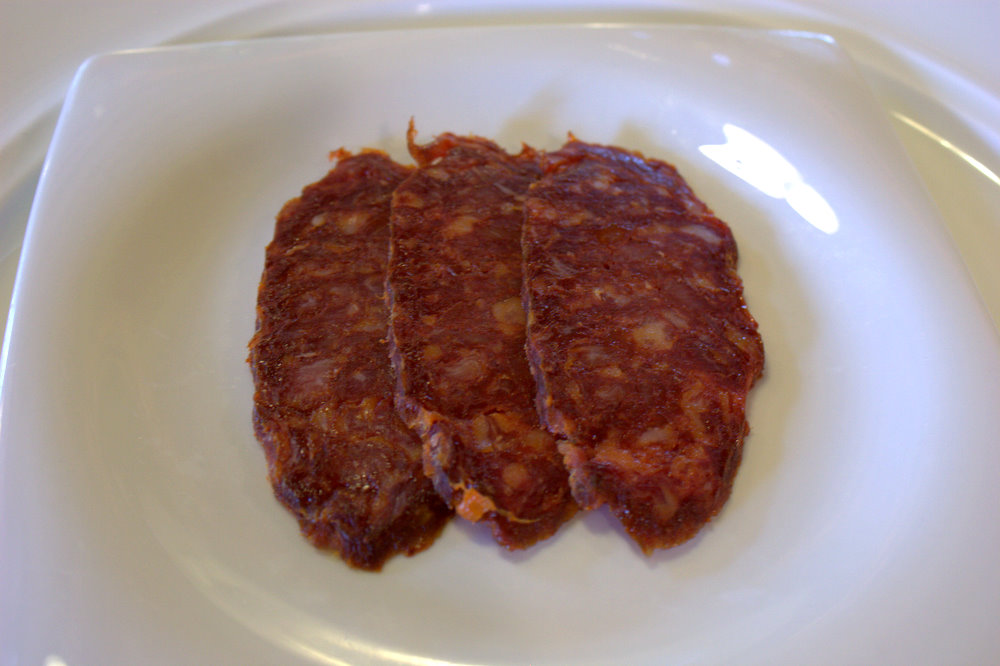
Etxebarri chorizo

We’d been gorging on various chorizos from a fancy deli near our apartment; little spicy ones, fat vinegary ones, but none of the cured sausages were as soft and balanced as the three fork-and-knife slices we were served as an introduction.

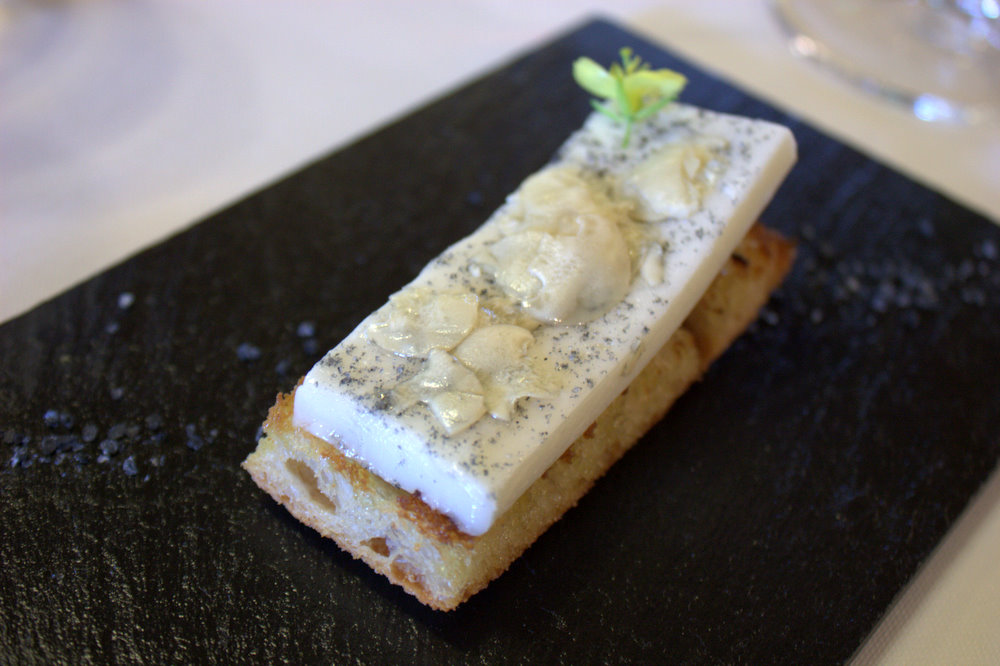
Etxebarri goat butter

The thick slab of smoked goat’s milk butter, the creamiest cream mixed with full-on barnyard funk and campfire, was almost overpowering at first. Rich, sooty and caprine with only a few paper-thin slices of mushroom for diversion, this was possibly the most decadent treat I’ve encountered, no truffles, foie gras or gold leaf necessary.

Etxebarri gambas

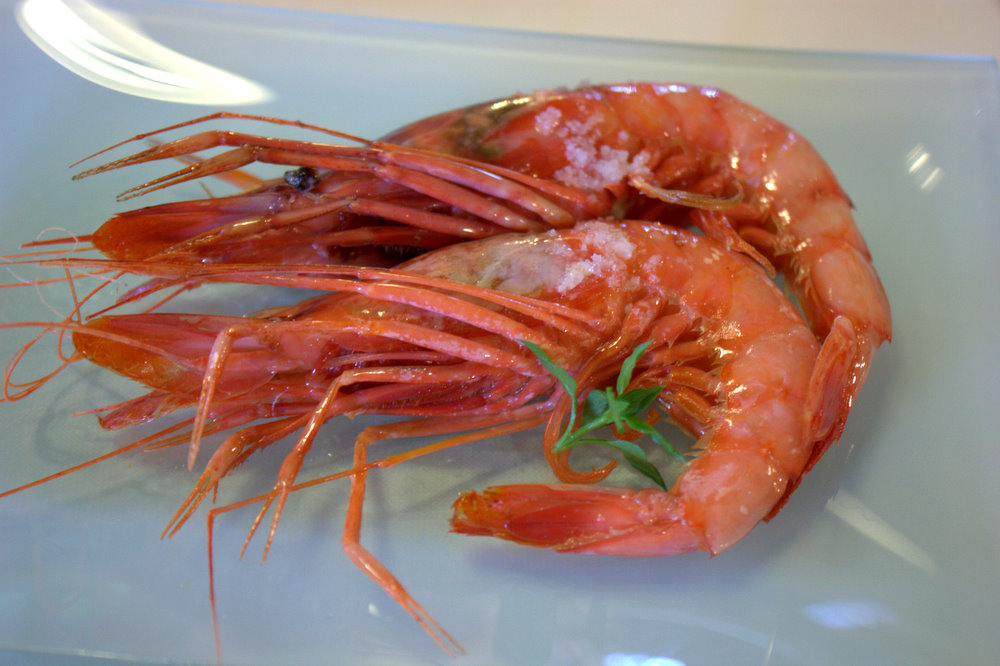
Palamós prawns, mine with one feeler that unfurled a half-foot off of the plate, were spot-on. I pulled the head from the body before thinking to suck the head and had to salvage the rush of smoked, buttery liquid with a hunk of rustic bread. I could make a whole meal (a very expensive meal) out of these meaty crustaceans. These were a highlight.

Etxebarri baby octopus

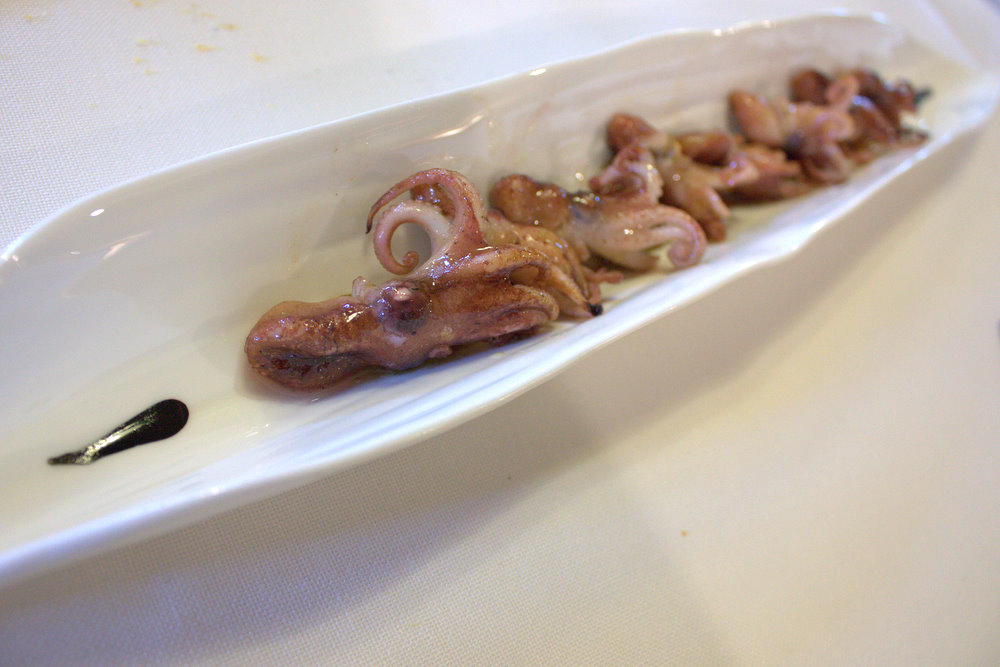
The octopus were small where the prawns were mighty. Grilled, but not charred, the little creatures were served in a straightforward manner with only a little smudge of ink for reference. I’ve seen other write-ups where there was an accompanying onion jam, but all I remember was the naturally sweet flesh, no extra sweetness.

Etxebarri shaved mushrooms, egg yolk

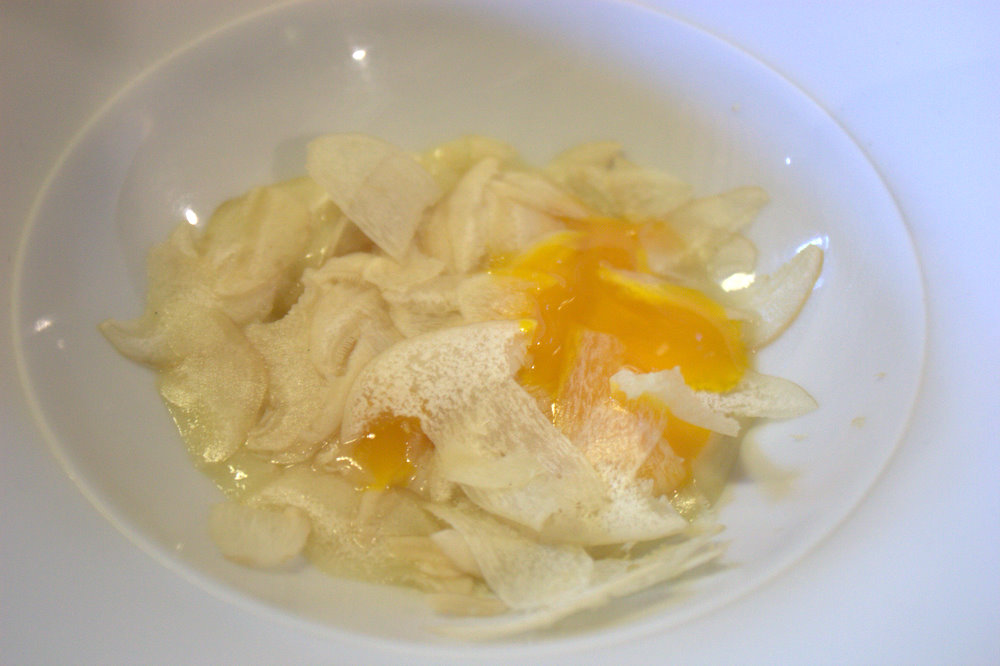
Wild Saint George’s mushrooms formed a tuft atop of a perfectly runny egg yolk (I can’t tell you how many times in recent history I’ve been served a way too stiff yolk—ok, twice, both in Brooklyn). Despite the egg’s brightness, this was a very quiet dish, a respite course. I don’t recall what was listed on the menu, but I imagine these were hongos. I’d asked my Madrileño Spanish teacher before my trip whether they used seta or hongo in Spain and he said seta. Of course, hongos abounded on every menu in San Sebastian and sat whole, big as a baby’s head in baskets on countertops. I’m not sure if this is because the Basque region is crazy for wild mushrooms or that my teacher isn’t really into food—I mean, he eats soyrizo.

Etxebarri pea soup

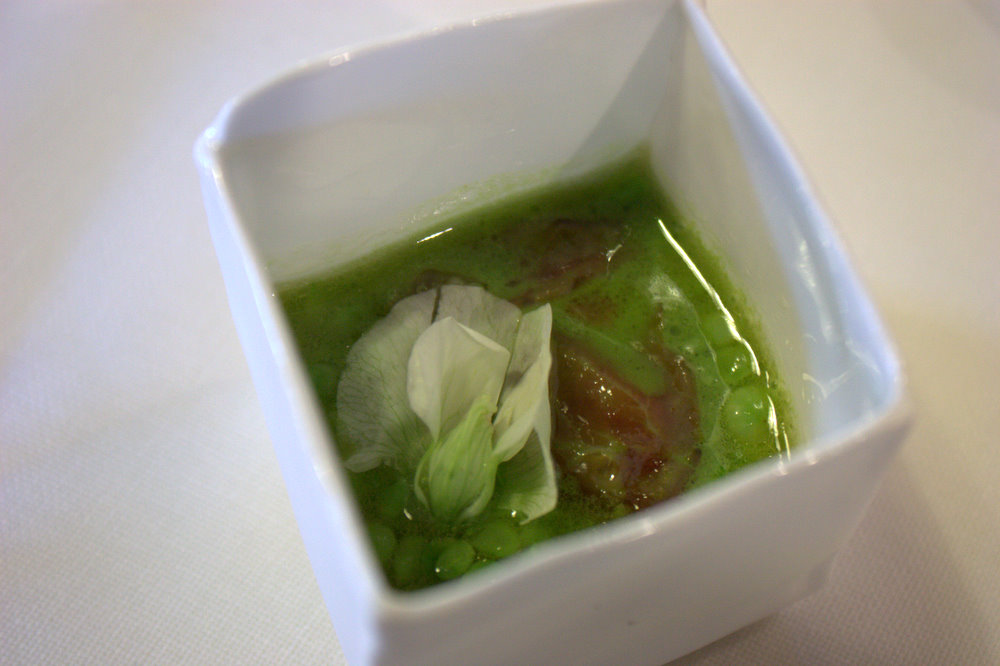
Pea soup showcased more spring produce and was smokier from wood than ham. Ok, there was a tiny wisp of jamón lurking the green puree. And of course, a flower.

Etxebarri angulas

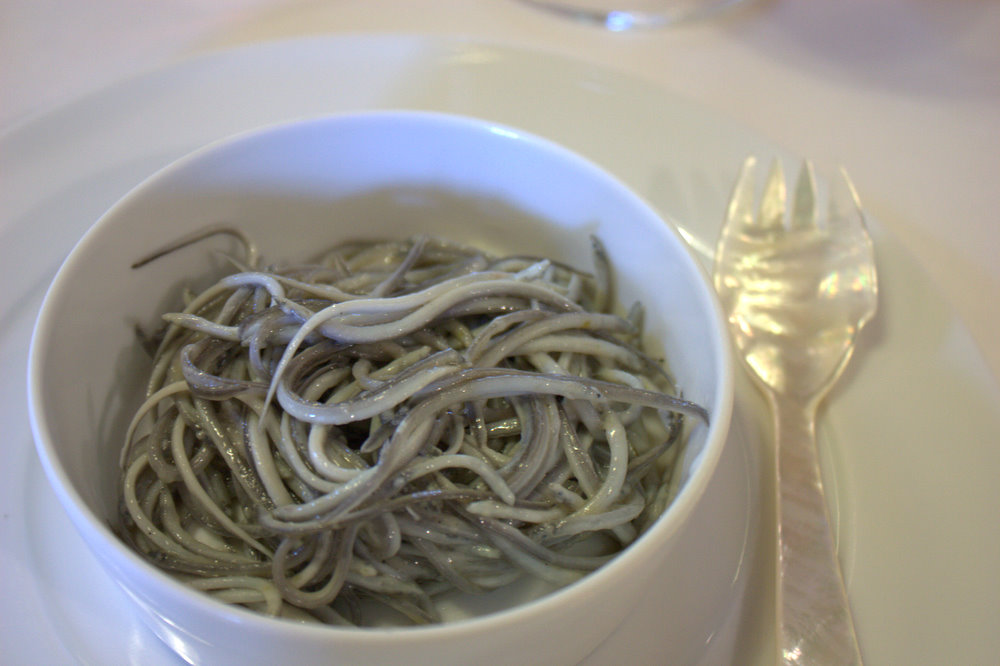
Angulas, not the imposter gulas seen in grocery stores and on pintxos, were buttery, slippery with an unexpected crunch like firm fish noodles. I tried looking for their microscopic eyes to remember they were actually eels.

Etxebarri sardine

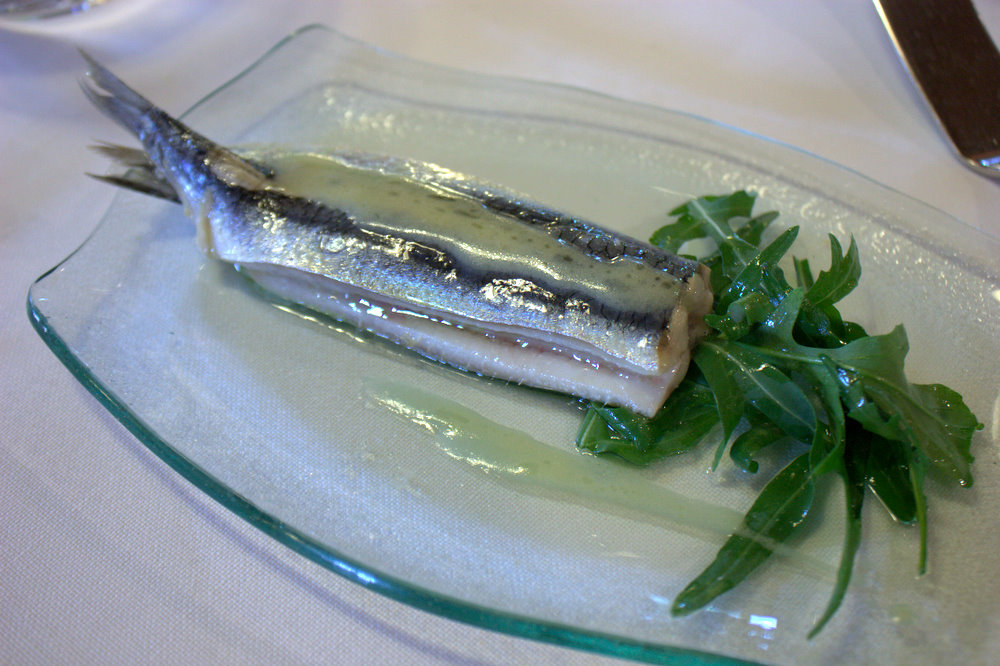
No eyes on the plump, headless sardine. The oiliness was cut by the handful of arugula.

Etxebarri txuleta

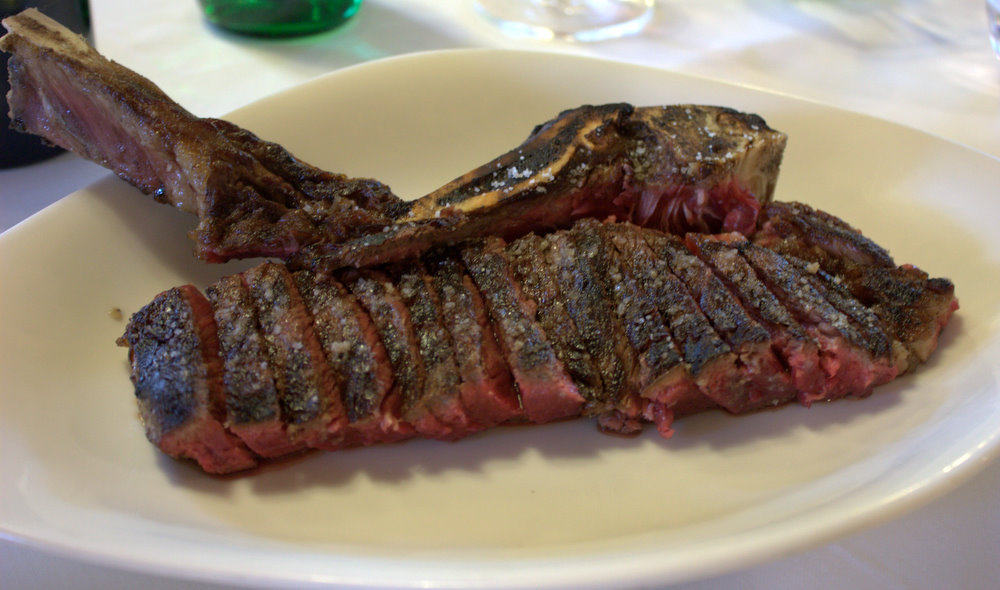
Even though full—little things always add up—I knew the chuleta was coming and was excited for a hunk of meat. I’d been anticipating its arrival after seeing family-sized versions of it on the tables of large groups of Spanish-speakers who’d ordered a la carte (which isn’t a bad idea if you’ve been once and already did the tasting to know what you like most).  I don’t know that there’s such a thing as a doggie bag in Spain, or Europe in general (it seems to be ok in Asia and Latin America), a bolsa de perro? (Bolsa para perros, which is what you get if you Google bolsa de perro,  is something very different.) So, the medium-rare-verging-on-rare (beware, done meat-lovers, you’re not asked) slices of aged beef had to all be eaten on the spot. A super-vinegary side salad helps revive the appetite. We discreetly tried to get all the fatty, charred remainders clinging to the bone without resorting to using our hands and gnawing. Those are the best bits.

Etxebarri lemon custard

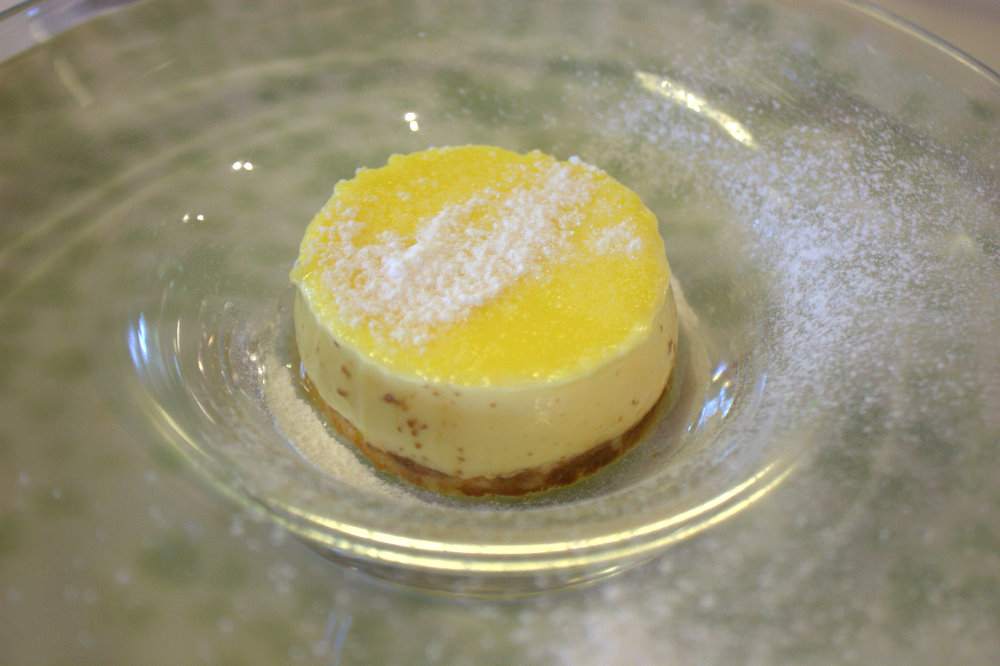
A lemony custard, supremely eggy, sugar powdered, and possibly the only non-smoked dish.

Etxebarri smoked milk ice cream

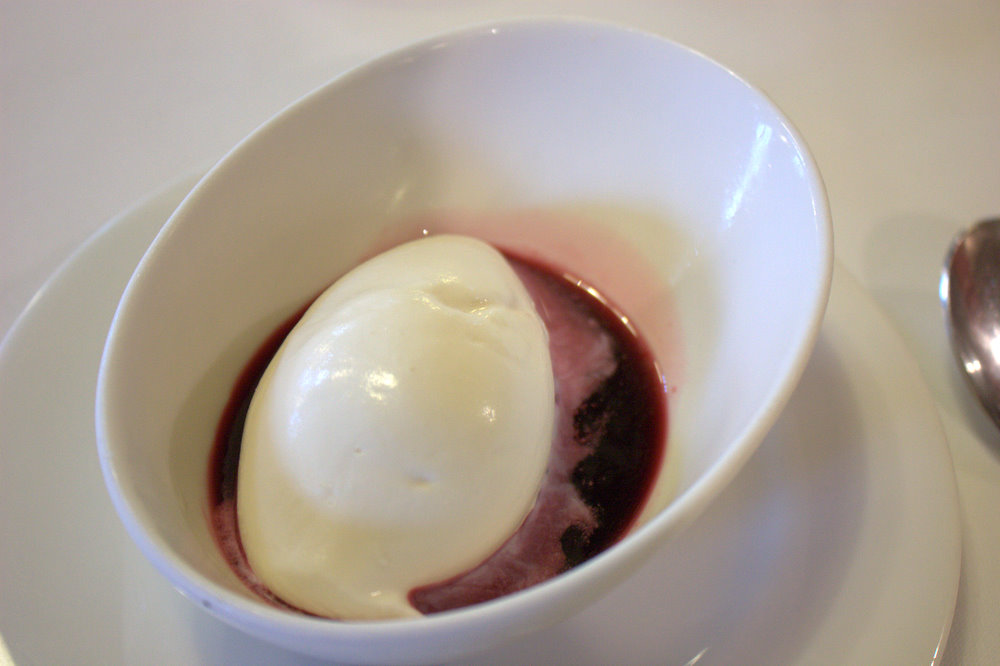
Can you smoke ice cream? Of course you can. The innocent-looking scoop of vanilla hit with an ashy background and berry (blackberry?) sauce made me think that s’mores might be good with a smudge of fruity jam.

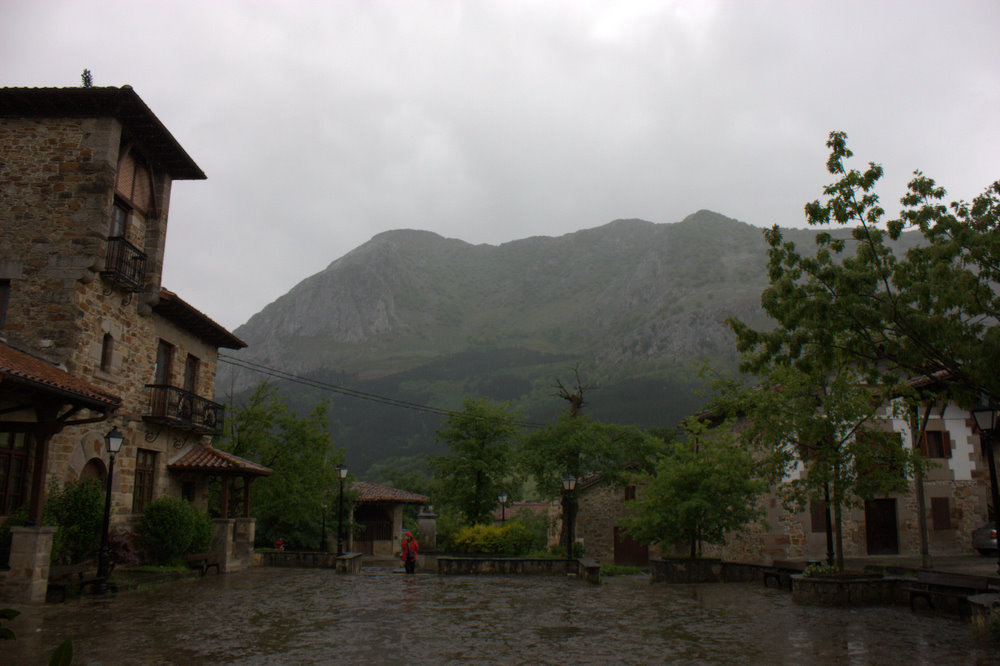
Etxebarri rainy courtyard

The only rainstorm of the week hit when we were inside.

I thoroughly enjoyed the blast of nature and purity, in fact, it might’ve been the most memorable meal of all from this week in Spain, but I still made (ok, he wanted to go too) James pull over the rental car at Eroski, a massive supermarket, in a small town right before the highway on-ramp. It was time to cram-in some less picturesque culture.

Etxebarri * Plaza San Juan, 1, Axpe, Spain

Mugaritz

I’ve put off writing about the Michelin-starred portion of my now-ancient-seeming vacation (I already need another one!) because, honestly, if you follow restaurant blogs to any degree and even casually keep up on Spanish cuisine, you’ve probably seen countless versions of these photos before (I just chanced upon a stranger’s fresh Mugaritz batch this morning via vias on Twitter) and probably captured with more finesse. Maybe you’ve seen the potatoes that look like rocks or the haystack out front near the parking lot or maybe shots of a blogger in the pristine kitchen at Mugaritz (I didn’t ask—that’s just something nice they do). I was here, I ate this, I did this! Me too.
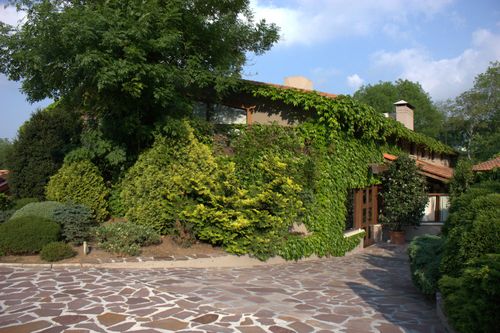
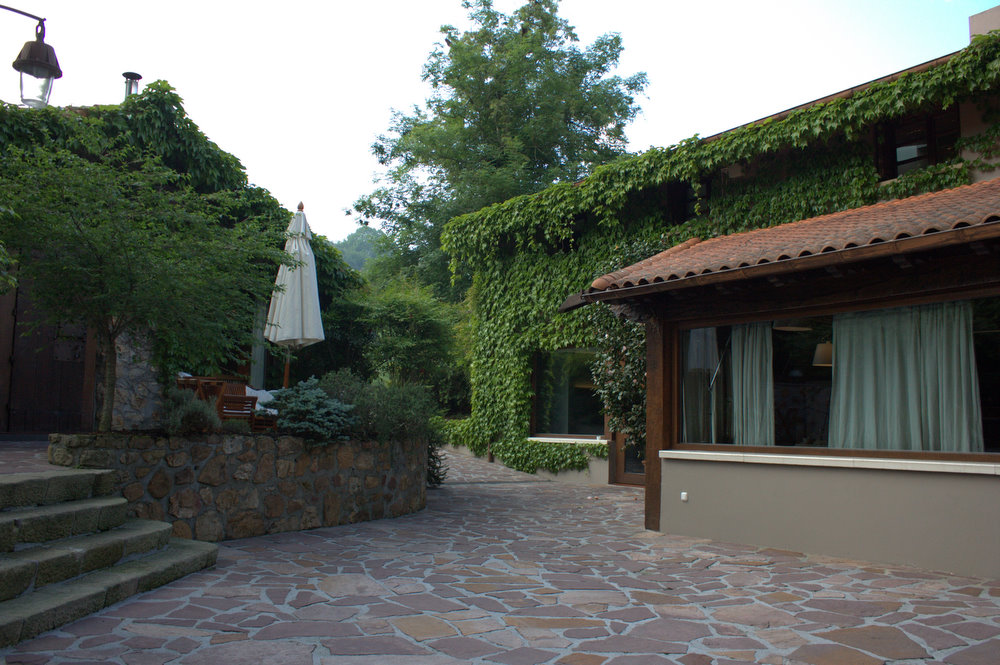
Mugaritz entrance

Who knows the motivations that drive the mortals paying out of their own pockets to travel to far-flung destinations, snap photos and post their uninfluential impressions online. Are they showing off, bragging? Sharing knowledge, being servicey? As the I Ate At El Bulli Pieces build to a crescendo (men named Adam are now helicoptering in? By the way, have you ever seen an IAAEBP  not written by a man? ) I can’t fault a single non-Heather Graham (is Spain considering her a VIP like Hasselhoff being big in Germany?) for wanting to document and capture a memorable dining experience, despite the lack of vintage Dom Pérignon (at least none of the last call at El Bulli missives referred to it as champers, ugh) and five dozen courses. Mugaritz may not be El Bulli–and it doesn't need to be–but common folk should also be able to indulge in blathering on about their trips to Spain. Me, I like to dork out on food.
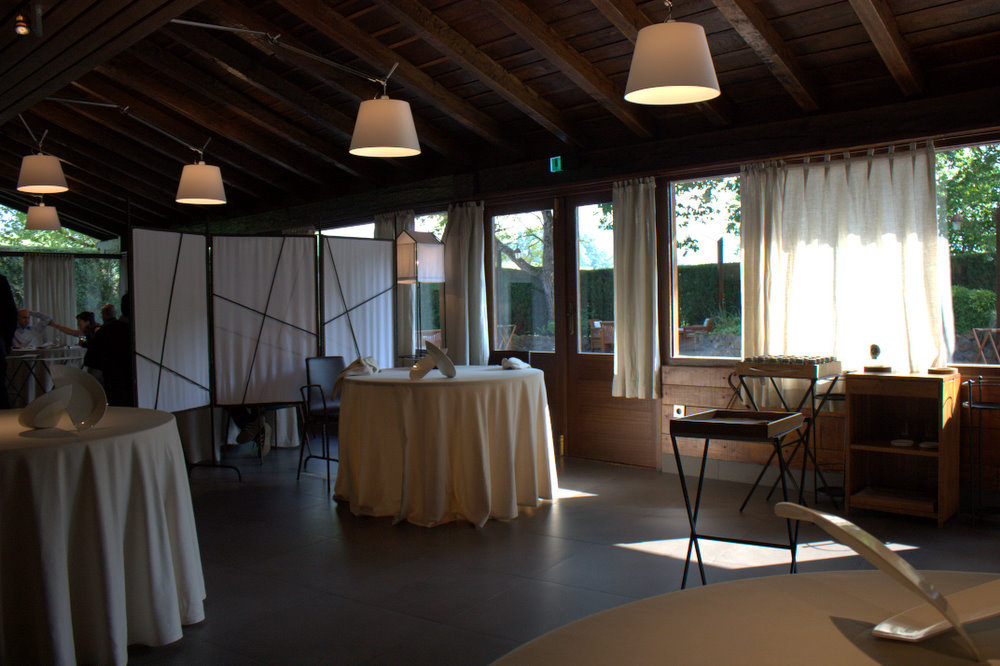
Mugaritz dining room

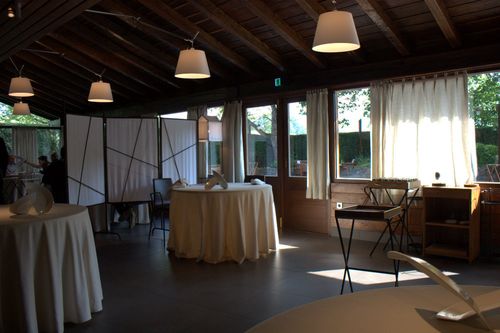
And not all food bloggers and Chowhounders are starry-eyed. Mugaritz is the most polarizing of the San Sebastián upper tier. That many say the service and atmosphere trumps the food, had me a little nervous. Yes, the cooking is far more conceptual than Extebarri and even more so than at Arzak, where experimental techniques are also employed (a little more playfully), but anyone with the means to do so  should certainly experience Andoni Luis Aduriz’s food first-hand. At least once. Once might be enough for most. I would go back for a different season, if I lived closer by.
Mugaritz kitchen

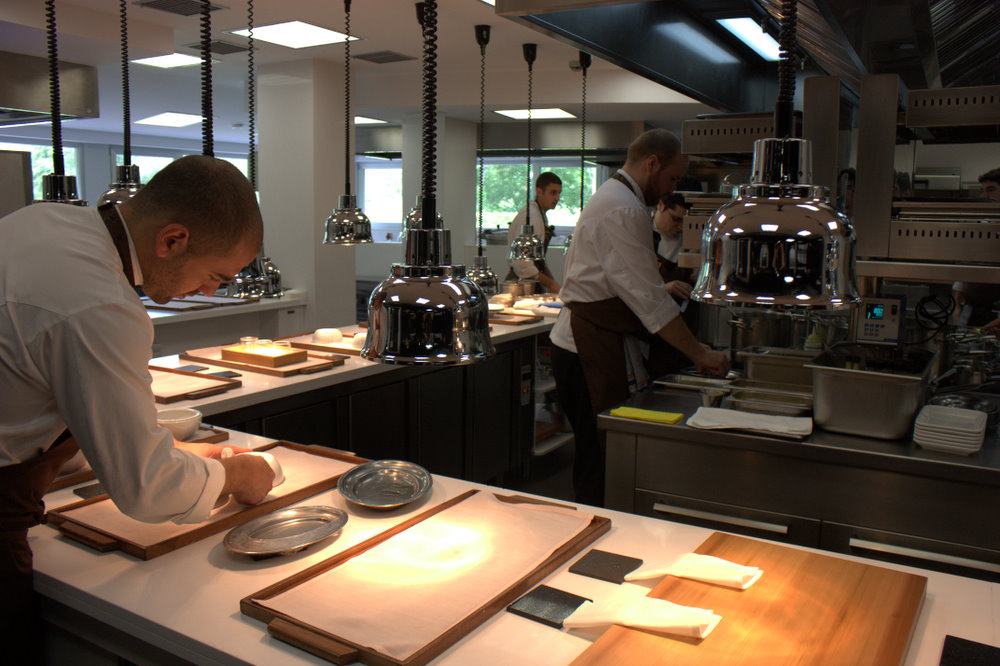
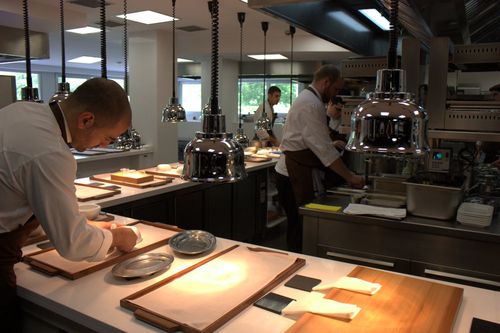
I went in a little blind, not scrutinizing Flickr beforehand or knowing much about the philosophy. I’m paraphrasing a bit but when given the kitchen tour a third of the way through the meal by one of the chefs, Oswaldo, he explained that they were “focusing on texture,” a worthy sense to explore and one less prized in the West unless we’re talking about popcorn and potato chip crunch—Americans love crunch.  In parts of Asia, people enjoy the crackle of cartilage and fried bones, slipperiness of noodles and the mucilaginous quality of fermented soy. 

At Mugaritz texture wasn’t being completely favored over taste, but prioritized to some degree. In fact, I was a little surprised to hear that they don’t use local produce, but cross the French border and shop at markets in Saint-Jean-de-Luz where the vegetables are smaller, better textured and the flavor concentrated. Despite a penchant for morphing  ingredients, Mugaritz is very about nature. Once I realized this approach, my expectations shifted for the remainder of the meal and gave me a different perspective on what I had already eaten.
Mugaritz cards

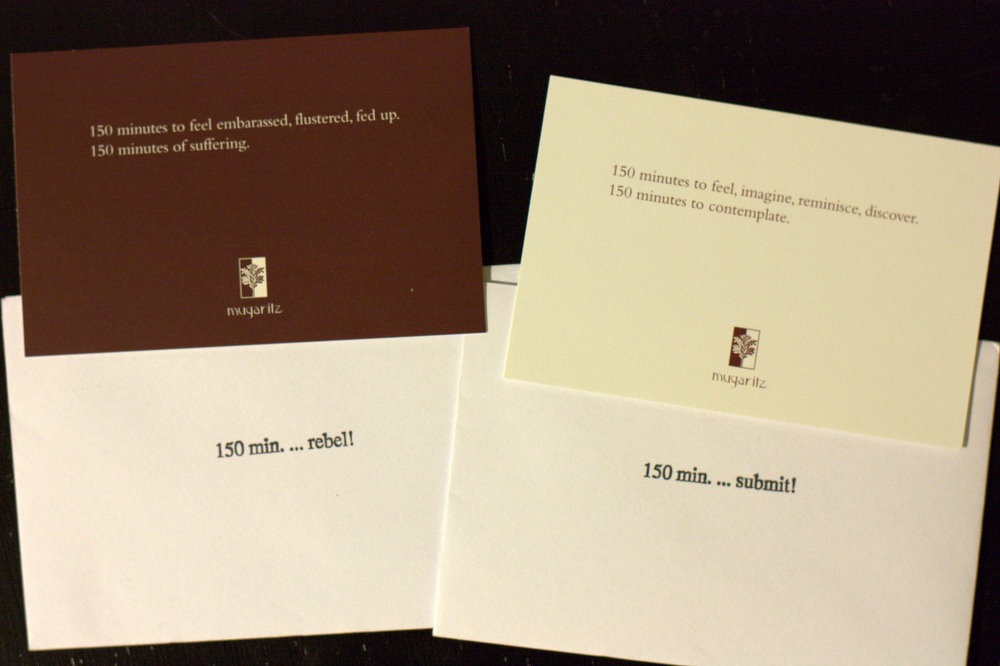
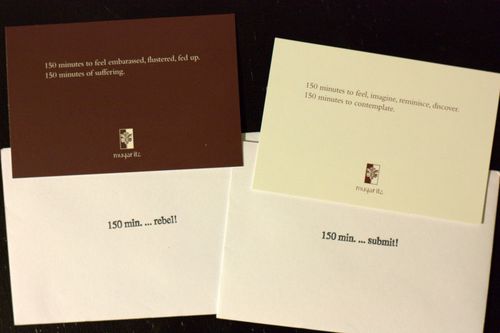
You’re given the option to submit or rebel. I wonder how much the menus vary because everyone seems to rebel. “150 minutes to feel embarrassed, flustered, fed up. 150 minutes of suffering,” you’re warned. When all of the amuses started arriving at once, willy-nilly with hard to catch explanations, some in English, some in Spanish (I took the suggestion of not seeing the menu ahead of time so everything would be a surprise) we joked, “It’s working–they are trying to fluster us!” I’m high-strung, so it doesn’t take much.  But really, a tableful of treats to start has been the modus operandi at most modern Spanish restaurants I’ve dined at, not the one-by-one procession I've encountered in the US. This is when you can sit back and sip your aperitif; cava, non-vintage, if you’re me.
Mugaritz piedras comestibles

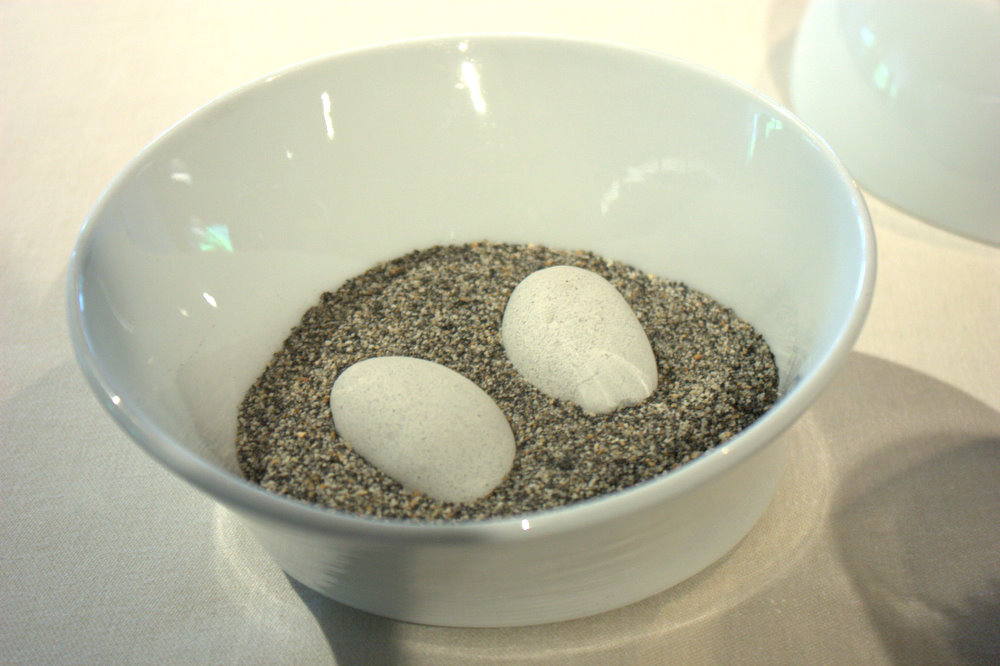
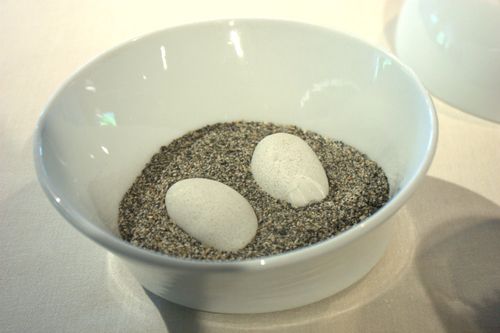
Piedras comestibles. The edible rocks with a kaolin (an edible clay, which I ate twice in this week, oddly–or maybe not for San Sebastián. I only knew what it was because a million years ago when I visited my sister after she first moved to the UK, I noticed an over-the-counter anti-diarrheal called kaolin and morphine. Did I just whet your appetite?) shell. These are served with an aioli for dipping and they’re sitting in a pepper mixture, probably the only pepper I encountered the whole spice-phobic week. Weirdly, these did not taste super-potato-like but kind of bland. Maybe it’s those French low-flavor vegetables at work.
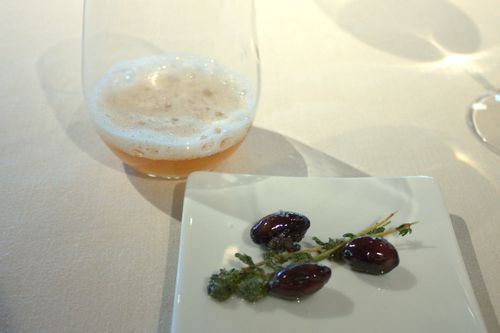
Mugaritz cerveza de legumbres tostadas, tapa de olivas y albuias con tomillo

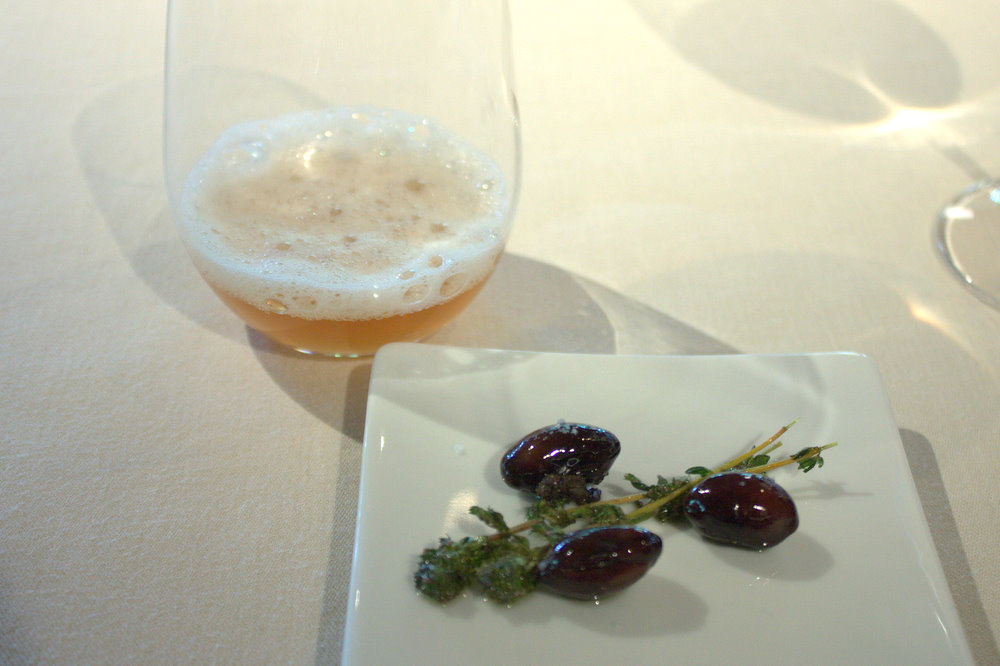
Cerveza de legumbres tostadas, tapa de olivas y alubias con tomillo. The warm “beer” made from toasted chickpeas and olives crafted from beans (for those who’ll never taste Adrià’s famous spherefied green olives) set the tone. The temperature and earthy, mealiness messed with the expected cold and yeasty, briny tastes.
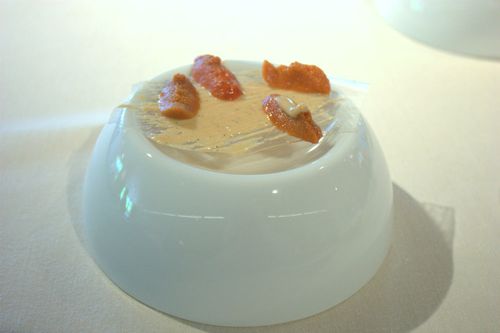
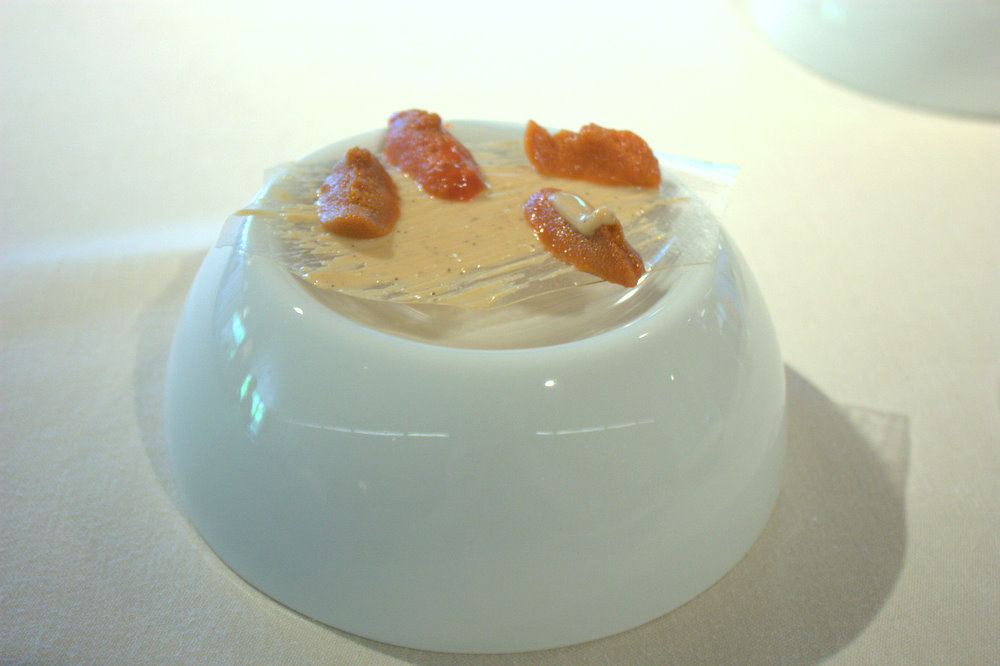
Mugaritz cristal de almidón y azúcar manchado con praliné y coraels del buey de mar

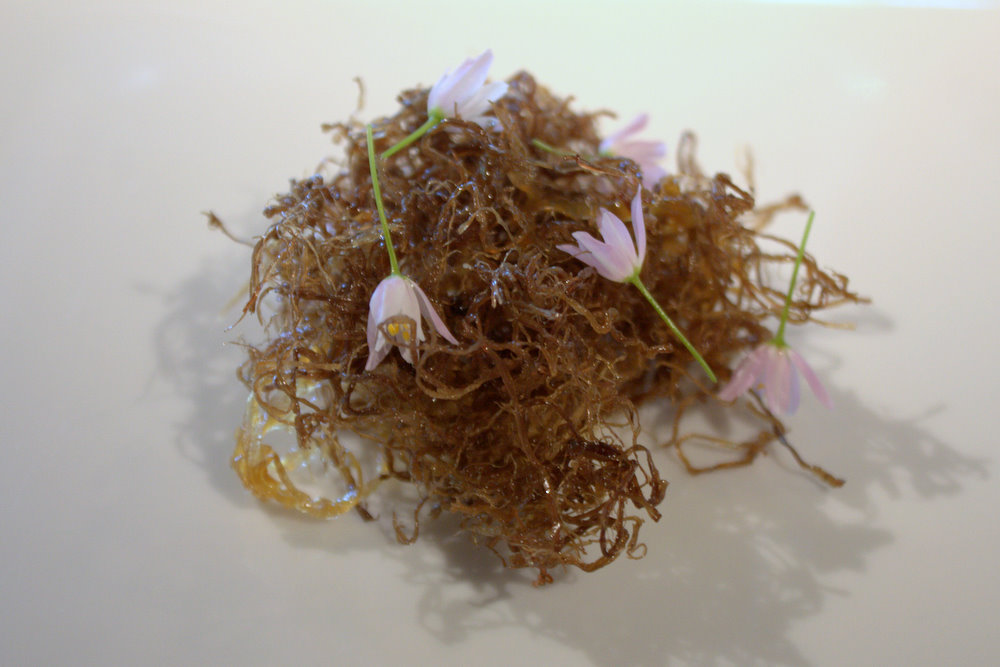
Cristal de almidón y azúcar manchado con praliné y corales del buey de mar. I immediately started losing track of what was what—was this real sea urchin or “sea urchin?”—and stopped over-analyzing. Crackly and sweet like uni candy, I tried to enjoy the arrangements of the food as they were, not a puzzle.
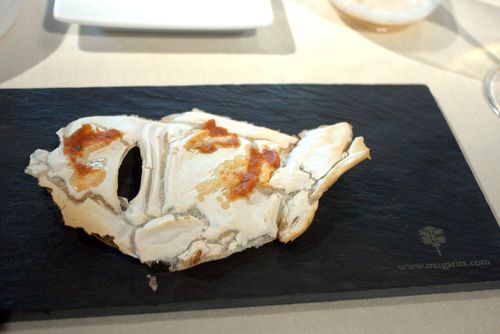
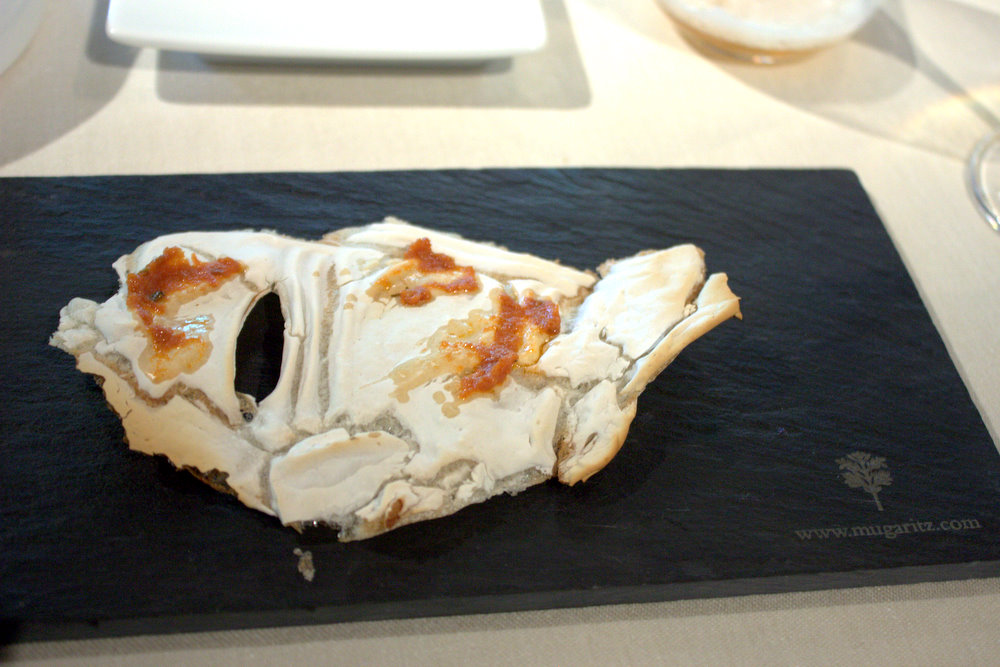
Mugaritz focaccia de almidón de pueraria a la parilla

Focaccia de almidón de pueraria a la parilla. Brittle, crackle-bread skeleton, grilled and made of a powdered herb called pueraria. I don’t know what the tomato-y swipes were. Maybe a little challenging in its plainness.
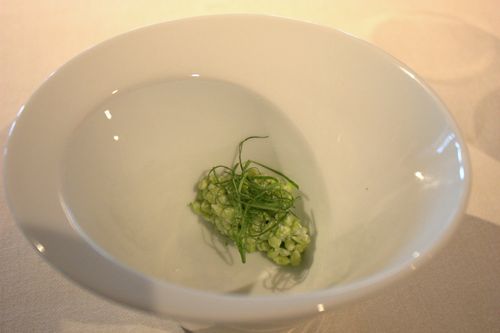
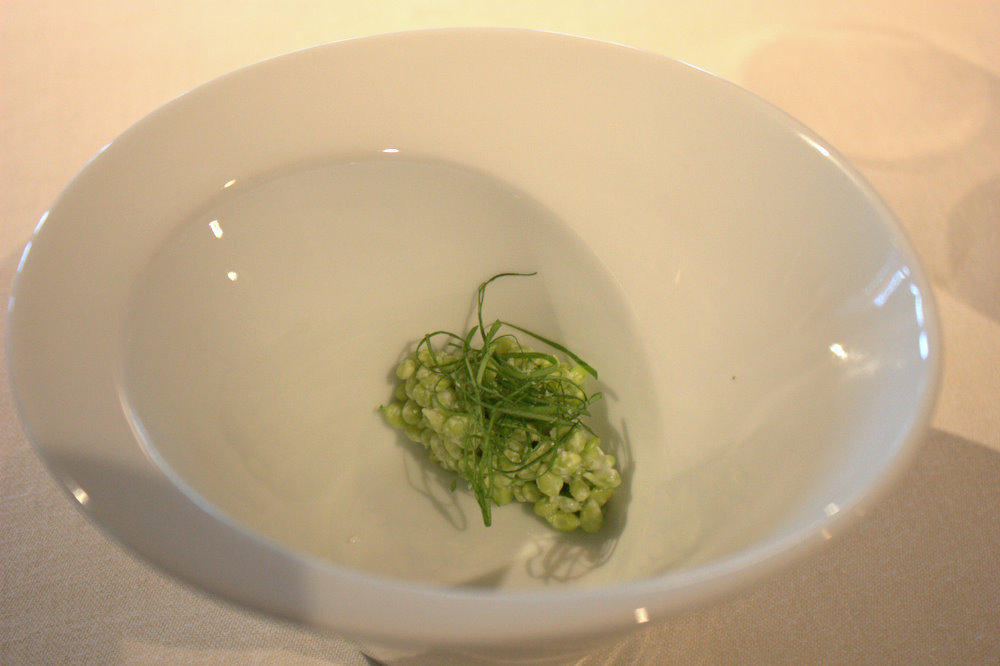
Mugaritz el verdor de guisantes lágrima animado con acederas rojas y mascarpone

El verdor de guisantes lágrima animado con acederas rojas y mascarpone. Rice krispie peas without much distraction from the listed mascarpone.
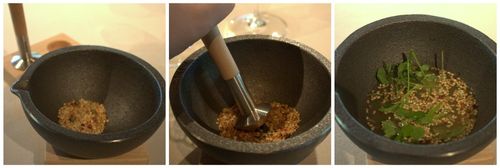
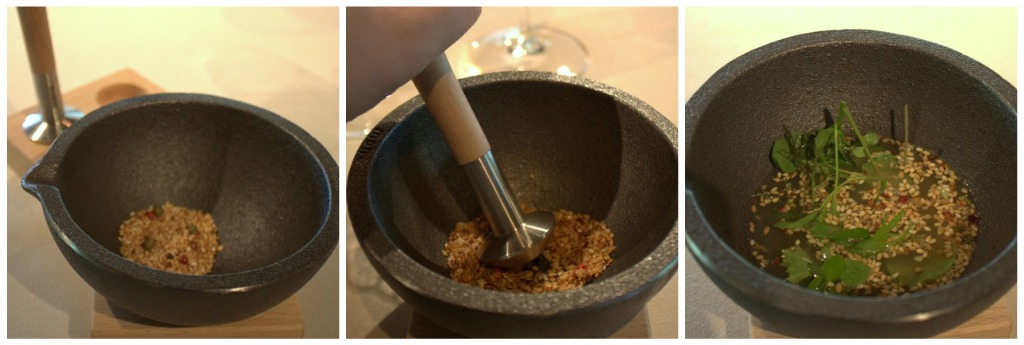
Mugaritz soup progression

Sopa de mortero con especias, semillas, caldo de pescados y hierbas frescas. This broth epitomized Mugaritz for me. It was certainly some crunchy soup. Interactive dishes are tricky—how long should I pound this stuff before we move on to the next step? Sesames in your teeth, blasts of pink peppercorn, slightly bitter herbs so prominent, I barely even noticed the fish broth after it was poured. Flavor and texture.
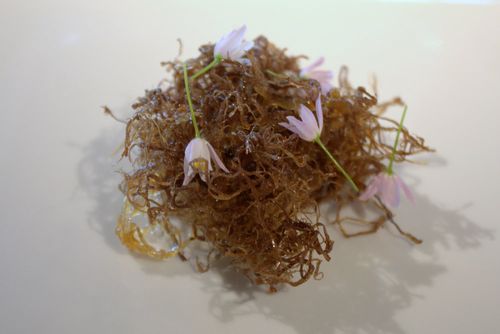
Mugaritz shhh...muerdete la lengua

Shhh…muerdete la lengua. Ok, I do like puzzles even though I said above that I was trying to take everything at face value too. But in this case, we were told to guess the secret ingredient. Something beefy? Indeed, cow tongue had apparently been, cooked then pulled apart strand by strand (I would never have the patience to stage at a restaurant) and dried into floss. I’m crazy about meat floss, though I like mine fried, Thai-style full of chiles and shredded lime leaves. This was more purist, a little Brillo-y and it even had the dreaded flowers, while the predominant flavor was roasted garlic hidden inside the bramble. But when thinking back to Mugaritz over the course of a week, this is the dish that always came to mind first. Pretty, kind of grotesque, fanciful. I wouldn’t want to eat an entire meal of compositions like this, but I appreciated the diversion.
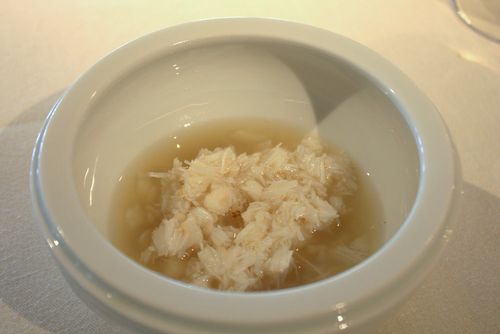
Mugaritz potaje meloso de pan cubierto de carne de buey de mar y geránio rosa

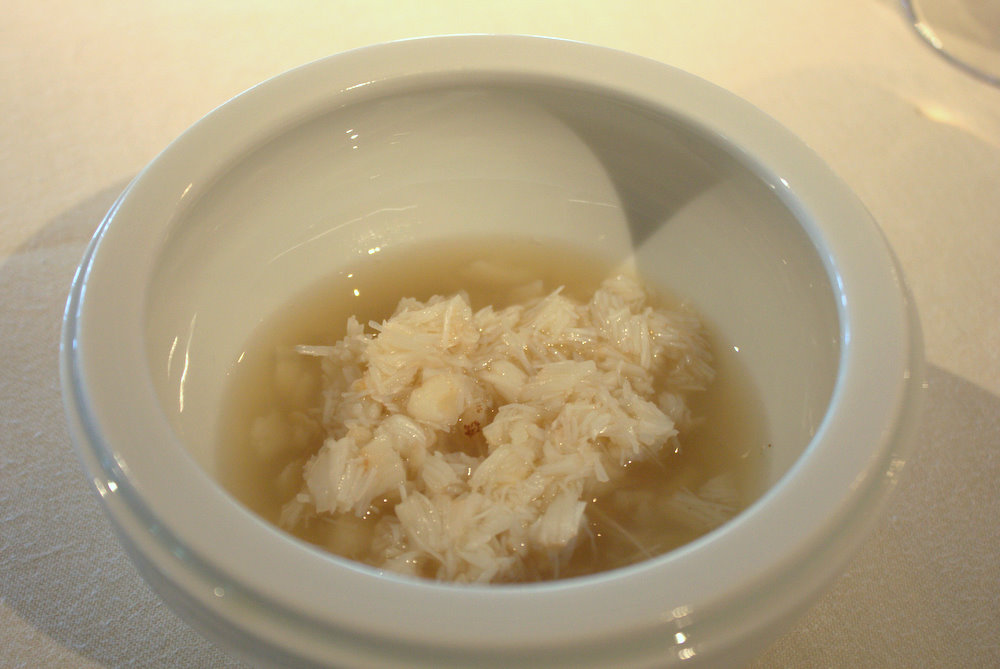
Potaje meloso de pan cubierto de carne de buey de mar y geránio rosa. I was not crazy about this one. Yes, yes, I’ve admitted my baby-ish aversion to flower petals in my food, but it’s purely a visual mental block. This soup, though, was completely perfumed with geranium, much worse than actually seeing petals. The shredded crab mixed with hunks of soggy torn bread created a white, floral sludge that was hard to finish. I can’t fawn over everything, right?
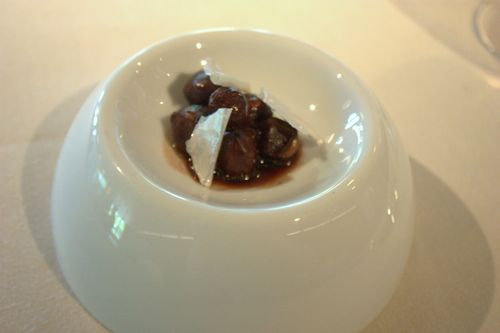
Mugaritz potaje de avellanas con nácar

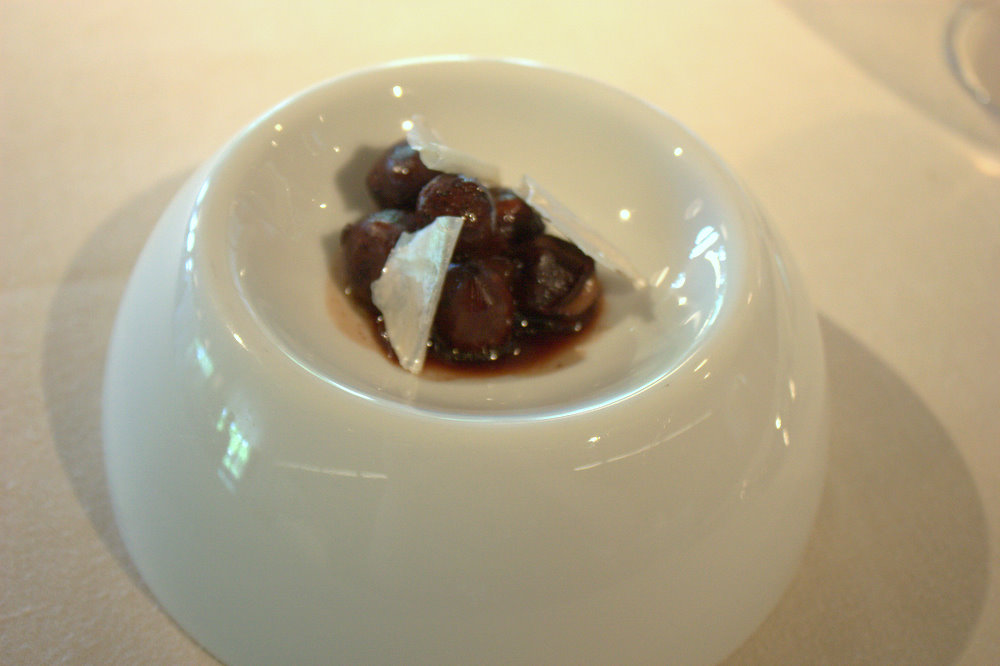
Potaje de avellanas con nácar. Similar to boiled peanuts, but hazelnuts with crispy pearlescent candy. I would not call this a potage.
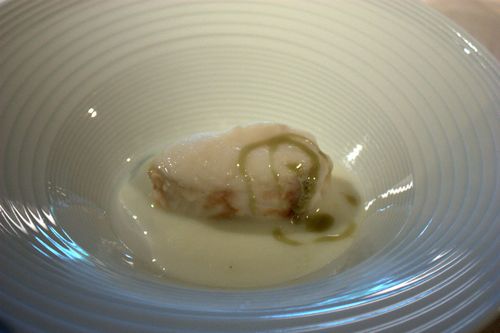
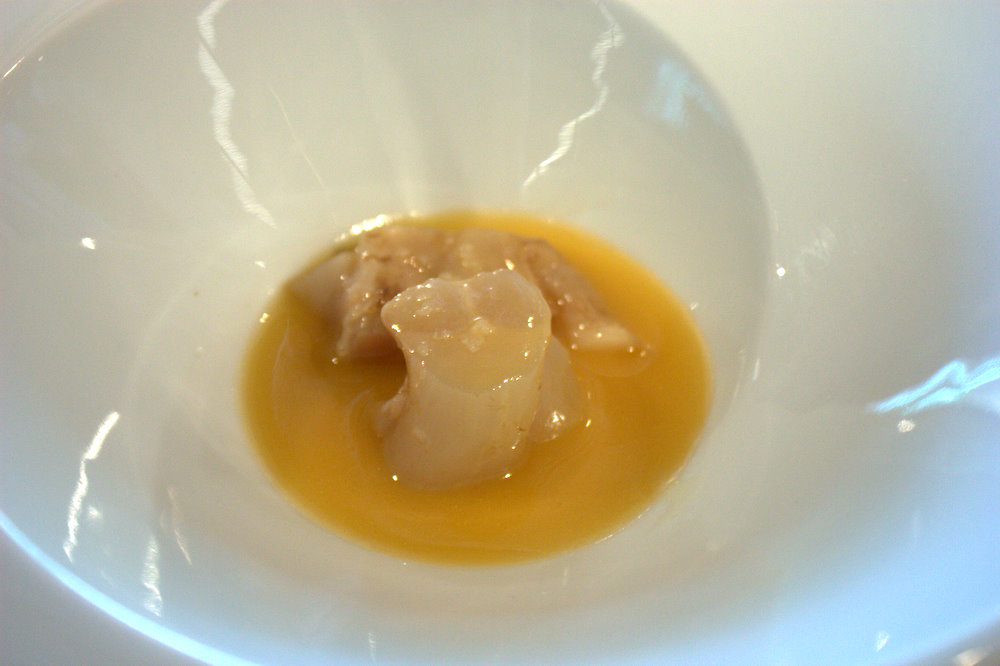
Mugaritz lomo de merluza servido en un jugo lechoso de brotes de coles estofadas

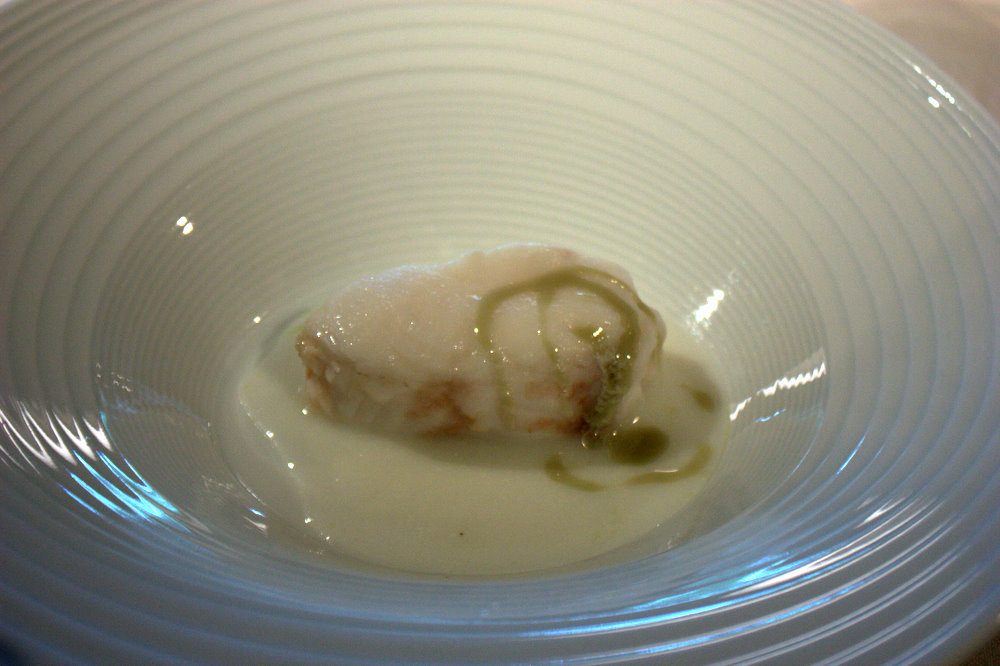
Llomo de merluza servido en un jugo lechoso de brotes de coles estofadas. From here the dishes started veering more into what I’d call food food, rich, little, elegant bowlfuls. I’m not sure what cabbage shoots are, but they were as mild as the hake
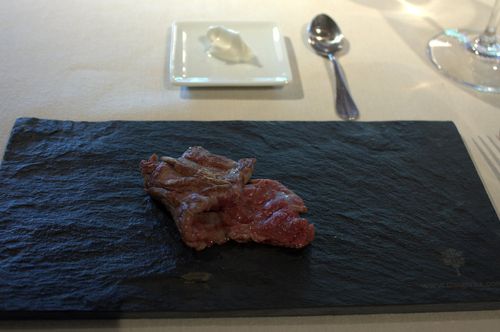
Mugaritz láminas de entrécula, emulsión de carne asada y cristales de sal

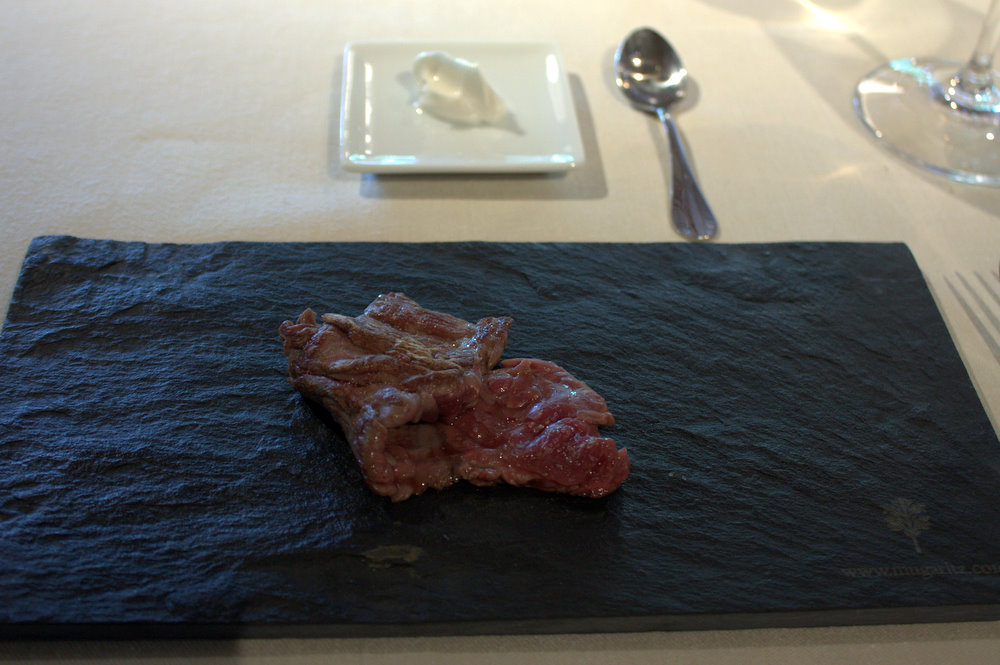
Láminas de entrécula, emulsión de carne asada y cristales de sal. A petite cut of beef from around the kidneys, the opposite of the region’s beloved txuleta, was served with an emulsified grilled meat butter that ranks right up there with Etxebarri’s smoked goat’s milk butter.
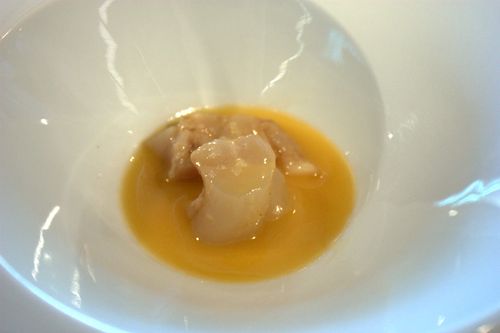
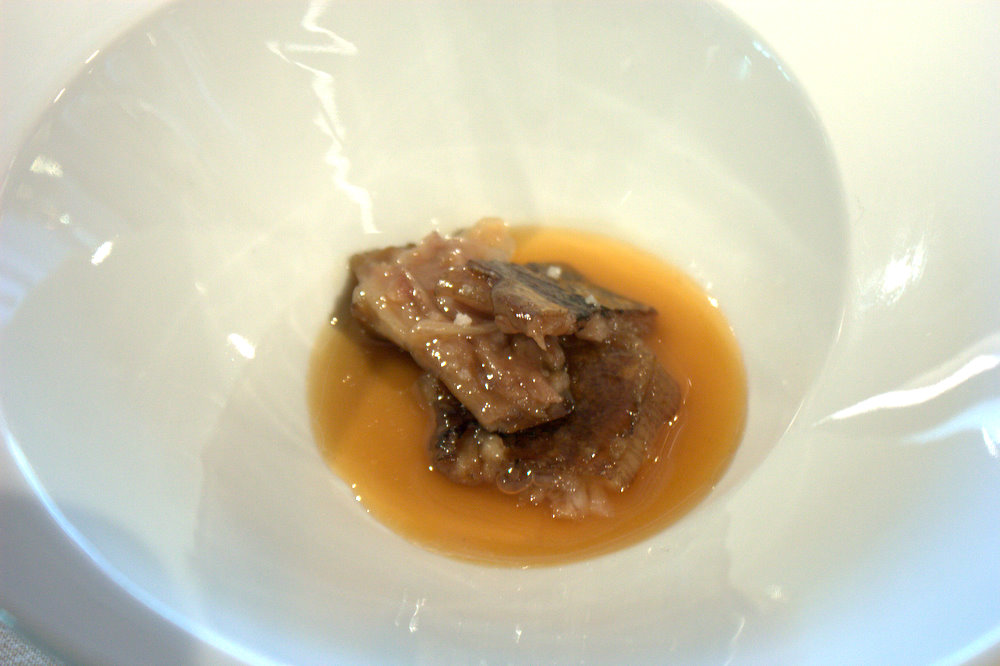
Mugaritz ossobuco royal trabado con aceite de bogavante tostado

Ossobuco royal trabado con aceite de bogavante tostado. That would be ossobuco in quotes. I originally thought this was bone marrow, but it might be tendons. Whatever the silky nuggets may be, they’ve been cooked down to a hyper-concentrated, gelatinous state and flavored with lobster oil. This is where bread comes in handy.
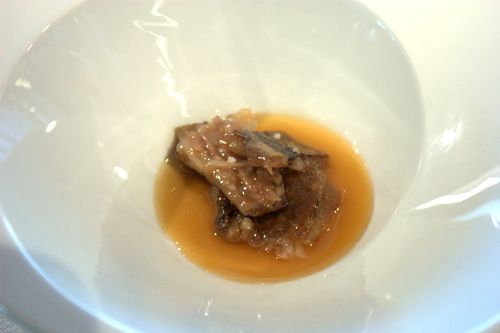
Mugaritz rabito de cerdo ibérico, hojas crocantes y aceite de semillas tostadas

Rabito de cerdo ibérico, hojas crocantes y aceite de semillas tostadas. The pig’s tail had been distilled to the point of two textures: opposites: gooey and crisp. Each bite pure pork. I have seen other photos of this dish with crackers on top. Maybe it’s better in its purest state?  Another surprising thing we were told when in the kitchen earlier on was that we should feel free to voice any dislikes ahead of time (I would never say flowers, though I might think it) to let them know if we wanted more of something or another course. That seemed kind of outrageous to me like when my stepsister once asked for more mushrooms on her schnitzel at The Rheinlander (she got them). I wouldn’t feel right about it, but this would be the dish for sure. I could just be an gelatinous-umami maniac because the preceding dish had the same appeal. Of course, at this point you’re not really hungry for double-portions of anything.
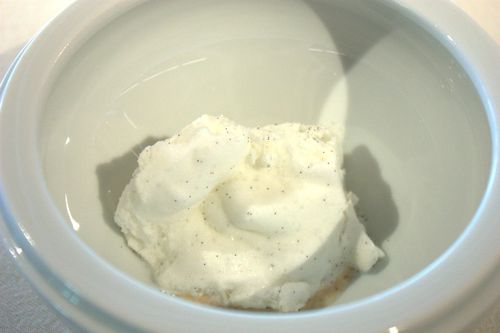
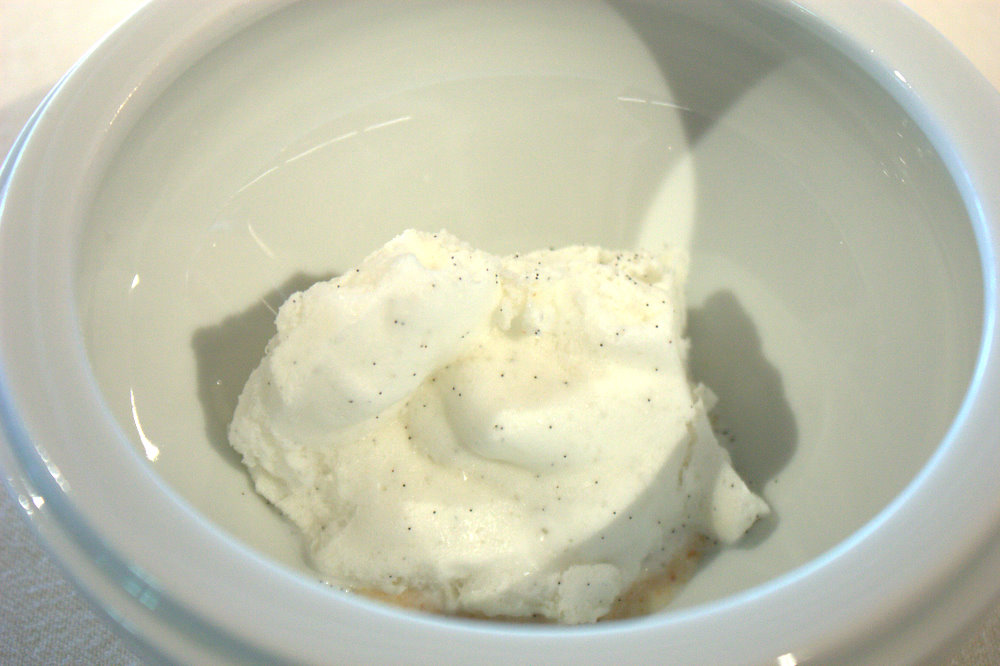
Mugaritz brioche helado de vainilla con agua de cebada

Brioche helado de vainilla con agua de cebada. Definitely more of a fluffy snowball than a brioche. I did not really notice the barley.
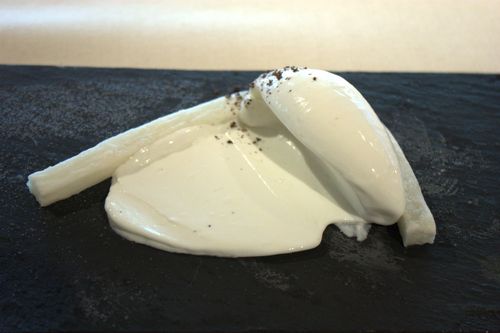
Mugaritz crema fria de limon con nabo encurtido en azucar no dulce

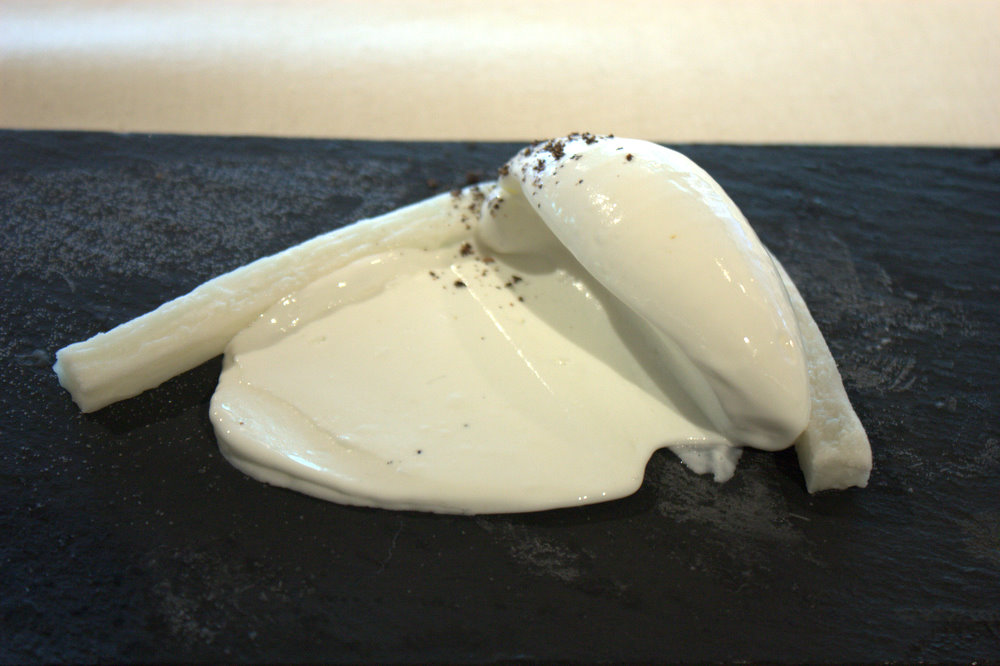
Crema fria de limon con nabo encurtido en azucar no dulce. White was the theme for desserts. This was lemony and served with what I thought was jicama but I’m now seeing was daikon. They both have that similar neutral crunch that could work in a dessert.
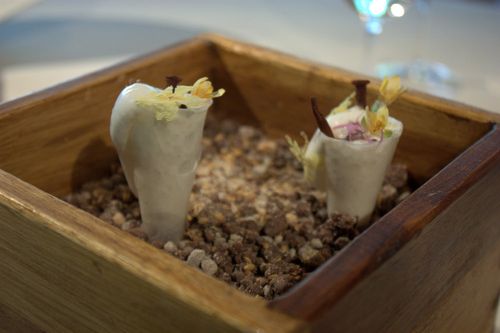
Mugaritz cucurucho de flores y clavos

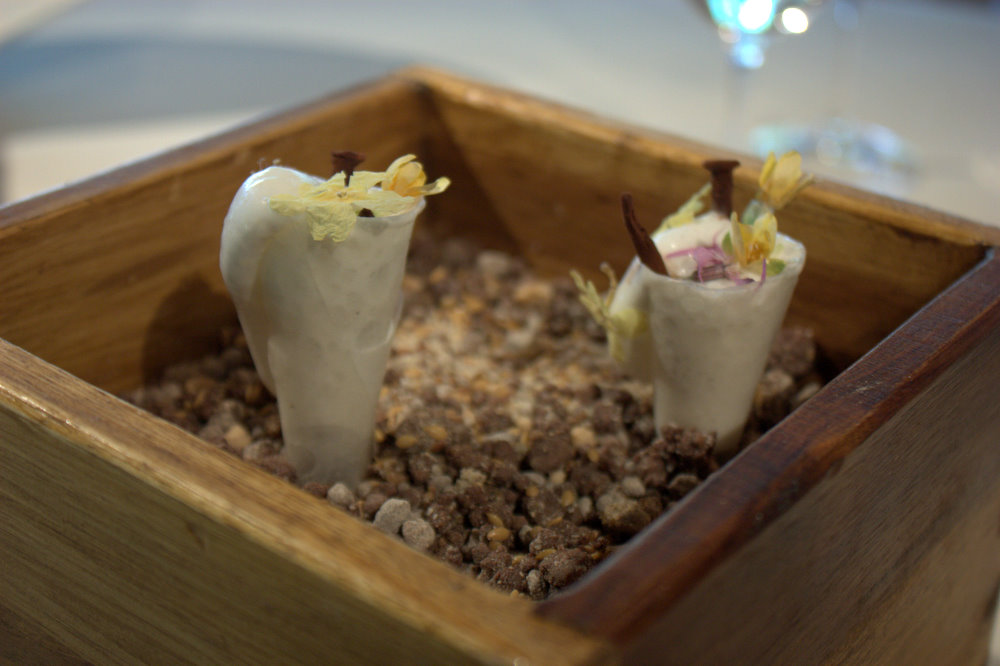
Cucurucho de flores y clavos. Flowers, ice cream and chocolate nails stuck into a box of chocolate dirt. It was interesting that they contrast the delicate with the utilitarian at the meal’s end. Arzak also has a send-off array of bonbons that includes candy nuts and bolts.
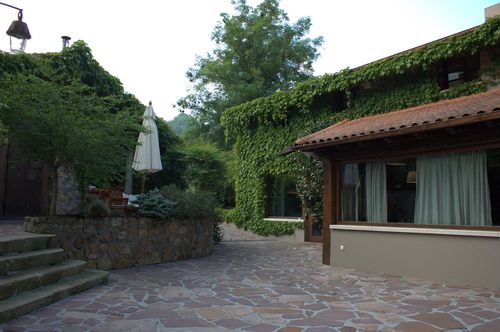
Mugaritz patio

Afterward, lunchers retired to the still-sunny patio for coffee or a glass of cava—and a cigarette, the tell-tale sign that you may be surrounded by food-travelers, but not Americans.
Full set of Mugaritz photos.

Mugaritz * Otzazulueta Baserria. Aldura Aldea, 20, San Sebastián, Spain